This year I can finally participate in something that’s been a dream of mine since I started working with coffee in 2017 and getting certified by the SCA… Corona has been forcing the competition to be postponed. I was going to first volunteer and help others participate, but I’ve decided to just dive in.
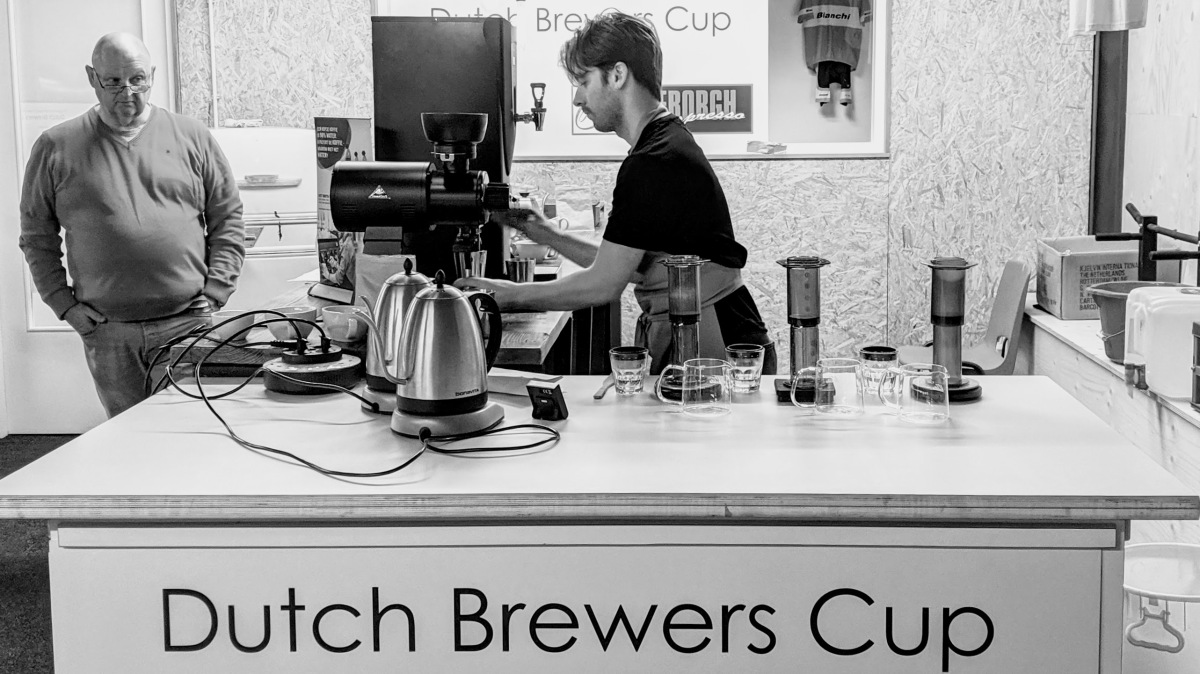
At the preliminary, you have to brew 3 cups of an unknown coffee bean in 15 minutes using your preferred brew method. You receive the beans on the day of your round and you get 30 minutes in advance to determine your best recipe using the beans provided, water present and a grinder to use.
Time lapse of a practice run
The preliminary is held at Alleborgh coffee in Almere, a well known espresso machine dealer, who has a backoffice practice floor where you can setup. They’ve been cooperating with SCA Nederland forever, as far as I know.
Not knowing the water used and using a guest grinder is an extra complication. Baristas know their own equipment in and out and can fine-tune results often instantly to compensate for dinner ad-hoc deviation
I’m going to double check the requirements again before Tuesday Feb 22nd, when I’m scheduled to go on stage, but I believe you get 15 minutes total time and can use 8 minutes to set up and 7 minutes to produce 3 cups of 180 grams of coffee liquid.
I also learned that you’ll get 15 min additional time familiarize yourself with the grinder (a mahlkonig EK43 🥰) and can bring your own coffee to achieve the grind size you’re set on using. There are tools to help with this task, such as a Kruve sieve or a ruler that indicates particle size, but I don’t have those yet. Maybe if I make the finals…
This is not that hard at all but the complexity increases because you kinda have to brew 3 batches of coffee in parallel and start the 2nd while you’re still brewing the first. This is where timing gets tricky and routine is crucial!
The coffees are judged blindly (they do not know who’s coffee they judge) on flavors, taste and consistency by a professional jury who’ve sampled the same coffee for themselves, so they know what’s possible to achieve. In a way, it’s whoever is closest to what they achieved wins.
One of the better things that Corona has brought to the world is the increasing availability of fantastic, fresh roasted, coffee bean subscriptions to all those who value excellent coffee when working from home! There are so many coffee roasters that have popped up as well and they sometimes bring you true gems from the coffee world to your home.
Fresh roasted beans
A coffee subscription brings you freshly roasted coffee beans to your doorstep on a regular basis. Some let you choose the frequency at which this happens, others deliver it to you every other week or month. Often, you can choose the “profile” of the coffee, which means you can decide if you want to the coffee roasted for espresso (a little darker) or for filter (a little lighter).
Did you know that coffee loses most of its delicate flavors within 15 minutes (!) after grinding? If you have always used supermarket coffee, then you really do not know how good coffee can taste!
Most coffee subscriptions can send you a fixed set of beans of your choosing, sent to you at regular intervals. You chose the roast level (espresso or filter, dark/medium/light), the quantity and which beans. From then on, you’ll never run out of fresh coffee beans again.
You may be able to set some parameters, such as blend vs. single origin or washed vs. natural beans. A few promise to occasionally send you a surprise coffee or a special coffee as well, as a thank you for your loyalty. This means you get a reliable source of great coffee beans sent to your house.
Quality of the beans
The quality level is above and beyond what you can get from the supermarket or your local coffee store, despite the latter already offering a much better bean than the supermarket. Local coffee roasters simply chose better green beans and take more pride in their (artisan) craft. They take more time and care to roast the beans slowly, which greatly enhances the flavors in the beans (source).
A rotating coffee subscription is a subscription for fresh coffee (beans or ground to your specs) that arrives regularly, but contains different coffees each time.
No Pressure Coffee
Another benefit of getting a fixed set of beans on a rotating schedule is that you don’t need to complete redial your brew settings all over again. Each bean often has a unique recipe: the setting on the grinder, the weight of dry coffee you use for the best flavor, the temperature of the water used to brew the coffee and maybe even the number of pours used to make filter coffee. If you write down your recipe (I highly recommend you do!) then when you get a known coffee again, you can simply reach for your last recipe and use that instead of having to go through several runs to optimize the recipe for taste.
Rotating subscriptions
Some coffee subscriptions give you the option to rotate the beans regularly. Each new delivery will bring different beans than the one before. I call this a “rotating subscription“. It’s a lot of work to source new green coffee beans on a regular basis, roast them and taste/cup them, adjust roasting profile, weigh and package all the subscriptions and do it all over again a week (or so) later. That’s something that only a handful people manage.
But… if you stay on long enough, you may start seeing certain beans reoccur. Not everyone has a limitless supply of every bean out there. Even roasters buy limited quantities of green beans and these run out, eventually.
Recommended Coffee Subscriptions
Here is my list of recommended coffee subscriptions in the Netherlands:
NOTE: all of the above roasters now offer a choice between a fixed or a rotating coffee subscription! That’s great news for us.
the coffee vine, Amsterdam (2012), is a unique coffee subscription because they use rotating coffee roasters and ship their monthly changing beans all across Europe and world-wide! They have true gems and unique beans but the coffee is not what I’d call suitable for beginners. If you’d like to try totally different and wonderful beans each and every time, this is your go-to place!
If you are a coffee roaster and you offer a (rotating) coffee subscription as well, please get in touch with me if you’d like to be included in this list!
No Pressure Coffee
Update Jan 2024: Boon no longer exists, filter box by Man met Bril is gone, Black and Bloom has sadly reduced their catalog and does not serve a subscription anymore, Uncommon added. Text updated and reworded.
I’m proud to say that after a lengthy postponement due to the global Corona Crisis, I’ve decided to participate in the next year’s Dutch Brewers Cup 2022!
I’m teaming up with a colleague in coffee, Dave from hetkoffieverbond.nl, who’s not only an accomplished coffee brewer but also roasts his own beans and works as a Cup Taster on quality control at a larger coffee roaster. We will both compete although in different categories! I’m very excited to both work with him and learn so much more about brewing coffee, beans, roasts and how to win competitions 😉
I also miss working with coffee. While I’ve spent my time useful and succeeded in making excellent coffee at home while working from home, it feels good to be amongst coffee fetishists in the near future and having the smell of fresh roasted coffee in the neighborhood.
Funny, it was a 104 weeks ago (exactly 2 years) that I was present at the preliminaries of the Dutch Brewers Cup 2019 so gain insight into the competition, meet some people and familiarize myself with it. But it seems much sooner.
Roasting coffee beans is easy. You just need a metal pan and fire.
Roasting coffee beans well is slightly harder. You need to pay close attention.
Roasting coffee beans excellently and consistently is both art, talent and science. It requires great skills and experience.
When you roast the coffee beans, the Maillard reaction creates a multitude of chemical compounds from around 145 C and caramelizes sugars present in the bean.
Roasting specialty coffee beans is on another level because they are of higher quality and you are trying to highlight, enhance or bring out certain flavors and tones that make that particular (micro)lot or harvest shine. Do it once and that’s luck. Do it twice and you are good! Do it more than twice and you are a true artist.
In light of celebrating those true coffee artisans and artists out there, here is my highly subjective list of the best coffee bean roasters in the Netherlands:
In alphabetical order:
Black and Bloom, Groningen
Blommers, Nijmegen
Capriole, Den Haag
Dagger Coffee, Utrecht
Dak Coffee Roasters, Amsterdam
Giraffe Coffee Roasters, Rotterdam
Keen, Utrecht
Lot61, Amsterdam
Man met bril, Rotterdam
Manhattan Coffee Roasters, Rotterdam
Single Estate, Den Haag
The Village, Utrecht
Ripsnorter, Rotterdam
Un.common AMS, Amsterdam
Why are they the best? Because they procure excellent beans. They roast to order so you get fresh beans every time. They are also able to create a roast profile that brings out the best of the particular bean.
They make great every day blends that are always outstanding, but also produce time-limited special editions of simply brilliant and out-of-this-world (micro)lots from somewhere special that just blow your mind.
Drinking those is more like enjoying a fabulous bottle of wine than drinking coffee…
Update April 2025: added Blommers, Dak, The Village, Keen
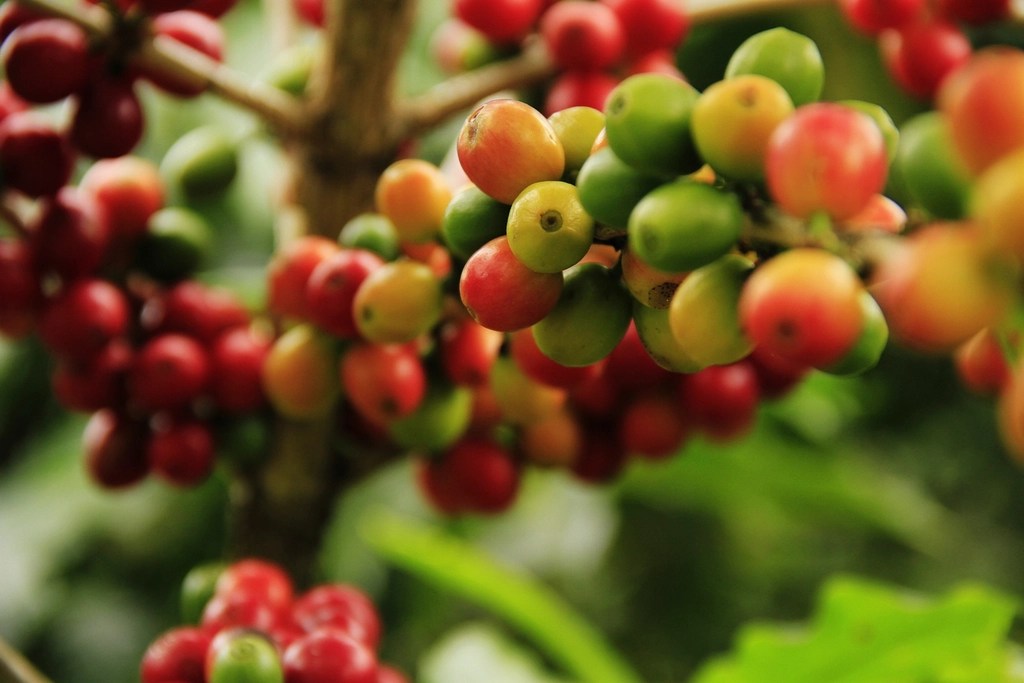
When coffee bushes are filled with cherries and they are ripe (dark red), they can be picked and processed. The skin is removed until only the “pit”or bean of the fruit remains. The bean is green until roasted.
In addition to these three processes, one can apply an optional extended fermentation process that can be applied to both methods.
In the washed method, the most common process, the coffee cherries are pulped to remove the skin and fruit flesh. The beans are then fermented for a shorter period of time, typically around 12 hours. After fermentation, the beans are washed and dried in the sun. Washed coffees generally have a cleaner flavor than natural coffees.
In the natural method, the coffee cherries are left whole and fermented with their skin on. This can take anywhere from one to three weeks, depending on the weather conditions. The natural fermentation process in the fruit during this period breaks down the sugars in the coffee cherries, which contributes to the flavor of the finished coffee. After fermentation, the coffee cherries are dried in the sun until they are brittle.
An additional extended fermentation process can be applied to both natural and washed coffees. In this process, the coffee cherries or beans are fermented in an anaerobic environment, which means that there is no oxygen present. This can create a more complex and fruity flavor in the finished coffee.
Here is a summary of the different processing methods:
Natural: Coffee cherries are fermented with their skin on for an extended period of time (1 to 3 weeks). This results in a coffee with a more complex and fruity flavor.
Washed: Coffee cherries are pulped to remove the skin and fruit flesh, then fermented for a shorter period of time (12 hours). This results in a coffee with a cleaner flavor.
Honey: Coffee cherries are pulped to remove the skin and some of the fruit flesh, leaving behind some of the mucilage. The amount of mucilage left on the bean affects the final flavor profile.
Extended fermentation: Coffee cherries or beans are fermented in an anaerobic environment. This can create a more complex and fruity flavor in the finished coffee.
The video below shows you the difference between natural and washed coffee processing, including a 72-hour anaerobic fermentation process for natural coffee.
The video starts with showing freshly picked red coffee cherries. They show that only red cherries are picked because they are at optimal ripeness (i.e. sugar content).
Natural method
The author of the video (Roaster Kat from Germany, who operates a YouTube channel showing what her work is like) explains that the skins are left on the cherries during this process. The cherries are dried until the skins crumble and fall off easily.
Then the video dives into an optional, additional, natural coffee processing. First, the coffee cherries are put in a plastic bag to ferment anaerobically, which means there is no oxygen. Yeast and bacteria are added to the bag to consume the sugar in the coffee cherries.
After four days of fermentation, the coffee cherries are taken out and rinsed. They are then laid out on a drying patio to dry for one to three weeks.
Washed method
Next, the video explains washed coffee processing. The skins are first removed from the coffee cherries using a long soak in water and a depulping machine.
Then, the beans are fermented in a tank with water for about 12 hours. The narrator explains that this fermentation process is shorter than the one used in natural coffee processing and its purpose is to remove a layer of sticky sugar from the beans. After fermentation, the coffee is rinsed and dried on a patio for several days.
Finally, the video shows how coffee is processed at a dry mill. The dry mill removes the outer layers from the coffee beans and sorts the beans by size and density.
Anaerobic fermentation
The video also talks about extended fermentation, which is a process that can be used with both natural and washed coffee. RoasterKat explains that extended fermentation can give coffee a unique flavor. In the video, they use a 72-hour anaerobic fermentation process.
Fermentation introduces a wealth of different and unique flavors in coffee. Very similar to how grape juice is fermented to wine. The process can be influenced by introducing other yeasts onto the coffee beans than those naturally occuring in their habitat. Commercial yeasts are readily available from companies such as DSM and you can choose the yeast by the flavor you want to create afterwards.
Need more information? Check out this article explaining the different processes in great detail.
The Coffee Science Education Centre (CSEC) in Australia tested the impact of a range of tap, artificially modified, and purified waters on the flavors of coffee in an espresso. The chemistry of the resulting brews and brew waters was analysed scientifically through gas chromatography with mass spectrometry, inductively coupled plasma optical emission spectrometry, a bank of photometers, and a series of pH/conductivity multi probes.
What a brilliant idea! I have long asserted certain differences in the flavors in a cup of coffee to the water used, but never really thought about it scientifically. Sometimes my favorite coffee tasted completely different when brewed at a friend’s home. Other times I simply couldn’t replicate the same great taste for a coffee I’d had at work in my home. I varied the recipe, tried to compensate for certain differences but never really solved the problem…
The study looked at how three elements of water affected flavours in extraction: hardness (the amount of calcium, magnesium, carbonate, and bicarbonate in water), pH levels, and total dissolved solids (TDS).
The biggest effect on flavour was achieved by modifying the hardness of the water
Dr Adam Carr of Seven Miles Coffee Roasters
They brewed an espresso on an industry standard machine from La Marzocco and then measured the concentration of chemicals in the coffee that are attributed to certain flavour characteristics, such as nutty/roasted (2-methylpyrazine), fruity (furaneol), vanilla/caramel (vanillin), and caffeine/bitterness (caffeine).
They found what I had sort of self-analysed by drinking coffee made with desalinated water, some mineral water and very hard (dH) water in my hometown in Bussum (dH around 9-10).
pH tends to concentrate flavors, much like salt enhances flavors in food
Higher pH tended to concentrate stronger flavours in coffee, though not to the same extent as hardness. However, higher pH levels also led to issues in the extraction process.
Scientists have finally answered a burning question of mine: why should an espresso be brewed in 25 +/- 2 seconds and use approx 15-22gr of dry coffee to yield 50ml of (a double) espresso?
Who came up with this rule and why? Not that I have a specific problem with it but it seems so arbitrary. Also, once you start to make espresso’s a day long, you’ll notice that it’s really hard to dial in the equipment a certain way and maintain those rules for every cup. Sometimes it’ll be 21 seconds, sometimes 29. The grinder is pretty accurate. The beans are practically the same. So where does this high variation come from?
Well, it turns out that brewing your espresso differently yields the same great taste and flavors while achieving this with much greater consistency and reducing the cost per cup of espresso!
How did they do it? Well, they started by reducing the process to a proper model with solid mathematics behind it. Brewing an espresso is basically fluid dynamics of a bed of particles. The “puck” being coffee grinds of varying sizes and water is pushed through this bed at a certain pressure.
These mathematics are very well understood and accepted. So the scientists started with this model, created equations for everything and solved the equations using differential equations. That resulted in a few parameters and then they found the optimal solutions.
Sounds easy enough but believe me the math is pretty impressive, yet their logic is sound.
Turns out if you lower the pressure to 6 bars instead of 9, use 7-15gr of dry coffee, ground coarser than tradition tells you to and aim for an extraction of 8-15 seconds, you will get a beautiful espresso that is much easier to reproduce!
Using less coffee can save up to 30% of your cost and in high volume locations, you can turn out coffees faster than before!
Don’t believe it? Even Lance Hedrick has a video about it, albeit 5 years after the fact…
So I decided that this valuable guide to the best coffee beans in the Netherlands needed to be updated!
Christian, January 2024
What are the best coffee beans in the Netherlands? Well, that depends a little on personal taste and favorites, but I can tell you who roast amazing coffee beans in the Netherlands and sell their coffee online!
Traditionally, there are a handful established coffee roasters in the Netherlands who have been producing specialty coffee since it wasn’t called specialtycoffee. These are oldskool roasters who’ve always been on the lookout for great green beans, source great coffee farmers and who know how to source these beans and treat them well. In my opinion, these are:
Capriole Coffee Service, Den Haag (1975) capriole.nl
However, the whole third wave coffee movement have sparked a bunch of great newcomers with new routes, difference sources, smaller batches and that great newcomer creativity and curiosity. They get beans that are “off the beaten path”, if you will, or from non-traditional coffee producing countries.
More recently, since roughly 2010, coffee farmers are experimenting with added fermentation of beans before drying them. This creates a whole range of funky flavors.
Some are pretty large scale roasters already, roasting dozens kilos of coffee every single day to keep production and delivery going. But others are small, artisan roasters, roasting green coffee beans to order once or twice a week.
I’ve had excellent coffee beans from all of these sources, but three that stand out for me and who’s taste I can still recall are:
Fabulous lush sweet yellow fruit tones combined with a medium to full body coffee, just enough bitters and everlasting flavors. And the smell when you brew is intoxicating!
Super tasty creamy coffee with red fruit tones and a full body. But the peculiarity is the thick fermented “wine-like” notes you smell when you open the package.
What’s the best coffee I’ve had from a non-Dutch source, you ask?
Amavida Coffee! ❤ Price was high but the rewards were too!
But don’t take my word for it! Check (the sadly discontinued) “Koffie Top 100” from 2018, which ranked the 100 best places to drink coffee in the Netherlands, and a find a place near you that excels in making coffee. Ranking was made by a professional coffee jury and each venue was visited at least 2x to see if they were consistent. Very impressive list, even today.
For a more recent assessment of coffee in the Netherlands, check the fantastic site koffietje.nl by the always lovely Sam. She brings a personal note to all the coffees she tries. If she likes it, you know it’s good. But if it’s great depends on you!
Update May 2022: Added Blommers to the list after tasting their excellent beans during the Dutch Brewers Cup finals in March 2022 at the Amsterdam Coffee Festival (ACF).
Update Jan 2024: Added Uncommon Amsterdam, Little Roastery and (how could I forget?) the Village Coffee. Small typos corrected and added note about fermentation of beans. Mentioned koffietje.nl. Replaced koffie top 100 link. Boon has closed.
This post on Insta by GoldMountain Coffee shows you very clearly the road a coffee bean takes from being planted to harvest, sorting, washing and so on. Very good pictures!