Categories
coffee competition news

The Louis Claus Bokaal

The evolution of the specialty coffee sector in the Netherlands is inextricably linked to the professionalization of the barista craft, a process that found its primary catalyst in the establishment of national competitive standards at the turn of the millennium.

Central to this professional trajectory is the Louis Claus Bokaal, a prestigious incentive award (aanmoedigingsprijs) presented annually within the framework of the Dutch Barista Championship (DBC).1 This trophy serves as a vital mechanism for identifying and nurturing “aanstormend talent” (emerging talent), specifically recognizing the highest-achieving newcomer who reaches the final stage of the national championship.1 To understand the origins, criteria, and impact of this award, one must examine the life of its namesake, the technical rigors of the Specialty Coffee Association (SCA) Netherlands, and the broader cultural narrative that has elevated a professional trophy into a symbol of Dutch coffee heritage.

Louis Claus and the Foundation of Dutch Coffee Competitions

The Louis Claus Bokaal originates from the necessity to honor one of the most influential pioneers in the Dutch specialty coffee movement. Louis Claus, the owner of the renowned café De Blonde Pater in Nijmegen, was a foundational figure who significantly elevated the standards of coffee preparation and hospitality in the Netherlands.1 Claus was not merely a business owner; he was a mentor and a visionary who recognized that competition would serve as the most effective vehicle for industry-wide improvement. In 2002, he stood at the “wieg” (cradle) of the Dutch barista competitions, assisting in the creation of the competitive infrastructure that would eventually become the Dutch Barista Championship.1

The Legacy of De Blonde Pater

De Blonde Pater served as more than a commercial enterprise; it functioned as an informal academy for aspiring baristas. Louis Claus cultivated an environment where technical precision was balanced with a deep commitment to guest experience, a philosophy that continues to influence the judging criteria of modern competitions.1 Under his guidance, De Blonde Pater produced several high-caliber professionals, most notably Liesbeth Sleijster, who achieved a third-place finish at the World Barista Championship in 2008.5 Claus’s pedagogical approach emphasized the mastery of espresso extraction and the chemistry of milk texturing, setting a benchmark for what would later be required of competitive baristas at the national level.1

Following the untimely death of Louis Claus on April 4, 2010 – at the age of 49 – the Dutch coffee community sought a permanent way to commemorate his contributions.4 The creation of the Louis Claus Bokaal was the result of this collective desire to preserve his name within the competitive circuit he helped establish. The award was designed to reflect Claus’s own passion for training and encouraging new talent, thereby focusing the prize specifically on newcomers to the championship finals.1

Criteria and Mechanics of the Award

The Louis Claus Bokaal is awarded by the Specialty Coffee Association (SCA) Netherlands, the national chapter of the global organization dedicated to coffee excellence.1 The award is not given for a single category of beverage but is instead a reflection of overall performance within the rigorous structure of the Dutch Barista Championship.

Recipient Eligibility and Selection

To receive the Louis Claus Bokaal, a participant must fulfill a specific set of criteria established by the SCA Netherlands:

  1. Finalist Status: The recipient must be one of the six finalists in the Dutch Barista Championship.1
  2. Newcomer Status: The participant must be competing in the DBC finals for the first time.1
  3. Highest Ranking Newcomer: Among all the finalists who are debutants, the Bokaal is awarded to the individual who achieves the highest total score from the sensory and technical jury.1

This structure ensures that even if a newcomer does not win the overall national title, which is often claimed by veterans with years of competitive experience, their exceptional performance in a high-pressure environment is formally recognized.1

The Competitive Performance Requirement

The path to the Bokaal requires a masterclass in efficiency and sensory communication. Each finalist must deliver a 15-minute presentation, during which they prepare and serve three distinct types of beverages to a panel of judges 1:

  • Four Identical Espressos: These must demonstrate a balance of sweetness, acidity, and bitterness, with a specific tactile quality.5
  • Four Identical Milk Drinks: Baristas typically focus on achieving a harmonious blend of coffee and textured milk, emphasizing sweetness and microfoam quality.1
  • Four Identical Signature Drinks: This round allows for creativity, where baristas combine espresso with various ingredients to create a unique flavor profile that highlights specific characteristics of the coffee.5

The scoring is overseen by a diverse jury, including sensory judges who analyze taste and flavor descriptions, technical judges who monitor cleanliness and workflow, and a head judge who ensures calibration and consistency across the panel.1 For a newcomer, achieving a high score across these categories necessitates months of preparation and a deep understanding of coffee science.

Complete Timeline of Award Winners

The historical record of the Louis Claus Bokaal provides a roadmap of the rising stars in the Dutch specialty coffee scene. Many recipients of this incentive prize have transitioned from “talented newcomers” to national champions and international competitors.

Detailed Recipient Timeline

YearRecipientProfessional Context and Achievements
2010Coen van SprangAwarded at the first championship following Claus’s death; van Sprang placed 3rd overall while representing Lebkov Rotterdam.5
2012Mark JordaanRecognized for his technical precision and potential during his debut in the finals.9
2016Rose van AstenAchieved 2nd place in the DBC 2016; later became the 2019 Dutch Barista Champion and competed in Boston at the WBC.10
2019Wendelien van BunnikNotable for winning both the Bokaal and the overall Dutch Barista Championship in the same year; later became World Aeropress Champion.3
2023Sanne WestphalPlaced 3rd in the 2024 finals after winning the Bokaal the previous year, demonstrating consistent growth.1
2024Loekie KinSecured 4th place in a highly competitive field at the Horecava in Amsterdam, outperforming several experienced participants.1

Historical Highlights: The 2010 Inauguration

The 2010 Dutch Barista Championship, held at Hotel de Goudfazant in Amsterdam, was a milestone for the industry. It was the first time the newcomer prize was officially named the Louis Claus Bokaal.5 The atmosphere was emotionally charged, as the community reflected on the recent passing of Claus.4 Coen van Sprang, who worked for the Rotterdam-based Lebkov, was the first to receive the trophy.7 His performance was praised for its sensory clarity and technical stability, qualities that would become the hallmark of Bokaal winners.5

Historical Highlights: The 2019 Breakthrough

The year 2019 represented a significant moment in the trophy’s history when Wendelien van Bunnik achieved a “double victory.” Typically, the Bokaal is won by a newcomer who places 2nd through 6th, as the top spot is often reserved for those with multiple years of experience. However, van Bunnik’s performance was so dominant that she claimed the 1st place title and the Louis Claus Bokaal simultaneously.3 Her subsequent victory at the World Aeropress Championship in London further validated the award’s role in identifying world-class talent.3

Anecdotes and Cultural Resonance

The Louis Claus Bokaal carries with it several anecdotes that illustrate the passion and humor inherent in the Dutch coffee community. These stories highlight the human element behind the technical scores.

The “Zoetemelk-plek” Anecdote

During the 2010 championship, where the first Louis Claus Bokaal was awarded, the overall winner Yakup Aydin provided one of the most memorable moments in DBC history. Having finished as the runner-up for several consecutive years, Aydin famously shouted, “Na vier jaar eindelijk geen Zoetemelk-plek meer!”.5

This was a reference to Joop Zoetemelk, the legendary Dutch cyclist in the Tour de France, known for his many second-place finishes. This anecdote underscores the intense competitive drive of the finalists and the significance of breaking through into the top tier of the Dutch coffee scene, a journey that often begins with the recognition provided by the Louis Claus Bokaal.5

The Literary Connection: “Het aanbidden van Louis Claus”

The legacy of Louis Claus extends into the realm of Dutch literature through the work of his sibling, Helena (now Valentijn) Hoogenkamp.4 In 2021, Hoogenkamp published the debut novel Het aanbidden van Louis Claus (The Worship of Louis Claus).12 The book is a fictional exploration of memory, identity, and the influence of a charismatic figure. While the character in the book is an aspiring actor rather than a barista, the title was directly inspired by the real-world renown of Louis Claus and his eponymous trophy.4

The family of Louis Claus expressed surprise and pride that his name had become so synonymous with excellence that it could inspire a work of fiction.4 The novel jumps across time. From 2003, the era when Claus was establishing the barista competitions, to 2018, reflecting the long-lasting impact of his presence on those around him.11 This literary connection has introduced the name Louis Claus to a wider audience outside the specialty coffee industry, further cementing his status as a cultural icon.13

SCA Netherlands and the Horecava

The awarding of the Louis Claus Bokaal takes place within the larger ecosystem of the “NK Koffie” (Dutch Coffee Championships), which are primarily held during the Horecava hospitality trade fair at the RAI Amsterdam.1 It takes place every year in early January. This venue provides the maximum possible exposure for newcomers, as they perform in front of thousands of hospitality professionals.

The Role of Sponsors and Support

The SCA Netherlands relies on a network of sponsors to maintain the high standards of the competition and to provide the prizes associated with the Bokaal. Key partners include companies like Brita, Victoria Arduino, Alpro, and Oatly.1

In the 2025 competition, the Louis Claus Bokaal was presented alongside an Oatly Cheque, which specifically rewards the highest-ranking participant using plant-based milk, a category won in 2025 by Isabelle van der Horst.2 These secondary prizes complement the Bokaal by encouraging innovation and sustainability among newcomers.1

The Jury and Calibration

The credibility of the Louis Claus Bokaal is upheld by the rigorous calibration of the jury. Led by coordinators such as Annemarie Tiemens, the jury undergoes extensive training, including webinars and practical tasting sessions, to ensure that their assessments are objective.1 Jurors must possess a valid SCA number and are trained to translate sensory experiences into clear, constructive verbal comments.1 This professional infrastructure ensures that when a newcomer is awarded the Louis Claus Bokaal, it is a testament to their genuine skill and potential to represent the Netherlands on the international stage.1

Future Outlook

As the specialty coffee industry moves toward 2026, the Dutch Barista Championship continues to integrate new technologies and techniques. Brewing espresso using sound waves only. Minute water chemistry compositions using Apax Lab‘s droplets. Specific milk cows or pastures so ensure the milk flavors complement the coffee. Freeze drying techniques with milk and coffee to extract specific flavor notes that shine in signature drinks.The 25th anniversary of the World Barista Championship in 2025 marked a period of reflection for the Dutch community, which has been a participant since the beginning thanks to the foundations laid by Louis Claus.2

The technical demands for newcomers are increasing. Modern finalists must now navigate complex variables such as TDS (Total Dissolved Solids) in their espressos and precisely controlled water chemistry provided by sponsors like Brita.1 The signature drink round has become particularly sophisticated, often utilizing culinary techniques to enhance the coffee’s natural aromatics.5 Despite these technical advancements, the core of the Louis Claus Bokaal remains the same: it is a tribute to the human passion for coffee and the spirit of mentorship that Claus embodied at De Blonde Pater.1

The timeline of winners from 2010 to 2024 reflects the growth of the industry itself. From the early days of establishing basic professional standards to the modern era of world-class innovation, the Louis Claus Bokaal has remained a constant indicator of where the Dutch coffee scene is headed. It ensures that every year, the industry pauses to recognize its future leaders, keeping the legacy of a Nijmegen pioneer alive in every shot of espresso pulled on the national stage.1

Works cited

  1. Zjevaun Janga wint Dutch Barista Championship 2024 – SCA Nederland, accessed April 28, 2026, https://scanederland.coffee/blog/zjevaun-janga-wint-dutch-barista-championship-2024/
  2. Zjevaun Janga kroont zich tot winnaar Dutch Barista Championship 2025 – SCA Nederland, accessed April 28, 2026, https://scanederland.coffee/blog/zjevaun-janga-dutch-barista-championship-2025/
  3. 5 koffietrends volgens koffiekampioen Wendelien van Bunnik – Food Inspiration, accessed April 28, 2026, https://www.foodinspiration.com/nl/5-koffietrends-volgens-koffiekampioen-wendelien-van-bunnik/
  4. ‘Het aanbidden van Louis Claus’, romandebuut Helena Hoogenkamp – De Orkaan, accessed April 28, 2026, https://www.deorkaan.nl/het-aanbidden-van-louis-claus-romandebuut-helena-hoogenkamp/
  5. Aydin wint Dutch Barista Championship 2010 – De RestaurantKrant, accessed April 28, 2026, https://www.derestaurantkrant.nl/aydin-wint-dutch-barista-championship-2010
  6. Dutch Barista Champion 2007 – Verslag van Misset – Liesbeth Sleijster, accessed April 28, 2026, https://www.liesbethsleijster.nl/misset-verslag-2007.htm
  7. Coen van Sprang Nederlands baristakampioen | Entree Magazine, accessed April 28, 2026, https://entreemag.nl/nieuws/branchenieuws/coen-van-sprang-nederlands-baristakampioen18382
  8. Zjevaun Janga kroont zich winnaar Dutch Barista Championship – Horecava, accessed April 28, 2026, https://www.horecava.nl/nieuws/zjevaun-janga-kroont-zich-tot-winnaar-dutch-barista-championship-2025
  9. Dutch Barista Championship 2012 – FINALE – Brandmeesters, accessed April 28, 2026, https://www.brandmeesters.nl/dutch-barista-championship-2012-finale/
  10. Companions – rosevanasten.com, accessed April 28, 2026, https://rosevanasten.com/companions/
  11. Het aanbidden van Louis Claus – Lezen voor de lijst, accessed April 28, 2026, https://www.lezenvoordelijst.nl/docenten-15-18/niveau-3/het-aanbidden-van-louis-claus/
  12. Recensie: Helena Hoogenkamp – Het aanbidden van Louis Claus – Tzum, accessed April 28, 2026, https://www.tzum.info/2021/04/recensie-helena-hoogenkamp-het-aanbidden-van-louis-claus-2/
  13. Helena Hoogenkamp Het aanbidden van Louis Claus – Alles over boeken en schrijvers, accessed April 28, 2026, https://www.allesoverboekenenschrijvers.nl/helena-hoogenkamp-het-aanbidden-van-louis-claus/
  14. Boekpresentatie | ‘Het aanbidden van Louis Claus’ door Helena Hoogenkamp – YouTube, accessed April 28, 2026, https://www.youtube.com/watch?v=AoZTN76QBb8
Categories
coffee news travel

SL9 Coffee: A Hidden Gem from the Peruvian Andes

Ever wonder if your favorite coffee can actually lie about its identity? For years, an ordinary bean from the Peruvian Andes called “Inca Gesha” was the talk of the town. It was floral, sweet, and tasted expensive. Everyone – from farmers to world-class roasters – was convinced it was a relative of the famous Panamanian Gesha.

Then someone did the DNA test.

It turns out “Inca Gesha” isn’t Gesha at all!

It is a rare, long-lost Kenyan variety called SL9 (specifically: Selection 9). This discovery didn’t just change the name on the bag; it unraveled a mystery involving 1940s secret research stations, 1960s global missions, and a 1980s insurgency.

When “Gesha” Isn’t Gesha

In the high-altitude region of Inkawasi, Cusco, farmers have been growing a special coffee that tastes like a tropical Asian dream. Because it grew at crazy heights – sometimes over 2,300 meters – and had that signature floral punch, it was naturally dubbed “Inca Gesha” [1][2].

But coffee professionals noticed something strange. Its trees didn’t look like Gesha. Gesha trees usually have long, drooping branches and distinct bronze or green leaf tips. These Peruvian trees looked… different.

To settle the debate, Lance Schnorenberg of SEY Coffee sent leaf samples to Dr. Christophe Montagnon at RD2 Vision, a leading genetic lab in France. The results were a bombshell: the coffee was a genetic match for SL9, a selection from the Scott Agricultural Laboratories in Kenya [2].

The Secret Life of Scott Labs Selection 9

The “SL” stands for Scott Agricultural Laboratories, a Kenyan research station famous for creating the “rockstars” of the coffee world: SL28 and SL34. Most coffee geeks know these for their blackcurrant and tomato-like flavors.

SL9 was different. It was a single-tree selection made in the 1930s from a block of unknown origin at the lab [1]. While it tasted amazing, it was prone to a nasty disease called Coffee Berry Disease. Because of this, it was largely discarded in Kenya. It was a “lost” variety that was never supposed to make it big.

How Did It Get to Peru?

This is where the story gets wild. How did a discarded Kenyan seed(ling) from the 1930s end up in the Peruvian Andes? Christopher Feran, a coffee researcher, has uncovered two main theories:

Theory 1: The Tingo Maria Station and the Insurgency

In 1942, the U.S. Department of Agriculture (USDA) helped Peru set up the Tingo Maria Agricultural Experiment Station. It was a hub for testing exotic plants. In 1964, a major FAO (Food and Agriculture Organization) mission to Ethiopia collected thousands of wild coffee seeds. Some of these “Ethiopian Legacy” seeds likely made their way to Tingo Maria [2].

However, in 1988, the station was destroyed by the Sendero Luminoso (Shining Path), a rebel group. Before the station went up in flames, it’s possible that seeds were taken by workers or distributed to nearby farmers. These “unnamed” seeds may have been planted in remote valleys, where they sat “latent” for decades until specialty roasters discovered them [2].

Theory 2: The “Monastery” Seeds

A more recent local story suggests a man named Don Julio brought seeds back from a monastery in 2011 to Inkawasi. He planted them, and by 2014, they won a local competition. These seeds became the “mother trees” for the local “Gesha Inka” [2].

Whether they came from a research station or a monastery, the cool Andean climate protected the SL9 trees from the devastating diseases that killed them in Kenya, allowing them to thrive and develop incredible sweetness.

What Does SL9 Actually Taste Like?

If you’re expecting a typical South American “nutty and chocolatey” cup, think again. Because SL9 is part of the Ethiopian Legacy group, it behaves much more like a high-end heirloom coffee from Africa [3].

  • Intense Aromatics: You’ll find heavy florals like jasmine, lavender, and orange blossom.
  • Tropical Fruits: Common notes include mango, dragon fruit, and melon.
  • Candy-Like Sweetness: Many roasters, including Nordic Brew Lab and Sey, describe a “hard candy” or “star fruit” sweetness [1][4].
  • Structure: It has a dense, complex acidity that feels “bright” but refined.

The Roasters Leading the Charge

If you want to try this “lost” variety, look for bags from these specific producers and roasters:

  1. Albino Ibias (Tres Cedros): Growing at a staggering 2,260 meters, his SL9 is known for extreme clarity and honeysuckle notes.
  2. Jhon Saenz (Aromas De Aniz): His lots often feature a 32-hour dry fermentation, which brings out ripe peach and dragon fruit flavors [4].
  3. Wilbert Almanza: A pioneer in the region whose “Inca Gesha” (now SL9) helped put Inkawasi on the map [3].

Brewing Advice: Patience is a Virtue

Because these beans grow so high up, they are incredibly dense. If you brew them like a normal coffee, you might miss the magic.

  • The “Rest” Period: Do not brew these fresh! Expert roasters recommend waiting 5 to 6 weeks after the roast date. This allows the CO2 to escape and the complex tropical notes to fully “open up” [2].
  • Temperature: Use high(er) water temperatures (94°C – 96°C) to penetrate the dense structure of the bean.
  • Grind Size: Start with a medium-fine grind. If it tastes “green” or “grassy,” grind a bit finer.

The Final Word: Why the Name Matters

Some people argue we should keep calling it “Inca Gesha” because that’s the name the local farmers used. But knowing it’s SL9 helps us understand its history. It connects a small farm in Peru to a 1930s lab in Kenya and a 1964 mission in Ethiopia.

As Christopher Feran puts it, coffee is often a “stranger in a strange land” [2]. The SL9 story is a reminder that even in our modern world, coffee still holds secrets waiting to be unlocked by a simple DNA test.

Update: Turns out the SL9 also exists in India (“Indian Gesha”?) and was already discovered by Australian coffee roasters since at least 2014. However, this could turn out to be the SLN9 variety instead. [6]


Footnotes & Research References

  1. Ozone Coffee Roasters: Varietal Spotlight: SL9. Discusses the genetic link to Scott Labs and the unique cup profile.
  2. Christopher Feran: The Lost Origins of “Inca Gesha” (2026). The definitive deep-dive into the DNA testing, the Shining Path insurgency, and the Tingo Maria research station.
  3. Fellow Products: Brewing Guide for Peru Gesha Inka. Highlights the Ethiopian Legacy genetics and specific brewing ratios.
  4. Sigma Coffee UK / SEY: Producer Profile: Jhon Saenz. Details the 2,300m elevation and specific 32-hour fermentation techniques for SL9.
  5. RD2 Vision / Dr. Christophe Montagnon: Genetic Fingerprinting of Coffee. Technical background on how SL-type material was identified in Peruvian populations.
  6. Five Sense Coffee: Lured by the SL9 Coffee of India, 2014-03-19

Further Watching

For a deeper look into how these coffees are sourced and roasted, I highly recommend checking out Lance Hedrick (over 400k subscribers on YouTube). He has collaborated extensively with SEY Coffee and has several videos where he interviews experts like Christopher Feran about the complexities of coffee genetics and processing.

This video features Christopher Feran (the primary researcher on the SL9 project) discussing how processing and genetics impact flavor, which is essential for understanding why the SL9 tastes so different from other Peruvian coffees.

Categories
brewing coffee competition news

Explore Manual Coffee Brewing: Techniques & Gear

Filter coffee!!! 💖 ☕ 🫘 I love my espresso but flavor-wise it can’t compete with a good pour over coffee made with love.

Having been a volunteer at the Dutch SCA Coffee Championships and its preliminaries, I love being backstage and observing the gear displayed, competitors practicing and their workflow with the chosen brew method/device. It changes every year! Some opt for complete reworks compared to last year. Others have optimized their previous workflows and swapped certain gear in or out.

Brief background: during the Brewers Cup preliminaries, everyone receives the same unknown, freshly roasted beans (250 gr) and has 45 minutes to determine with their best recipe. Then, you brew 3 cups for the judges who judge your coffee anonymously! They do not see the barista, they only taste their coffees.

You receive points for consistency and flavors, since the judges have benchmarked the same beans themselves that morning or the previous day.

I became overwhelmed with the new filter brewers appearing on the market in the last 2-3 years. It’s awesome to see some competitors swearing by them as soon as they’ve tried it and bring them to the competition. But I don’t have the time to try them all out and I don’t want to spend money on acquiring (even) more coffee gear that I may only use occasionally.

So how do they compare? What is the opinion of the general public about all of these pour over brew methods? How many different ones are there anyway?

Recently, I made a list with my co-volunteers of the gear that we all knew about and asked Gemini to research them, check Reddit for opinions and feedback and give an overview of each brew method/device and how it differs from others. It should also try to categorize them into types of brew methods, if possible.

Here is my initial (seed) list, in no particular order:

  • Gina Coffee Maker
  • Orea coffee brewer
  • Hario V60
  • Hario V60 neo
  • Hario Switch
  • Aeropress (Premium, XL)
  • UFO dripper
  • Pulsar
  • Z brewer
  • Kalita wave
  • Clever dripper
  • Aramse Sofi brewer
  • Aeropress prisma

Here is what Gemini came up with. Use it as-is. I didn’t verify many of these devices. I only know the Aeropress and V60 very well. I rely on (review) videos just like the rest and I take them with a grain of salt. But I like the general overview and categories of pour over coffee makers.

Here we go!


A Guide to Pour-Over Brewing Methods

The Manual Coffee Renaissance

So, you’ve dipped your toes into specialty coffee, maybe even upgraded your automatic brewer. But now? Now you’re hearing whispers of “total control,” “clarity,” and “unlocked flavors.” Welcome to the beautiful, sometimes obsessive, world of manual pour-over brewing!

This isn’t just about making coffee; it’s about becoming an active participant in the creation of your cup. When you go manual, you’re the master of four critical variables:

  • Contact (Brew) Time,
  • Temperature,
  • Turbulence (Agitation), and
  • Grind size.

But the brewer you choose, that physical vessel, is your instrument, and its design dictates how you play.

Your water quality, its chemical composition and your choice of paper or metal filters also play a major role in the resulting coffee. We’ve ignored these variables at this stage.

We’ll explore the most talked-about manual brewers of 2025/2026, from the iconic classics to the cutting-edge “no-bypass” disruptors and the new wave of “flatbed” champions. We’ll break down their physics, highlight their unique quirks, and even point you to the top pros’ reviews so you can see them in action.

Let’s brew this!


The “Control Freak” Dictionary: Why Brewer Design Matters

Before we get into the specific brewers, let’s understand the core design elements that dictate your coffee’s fate. This is the language of control.

  • Cone Angle (The Slope): This refers to how steep the walls of the brewer are.
    • A steeper 60° cone (like a V60) creates a deep coffee bed, meaning water has a long path through the grounds. This can lead to higher extraction but requires precise pouring to avoid “stalling.”
    • A shallower 80° cone (like the UFO Dripper) or a very wide flat bottom makes the bed shallower and more uniform, often promoting sweetness and evenness.
  • The Bottom Hole(s): This is where the magic (or frustration) of flow control happens.
    • A single large hole (V60, Orea) puts all the flow control directly in your hands; your grind size and pour speed are paramount.
    • Multiple small holes (Kalita Wave) or a restricted screen (Pulsar) create a “speed limit” for the water, offering more consistency regardless of your pour technique.
  • Shutoff Valves: These turn a pour-over into a “hybrid” brewer.
    • By closing a valve, you allow the coffee to steep (full immersion) before filtering. This ensures incredibly even extraction and is a cheat code for consistency.
  • Bypass vs. No-Bypass: This is a big one for enthusiasts!
    • In most brewers, some water flows around the coffee bed (between the paper and the brewer wall) without fully extracting flavor. This is called bypass.
    • No-bypass brewers (Pulsar, Z1, Tricolate) force 100% of the water through 100% of the grounds, aiming for maximum extraction efficiency and intensity.

1. The Conical Classics: The “Skill” Brewers

These iconic brewers rely on a steep cone and a single large hole, demanding the most from your pouring technique. They are designed for clarity and brightness.

Hario V60 (Classic, Neo, and Suiren)

The undisputed king of manual pour-over. Its 60-degree angle and internal “ribs” allow for high airflow, making it incredibly responsive to grind size and pouring. While the V60 Neo is a high-performance glass-and-silicone version of the classic, the V60 Suiren is Hario’s modular, petal-based evolution, designed to maximize airflow and minimize stalling by removing the solid wall entirely.

UFO Dripper

A fascinating newcomer with a very steep 80° angle. It creates a uniquely shallow coffee bed compared to other cones, which impacts extraction.

  • What makes it unique: Designed for high sweetness and clarity, often used by competitors. It requires specific filters or a precise origami fold.
  • The Pro View: The Real Sprometheus – UFO Dripper: A Giant Leap?. He analyzes the 80° angle and how the deeper bed affects extraction compared to a standard V60.

2. Flat-Bottom Moderns: The “Sweetness & Body” Brewers

By creating a flat bed of coffee, these brewers aim for more even water distribution, generally leading to a sweeter, heavier-bodied cup.

Kalita Wave

The “old reliable” of the flat-bottom world. It’s famous for its three small holes and distinctive “wave” filters.

  • What makes it unique: Those three holes act as a bottleneck, regulating the flow and making the brew more forgiving and consistent.
  • The Pro View: James Hoffmann – The Best Pour-Over Dripper?. A classic review focusing on the stainless steel vs. glass models.

Orea Coffee Brewer (V3 & V4)

Currently the most lusted-after flat-bottom brewer on enthusiast forums. Made of high-grade, thermally stable plastic, it features a massive, wide-open bottom. The V4 is modular, allowing you to swap “bottoms” to change the flow style.


3. New Wave Flat-Bed Brewers: The “Balanced Clarity” Machines

This sub-category takes the “flat bed” concept even further, focusing on perfectly even water contact across a very shallow, wide bed. They aim for balance, juiciness, and often a brighter, cleaner cup than traditional flat-bottoms.

April Coffee Brewer

Designed by World Brewers Cup champion Patrik Rolf, this brewer emphasizes a super-wide, very shallow bed and is optimized for lighter roasts and a high-volume pour.

  • What makes it unique: It aims for extreme evenness and clarity. Often used with a coarser grind than other methods.
  • The Pro View: James Hoffmann – The April Coffee Brewer Review. Hoffmann discusses its unique design and how it promotes a distinct flavor profile.

Timemore B75

Often touted as an “Orea-killer” due to its affordability and similar ultra-fast flow. It’s a transparent, ribbed flat-bottom dripper.

Tricolate & NextLevel LVL-10

These are the most “extreme” flat-bed brewers, featuring perfectly vertical walls and often a shower screen.

  • What makes it unique: They achieve virtually zero bypass due to their cylindrical design and often allow for much higher brew ratios (e.g., 1:20) for surprisingly strong, clean coffee. You often just dump the water in, no fancy gooseneck needed!
  • The Pro View: The Real Sprometheus – Tricolate Brewer Review. He examines whether this “no-pour” method lives up to its scientific claims.

4. No-Bypass Specialists: The “Physics” Brewers

These are for the scientists and the detail-oriented. They aim for 100% extraction efficiency by forcing all water through the coffee bed.

NextLevel Pulsar

Developed with coffee physicist Jonathan Gagné, the Pulsar looks like a lab experiment. It features a unique valve at the bottom.

  • What makes it unique: The valve allows you to control the flow rate precisely, effectively combining immersion and percolation in a highly controlled manner. It’s built for maximum extraction.
  • The Pro View: Lance Hedrick – Pulsar: The Future of Pour Over?. Hedrick worked closely with the designer and offers a masterclass on its capabilities.

Orea Z1 (The “Z Brewer”)

A specialized zero-bypass brewer designed for smaller doses. It often includes a built-in showerhead for gentle, even water dispersion.

  • What makes it unique: Creates an incredibly intense, concentrated cup. It requires specific Sibarist Z1 paper filters.
  • The Pro View: Matteo D’Ottavio – Orea Z1 Review. A deep dive into what “zero bypass” actually means for your morning cup.

5. Hybrid & Immersion: The “Consistency” Kings

Can’t decide between a French Press and a Pour-over? These give you both, offering a consistent brew with less fuss.

Hario Switch & Clever Dripper

These brewers allow you to steep the coffee (immersion) and then release it to filter through. The Switch is a glass V60 with a valve; the Clever is a plastic, wedge-filter version.

Goat Story Gina

A “smart” hybrid brewer with a built-in scale and a precision valve that’s also gorgeous to look at and showcase your skills.

  • What makes it unique: App-connected brewing for tracking, and the ability to switch between pour-over, immersion, and even cold drip.
  • The Pro View: The Real Sprometheus – Gina Smart Brewer Review. He tests its smart features and versatility.

6. The AeroPress Universe: The Versatile King

Not strictly a pour-over, but its incredible versatility and control make it a staple in any manual brewer’s arsenal.

  • AeroPress (Classic, Premium, XL): The Premium is a new glass/stainless model; XL offers double capacity.
  • AeroPress Prisma (Fellow Prismo/Flow Control Cap): These are attachments that add a pressure-actuated valve, allowing you to brew concentrated “espresso-style” shots.
  • What makes it unique: Unmatched versatility for brew styles, grinds, and portability. The Prisma/Flow Control Cap transforms it into a pseudo-espresso maker.
  • The Pro View:

7. Specialized & Heritage: Aramse Sofi Brewer

A beautifully modernized take on the traditional South Indian Filter.

  • What makes it unique: It uses a fine-holed stainless steel disc (no paper!) to create a rich, thick “decoction.” Perfect for intense, milk-based coffees.
  • The Pro View: Aramse – The Sofi Brewer: Reimagined. The creator’s channel provides the best context on its heritage and modern application.

Paper: The Unsung Hero

Don’t neglect your paper filters! They dramatically impact flow rate, clarity, and even taste.

  • Hario Tabbed: The standard, good all-rounder. Available in one cup (01) or two cup (02) sizes. Do note that the “official” paper is from Japan and other manufacturers have licences to produce V60 paper outside of Japan. However, these are slightly different filters. See James Hoffman’s V60 filter paper test.
  • Sibarist FAST: The “Ferrari” of paper. Allows ultra-fast flow, demanding a finer grind but unlocking immense flavor.
  • Cafec Abaca Plus: A favorite for its consistent flow and lack of “papery” taste.

Your Next Step: Choosing Your Brewing Philosophy

So, which path will you take on your manual brewing journey?

  • For the budding barista keen on technique:
    Start with a Hario V60. It will teach you patience and precision.
  • For foolproof consistency and convenience:
    The Hario Switch is your best friend.
  • For bright, juicy clarity and light roasts:
    Explore the Orea V4 or the April Coffee Brewer.
  • For ultimate extraction and scientific experimentation:
    The NextLevel Pulsar or Orea Z1 are calling your name.
  • For a do-it-all, robust, and portable option:
    The AeroPress ecosystem is unmatched.
  • For heavy-bodied, unique textures or milk-based drinks:
    The Aramse Sofi offers a fantastic experience.

Manual brewing is a journey of discovery. Each brewer offers a unique perspective on coffee, inviting you to experiment and refine. Don’t be afraid to dive in!

If you have specific experience with any of these brew methods or filters, and you are very passionate about its performance, then please get in touch with me and enlighten me! I’m always happy to learn something new.

Categories
brewing coffee news

Top 8 Coffee Makers for Perfect Filter Brews

Filter coffee!!! 💖 ☕ 🫘

The best coffee’s require no pressure.

That’s true. Sure, most of us love a warm, steamy, dark espresso or two in the morning to (help) get us started. But for flavor, espresso is not the best. Filter coffee allows flavors and odors to be enjoyed much better than espresso ever can. You can grap a cheap coffee maker almost anywhere, but if you’re spending $25 per bag of fresh beans, you are not doing yourself a favor!

Let’s go over the coffee gear that lets you jump the gap between a normal “morning caffeine delivery system” and a “specialty coffee experience.” We’re looking at SCA-certified brewers. Machines that actually hit and maintain stable temperatures needed to extract those floral, nutty or fruity notes, and the grinders that make it all possible.

You just want to make better coffee.


The Brewers

The Specialty Coffee Association (SCA) doesn’t hand out certifications for fun. To get that seal of “Certified Coffee Maker”, a machine has to maintain a brew temperature of 92-96°C and complete the brew cycle in a specific timeframe. Most cheaper machines fail this, resulting in coffee that is either sour (under-extracted) or bitter (burned, over-extracted). Most importantly, your artisan specialty coffee beans are more or less wasted…

1. Moccamaster KBG Select

The Industry Icon

Handmade in the Netherlands since 1968 and built like a tank, the Moccamaster is the “buy it for life” option. It’s simple, it’s colorful, and it’s remarkably consistent. The “Select” switch in the filter holder allows you to toggle the flow rate for a half-carafe or a full pot, ensuring you don’t lose quality when you’re only brewing for two. You pay for quality, consistency and durability.

Deep Dive: James Hoffmann’s Moccamaster KBGV Select Review

Moccamaster KGB

Moccamaster KGB Select

2. Fellow Aiden

Fellow Aiden

The Tech Darling

The Fellow Aiden is for the person who wants pour-over quality with the push of a button. It features a dual shower head and interchangeable filter baskets (cone and flat-bottom), allowing it to adapt to whatever style of coffee beans you’re picking that morning. It features an external water tank, so you can weigh your water during preperations.

It even has an app, because of course it does.

Deep Dive: James Hoffmann’s Fellow Aiden Review

3. Ratio Four

The Aesthetic Champion

If you want your coffee maker to look like a piece of art, the Ratio Four is it. It uses high-end materials like hand-blown glass and wood accents, mimicking the manual pour-over process (including a bloom phase) with zero effort on your part.

If you need your partner’s (design) approval, this is almost a “sure thing”! It’s a “small batch” specialist, perfect for 1-4 cups, but they do make bigger models too.

Deep Dive: Chase Reeves’ Ratio Four Review

Ratio Four

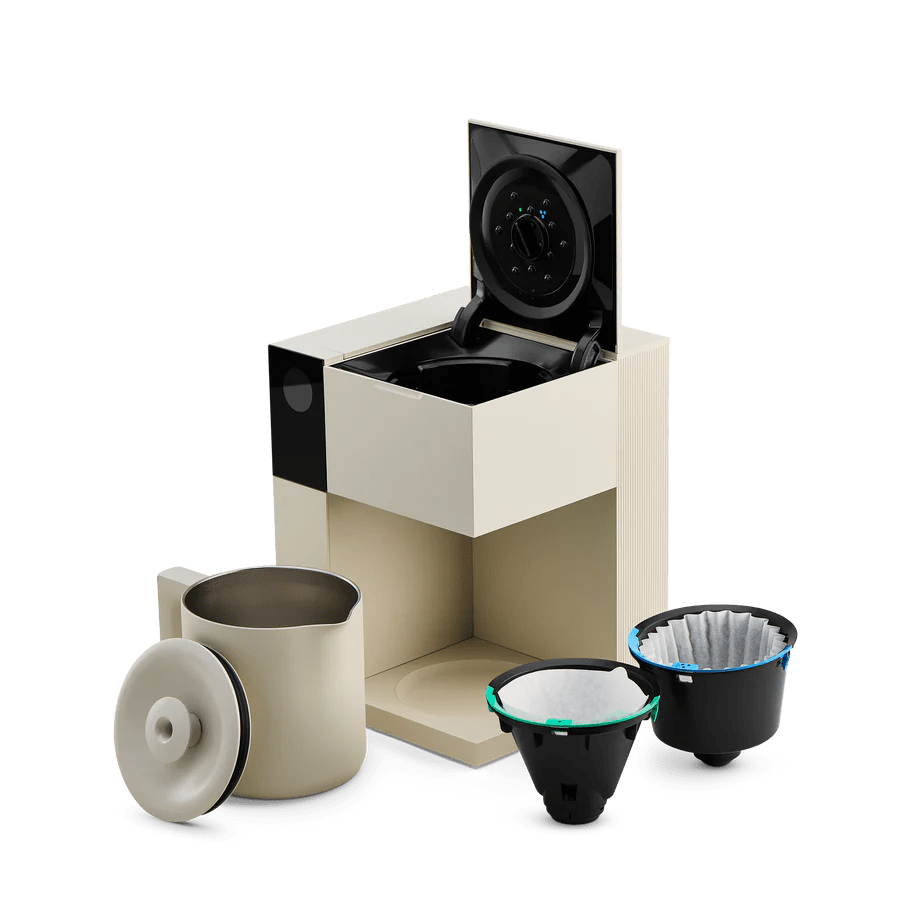
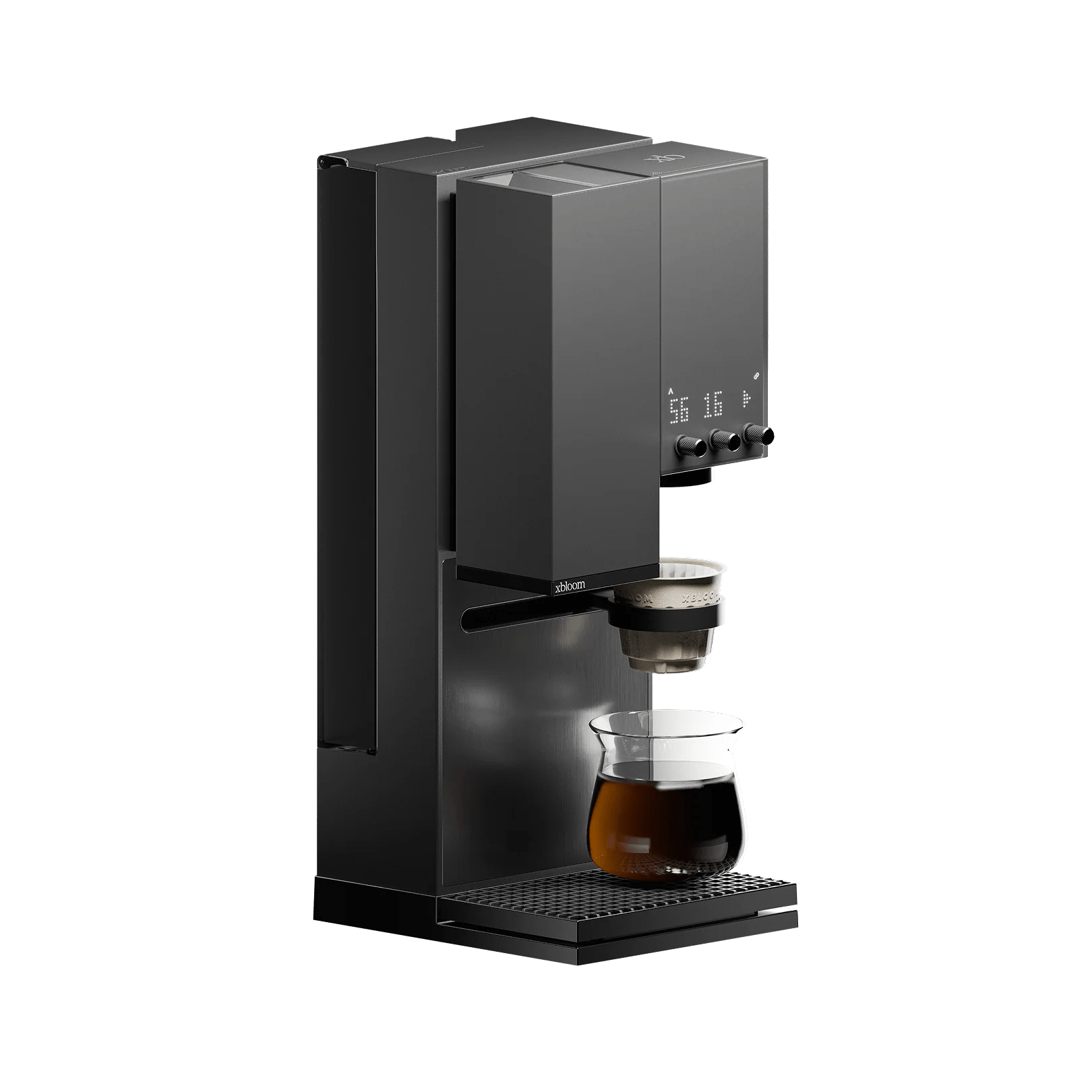
4. Xbloom Studio

Xbloom Studio

The Automation King

The Xbloom Studio isn’t just a coffee maker; it’s a robot barista. It automates the “pour” pattern, moving the water stream across the grounds just like a professional barista would.

It’s for the ultimate coffee geek who wants to experiment with recipes (and share them) but doesn’t want to stand over a kettle at 7:00 AM. It also comes with a built-in grinder that just may be enough in the beginning!

Deep Dive: Lance Hedrick’s Xbloom Studio Insights

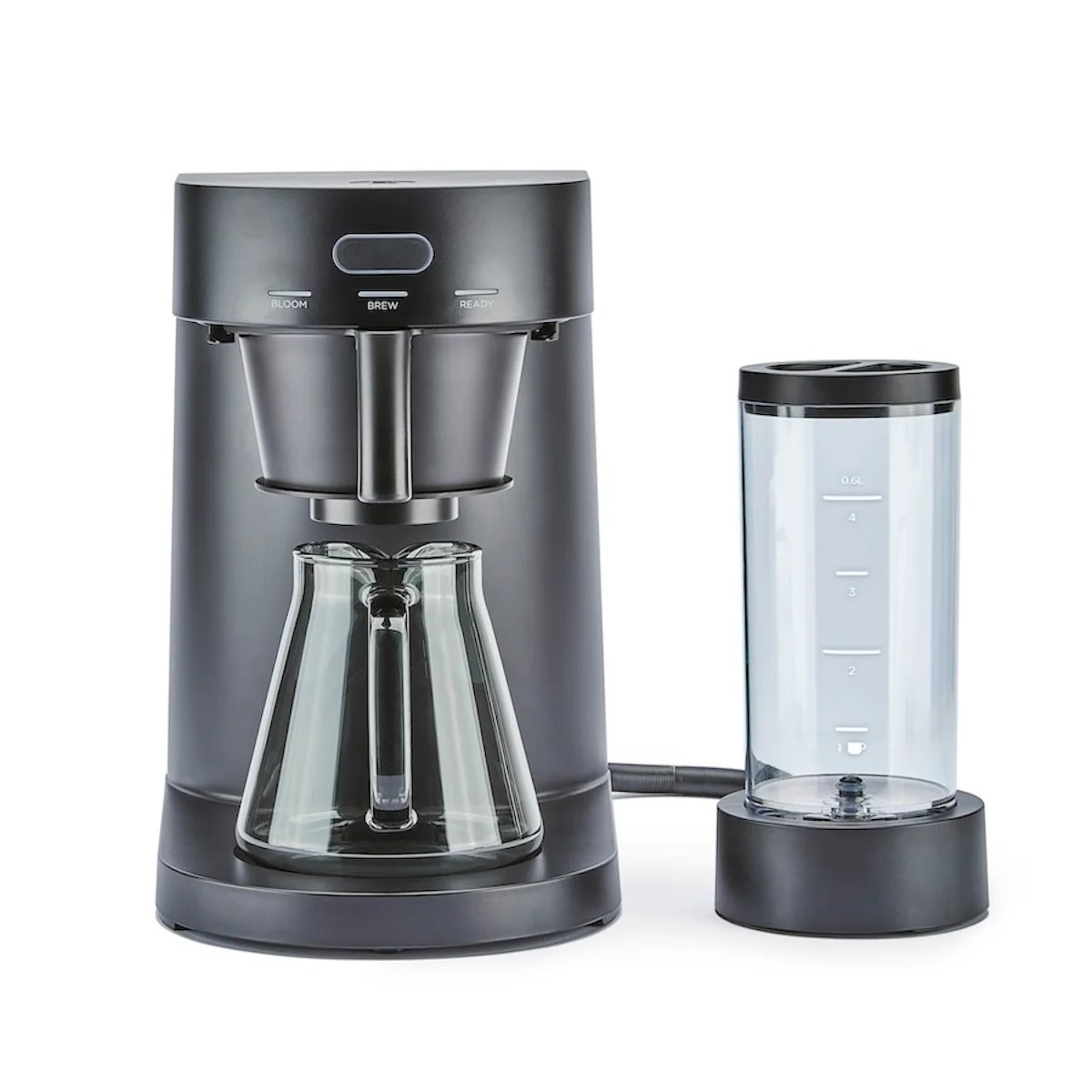
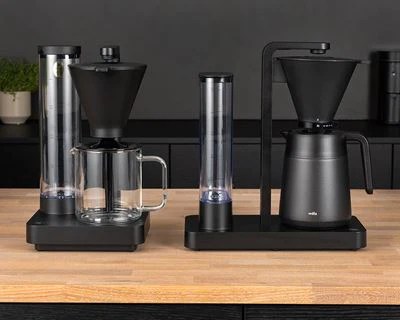
5. Wilfa Performance

Red Dot Winner

Designed in Norway with input from World Barista Champion Tim Wendelboe, the Wilfa Performance features a unique removable water tank. No more pouring water from the carafe (which can contain old coffee oils, don’t do that!) back into the machine. It also has a manual flow control to dial in your extraction.

There is a more compact version available and an advanced model with more controls will be introduced soon.

Deep Dive: James Hoffmann on Wilfa Gear

Wilfa Performance
Compact & Classic

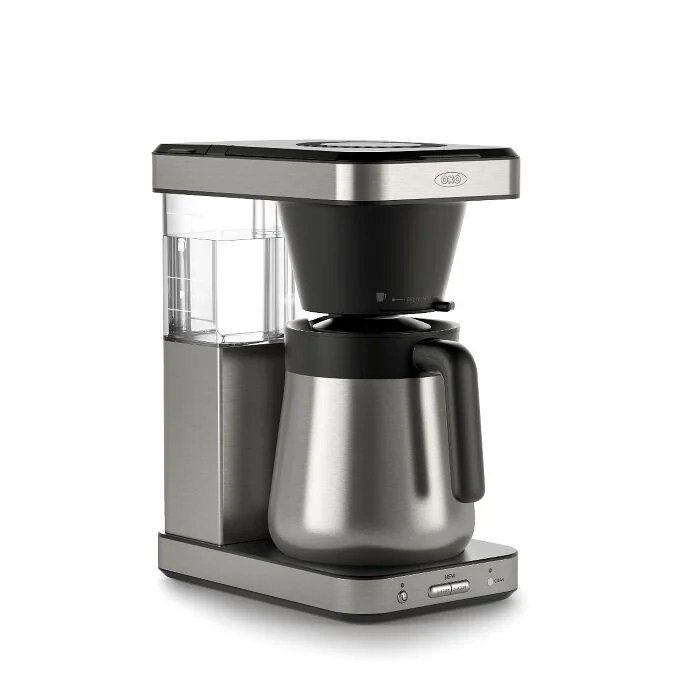
6. OXO 8-Cup

OXO 8-Cup

The Compact Choice

The OXO 8-Cup is great for those with limited counter space. It’s SCA-certified, fast, and features a “podless” single-serve mode that uses a special basket to ensure small brews don’t turn out weak.

Great for families of coffee drinkers, small offices or campus dorms. Their thermos keeps your coffee warm until after lunch!

Deep Dive: Roasty Coffee’s OXO 8-Cup Review

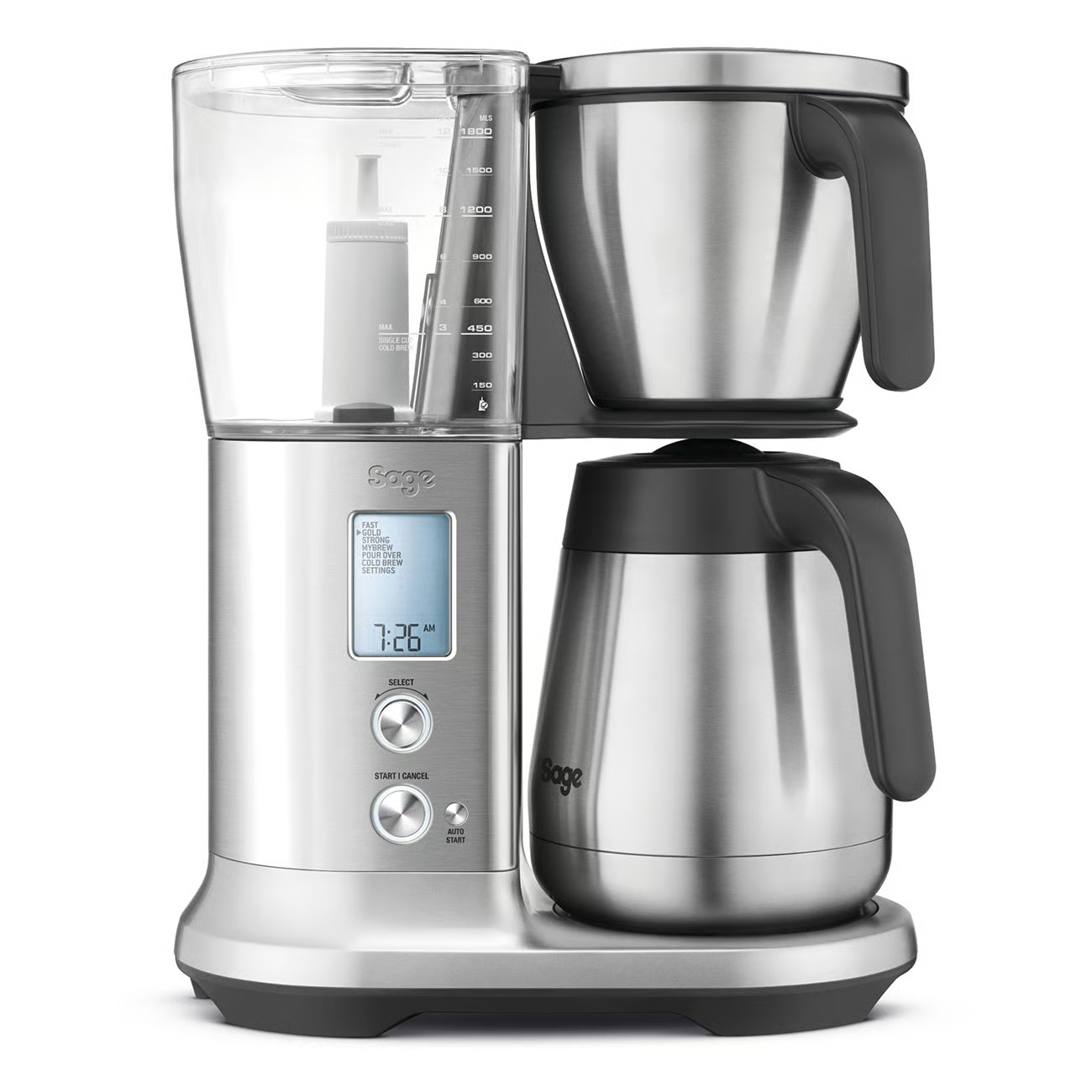
7. Sage Precision Brewer

The Customizer

This machine gives you control over almost everything:

  • bloom time,
  • water temperature (to the degree), and
  • flow rate.

It’s the closest you can get to a “manual” experience in an automatic machine. While the xbloom has a built-in grinder and is best for single cups, this will suit bigger batches. Comes with flat-bottom and cone filter baskets to suit different beans, roast styles and flavor preferences.

Deep Dive: CoffeeBlogKev’s Sage Precision Review

Sage Precision Brewer

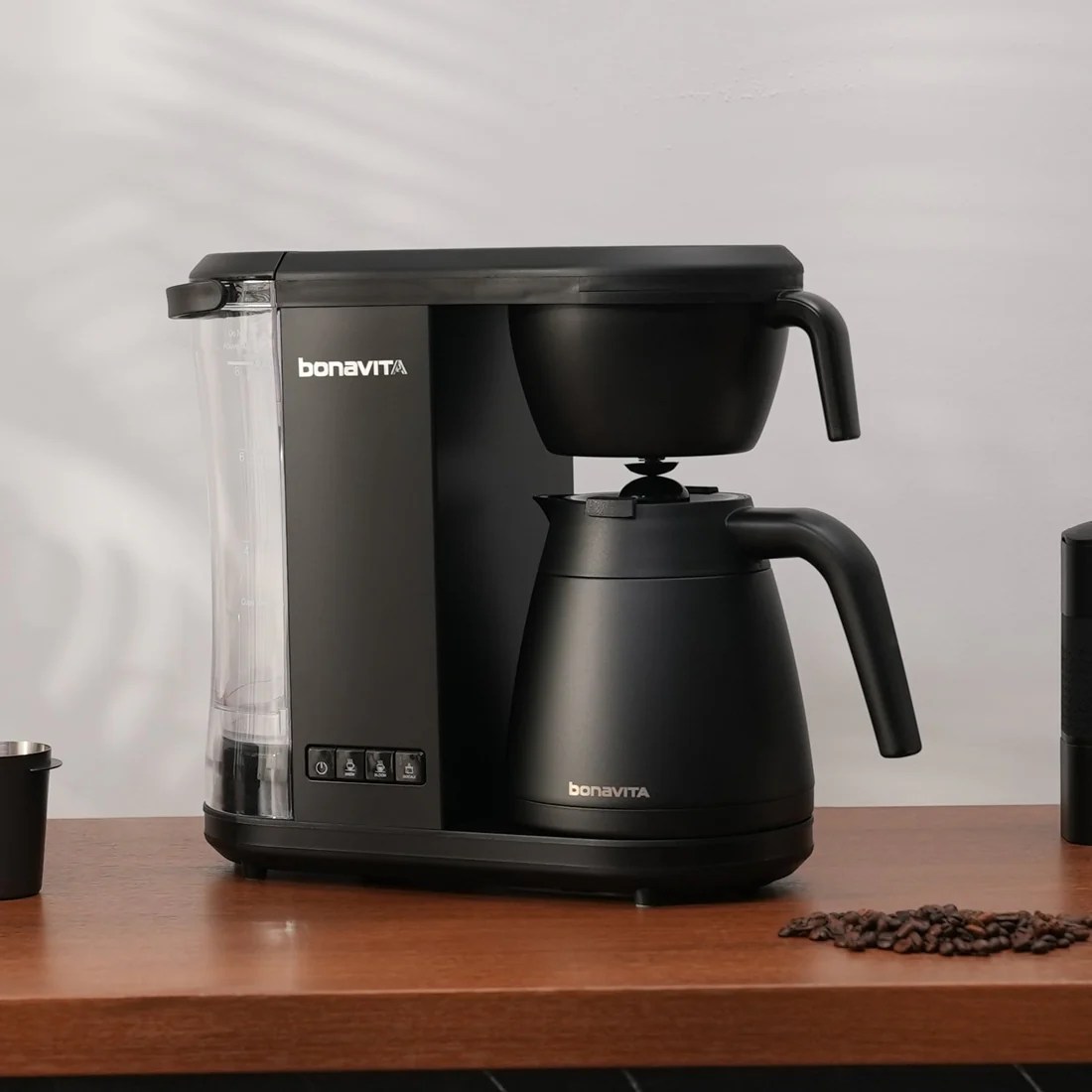
8. Bonavita Enthusiast

Bonavita Enthousiast

The Budget All-Star

The Bonavita Enthusiast is the latest evolution of the legendary Bonavita line. It’s simple, it’s effective, and an affordable way to get into SCA-certified brewing.

It has a dedicated “Bloom” button that pre-wets the grounds, essential for letting those CO2 gasses escape. Can’t go wrong here, it will improve your daily brews.

Deep Dive: ECS Coffee’s Bonavita Enthusiast Review


The Grinders

You can have a € 1,000 brewer, but if you’re using a € 20 blade grinder from the hardware store, your coffee will taste like sadness more often than not. You need a burr grinder for a more consistent particle size. Even the burr’s design matters more than you might think!

1. The Gold Standard: Fellow Ode Gen 2

The Ode Gen 2 is designed specifically for filter coffee (not espresso). Its 64mm flat burrs produce a remarkably clean, sweet cup. It’s easy to use and fast. It’s beautiful and features an ionizer to reduce that annoying static mess. Though a spray of water across the beans beforehand will almost remove it entirely and keep your grinder more clean!

Deep Dive: James Hoffmann’s Ode Gen 2 Review

2. The Versatile Starter: Fellow Opus

The Opus is the Ode’s younger, more versatile sibling. It can grind for everything from coarse French Press to fine Espresso. It’s a great choice if you’re just starting out and want one machine to do it all.

Deep Dive: Lance Hedrick’s Opus Review

3. The Value King: DF54

The DF54 has taken the coffee world by storm recently. It offers premium 54mm flat burrs at a fraction of the price of competitors. It’s a “single-dose” grinder, meaning you only put in the beans you’re about to brew, keeping everything fresh.

Deep Dive: Lance Hedrick’s DF54 Review

4. The Powerhouse: DF64 Gen 2

Stepping up to the DF64 Gen 2 gets you larger 64mm burrs and a more robust build. It’s the “enthusiast’s choice” because you can easily swap the burrs later (to something like SSP burrs) to further customize your flavor profile.

Deep Dive: Lance Hedrick’s DF64 Gen 2 Review

5. The Endgame: Timemore Sculptor 078

The Sculptor 078 is widely considered the current king of filter grinders. Its “Turbo burrs” and variable RPM (you can slow down or speed up the motor) produce a cup clarity that few other grinders can match.

Deep Dive: James Hoffmann’s Sculptor Review

6. The Reliable Italian: Eureka Mignon Filtro

Eureka has been making grinders in Italy for nearly 100 years. The Filtro is their dedicated filter coffee model. It’s built like a tank, is remarkably consistent, and has that classic Italian industrial vibe.

Deep Dive: The Coffee Chronicler’s Eureka Filtro Review


The Secret Weapon — The Kruve Brewler

How do you know if your grind is “medium-coarse”? Is your “medium” the same as my “medium”? The industry relies on subjective experience and sharp eyes. Especially in the beginning, when you are starting out on this “better coffee journey”, it may be hard to judge reliably and repeatedly what’s a “medium” grind and what’s “medium-coarse“?

Enter the Kruve Brewler. It’s a simple ruler-style tool that allows you to measure your coffee grounds in microns (µm).

  • The Free Version: Kruve offers a printable PDF of the Brewler. It’s not as accurate as the metal one, but it’s a great starting point for calibrating your eyes. Build up some experience and compare your friends’ grinders or pre-ground coffee from the supermarket to what you grind yourself. Perhaps you already have a great affordable coffee from a local store, but you’d like to get whole beans and enjoy fresh ground coffee instead.
  • The Metal Tool: For about the price of two bags of specialty coffee, you can get the stainless steel version. It has actual holes for different micron sizes. You just slide your grounds through until you find the match. It takes the guesswork out of “dialing in.”

Deep Dive: Kruve Sifter & Tooling Review


How Much Should You Spend?

Prices fluctuate, and you’ll find different deals depending on where you live in the EU or the US, but here is a rough guide to the investment levels:

  • The Entry-Level Setup:
    ~€300–€400 total.

    Think Bonavita Enthusiast + Eureka Filtro.
  • The Enthusiast Setup:
    ~€600–€800 total.

    Think Moccamaster + Fellow Ode Gen 2.
  • The “Endgame” Setup:
    €1,000+.

    Think Fellow Aiden or Xbloom + Timemore Sculptor 078.

Remember, the goal isn’t to have the most expensive gear.

It’s to have the gear that makes you look forward to your morning coffee. No pressure.

Categories
brewing coffee news

Aeropress celebrates 20 years!

Happy Birthday to Aeropress!

It is 20 years ago when inventor and coffee lover (not a barista) Alan Adler developed the aeropress. His quest was simply to make a better cup of a coffee, more consistently and somewhat quicker…

Today, millions of aeropress coffee makers travel everywhere we go and bring us a tasty, quick, solid cup of coffee. From Arizona canyons, to camp sites in the South of France, to the plains of Eastern Europe, back country of Australia and ocean islands in the Pacific. It is ubiquitous and still going strong!

What used to a single product is branched out into a wider variety of choices, materials and add-ons.

  • Aeropress Original
  • Aeropress Premium
  • Aeropress Clear
  • Aeropress XL
  • Aeropress Go & Go Plus

Very recently, Aeropress have also introduced a manual grinder to match their style and create the option to get everything from one source. Very smart, though it may not be the best manual grinder for your money. That remains to be seen…

Categories
coffee news

Why Metal Vacuum Canisters Keep Coffee Fresh Longer

Coffee lovers understand that the quest for the perfect cup begins long before the brewing process. It starts with the beans themselves – those aromatic, freshly roasted gems that hold the promise of a delightful experience. However, preserving their delicate flavors and aromas can be a challenge.

Disclaimer: I was offered to test an Outpeak canister free of charge, but these are my honest observations and experiences.

Exposure to air, light, heat and moisture can rapidly degrade the quality of specialty coffee beans, leaving you with a lackluster brew. That’s where metal coffee canisters with vacuum technology step in.

The Factors of Coffee Freshness

To truly appreciate the benefits of these canisters, let’s delve into some science of coffee freshness. Air (oxygen) is the enemy of freshness. It reacts with the coffee oils and fragile organic compounds, causing them to oxidize and deteriorate. Light, heat and moisture also accelerate this degradation process.

Traditional storage methods (paper, plastic or glass) offer minimal protection against these elements. This is where metal coffee canisters with vacuum technology shine. These canisters are equipped with a small battery-operated air pump in the lid, which removes most of the air and oxygen from the container at the touch of a button. This significantly slows down the oxidation process and preserves the beans’ freshness over a longer period.

Metal vs. Glass: The Battle for Light Protection

Unlike glass canisters, which allow light and heat to penetrate, metal canisters block harmful UV rays. Light can trigger photochemical reactions that degrade coffee’s flavor compounds. By blocking out light, metal canisters add another layer of protection, ensuring your beans remain fresh and flavorful for longer.

Airtight Seals and Moisture Control

The airtight lids on these canisters serve a dual purpose. Firstly, they maintain the low pressure (-25 kPa and -33 kPa) created by the pump, preventing air and oxygen from seeping back in. Secondly, they keep moisture at bay. By creating a dry environment, the airtight lids contribute to the longevity of your beans.

Real-World Experience: The Outpeak Coffee Canister

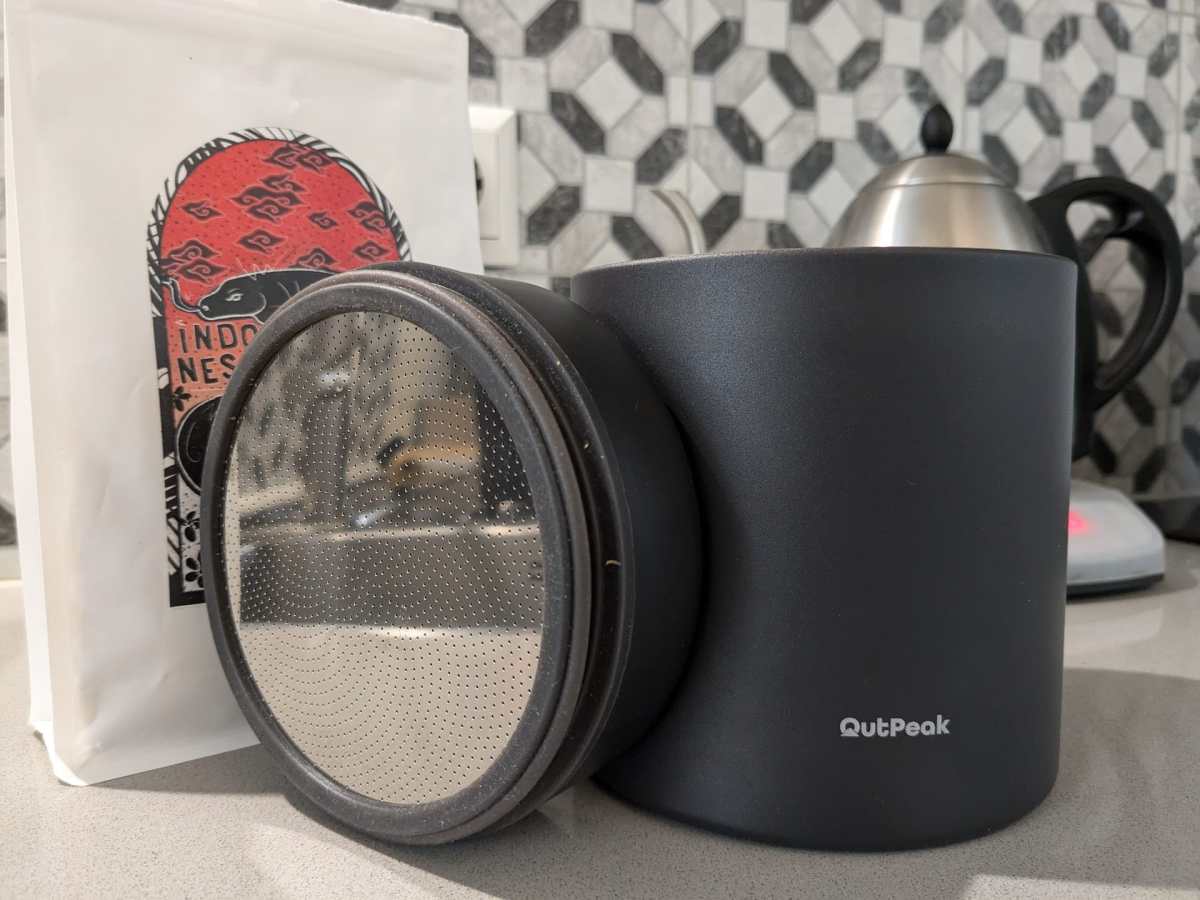
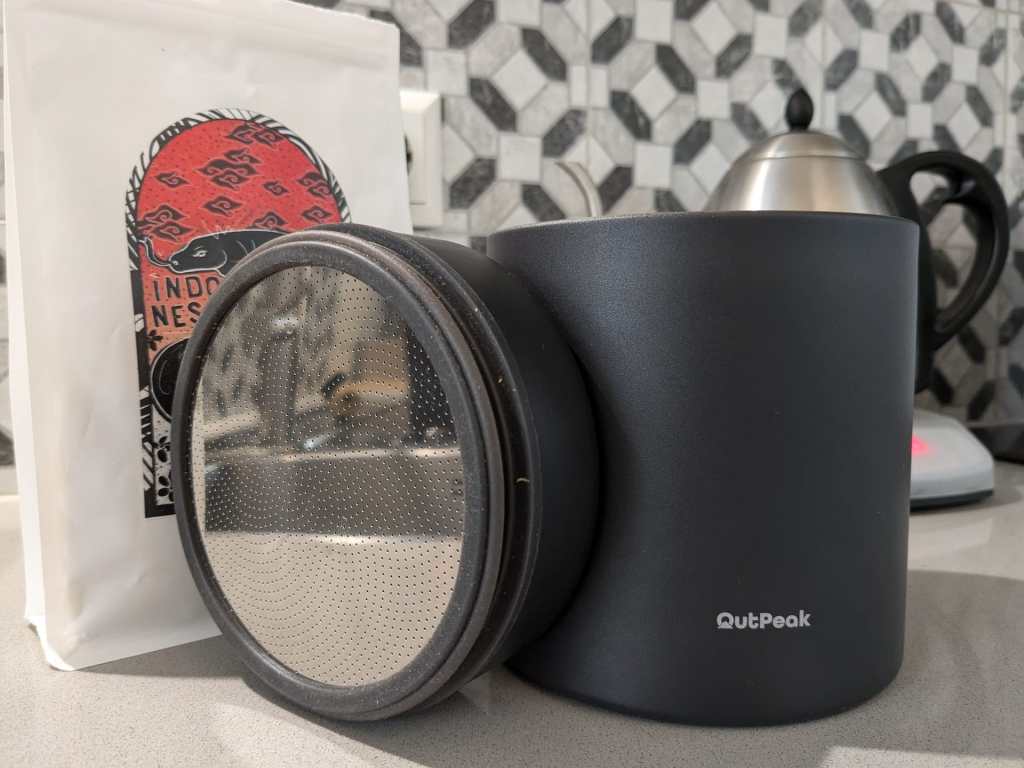
outpeak coffee canister with a bag of beans and water kettle in background

I recently had the opportunity to try the Outpeak coffee canister and the results are encouraging! As someone who goes through a 250 gr bag of coffee beans in about a week, I’ve always been frustrated by the rapid decline in freshness, particularly with the more expensive specialty coffees.

By the end of the week, those unique and vibrant flavors would fade, leaving me with a less exciting cup.

With the Outpeak canister, I noticed a remarkable difference. Even after a week, the specialty coffee beans retained more of their distinctive characteristics. The flavors were brighter, the aromas more pronounced, and the overall experience more satisfying. While the difference may be subtle, it’s undeniable that storing beans in a vacuum, away from heat, light and moisture, has a noticeable impact on their longevity.

The Outpeak canisters offer a built-in USB-C charger port and a full charge lasts more than 4 weeks, in my experience. I fully charged the lid with pump upon arrival and haven’t had the need to recharge it yet. That’s great! I will update this post with a more precise duration, when I need to recharge.

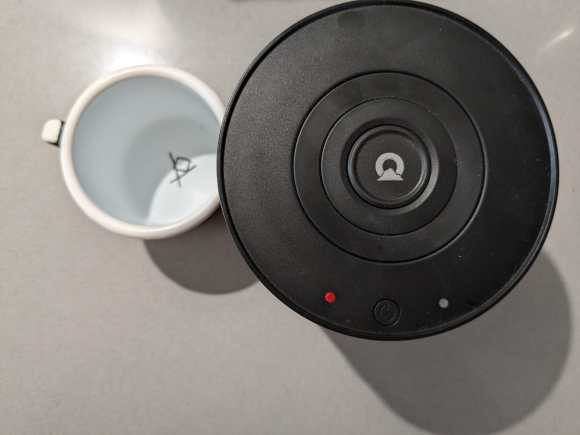
outpeak canister from above with a cup from the Barn for size comparison
Top view of the Outpeak metal coffee canister

Size does matter!

Outpeak offers metal canisters in three sizes:

  • 130 gr
  • 500 gr
  • 600 gr

I had the good fortune of testing the 500 gr canister. It comfortably fits a fresh bag of 250 gr coffee, obviously. I get fresh coffee delivered every two weeks and most roasters ship bags of 250 gr, sometimes 350 gr.

I found two minor issues with this version of the canisters that I hope Outpeak can improve in an updated version:

  1. The diameter of the lid is slightly too large (ca. 12.5 cm or just under 5″) for my (small) hands, making it somewhat hard to get a good grip to open it. Letting air in twice helps.
  2. The 500 gr canister is a little big when you only store 250 gr. That leaves a lot of open space inside. Perhaps 300 gr, 550 gr and 1100 gr versions are more inline with the amount of coffee most people need to store on their home countertop.

Getting a fresh bag every week is very practical anyway!

Investing in Long-Term Freshness

For coffee enthusiasts who value quality and freshness, metal coffee canisters with vacuum technology are a worthwhile investment. While they may be slightly more expensive than traditional storage options, the benefits they offer are undeniable. By preserving the delicate flavors and aromas of your more expensive specialty coffee beans, they ensure that every cup you brew is a great experience.

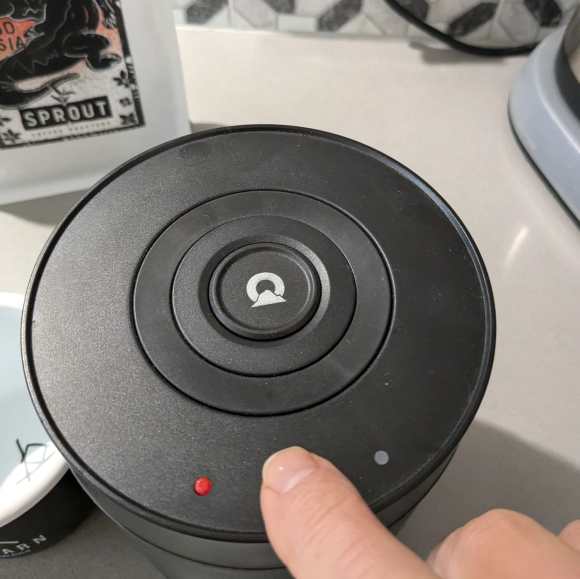
pressing the vacuum button on an outpeak coffee canister
Pressing the vacuum button on the top of the lid.
In the middle the large vent to let air back in when you open it.

If you’re tired of your coffee losing its luster after just a few days, it’s time to upgrade your storage game. Metal coffee canisters with vacuum technology, like the Outpeak canister, offer a simple yet effective solution. By creating an optimal storage environment for your beans, they unlock their full potential, allowing you to savor the true essence of freshly roasted coffee for longer.

Remember, the quest for the perfect cup starts with the beans. Treat them with the care they deserve, and they’ll reward you with an unforgettable coffee experience.

Update 1 Nov 26th 2024:
Well, I have stored some decaf beans in the Outpeak vacuum canister for several weeks now. I wanted to test the preservation of flavors because decaf beans “spoil” much faster than caffeinated beans. We don’t know why yet. After being kept in vacuum for almost 6 weeks, the beans brewed a great coffee on my Hario V60. Very comparable in taste to a fresh brew when the beans are less than a week old! That’s wonderful news.

Update 2: Fellow has just launched opaque vacuum canisters (Atmos) as well at a comparable price to Outpeak’s offering. Good to see vacuum storage of beans in metal containers is becoming more popular. I know glass is prettier but it’s worse for the preservation of flavors.

Categories
brewing coffee news

Unlocking Coffee’s Secret Chemistry

Hello, fellow coffee nerds! ☕️🔬

I have always wondered how my coffee brew gets its zing. What makes up that “Golden Cup” of coffee? Why is one cup extraordinarily great and the next good but not quite that good, even though you used the same beans, same grinder, same water, same brew method?

The art of being a good barista is that you’re able to make a great coffee every single time. Turns out it’s not just about coffee beans and water, it’s actually a whole chemistry lab in your cup! 🧪

Five years ago, the Simonelli Group reached out to the Coffee Science Foundation, asking if they could somehow work together on cutting-edge espresso research? That open question in 2019 led to the start of an exciting multi-year research project by Professor Christopher Hendon at the University of Oregon, that wants to measure the chemistry that goes on in your cup of espresso.

That initial conversation led to a truly exciting initiative—a multi-year research project aimed at measuring espresso chemistry, correlating those measurements to sensory attributes, and laying the groundwork for science-based useable tools for the coffee industry.

Long story short: scientists are using electricity to break down what’s in your espresso. How do chemical compounds affect the taste of the cup of coffee and the flavors that you experience? 🤯

We all know coffee can taste amazing, but it can also be a rollercoaster of flavors. Is it the beans, the roast, the water, or your barista skills? 🤔 Turns out, it’s all of these things, plus a bunch of tiny molecules we’re just starting to understand.

Traditionally, we’ve always measured coffee strength using TDS (Total Dissolved Solids) – basically, how much coffee stuff is dissolved in the water. Coffee is still 98-99% water. But here’s the thing: you can have two cups with the same TDS that taste totally different. 🤯 That’s because TDS doesn’t tell us what kind of stuff is dissolved, just how much.

This is where electrochemistry comes in. It’s like using a tiny electric probe to see what molecules are in your coffee and how many of them there are. Different molecules react to electricity in different ways, so we can use this characteristic to create a kind of “fingerprint” of your brew.

This is super cool for a few reasons. First, it can help us understand how things like roast level, brewing time, and even the type of beans affect the flavor. 🔬 Second, it could lead to new tools for baristas to dial in their espresso perfectly every time. 🤩

The research is still ongoing, but the possibilities are endless. Imagine being able to measure the exact chemical makeup of your coffee and adjust your recipe to create the ultimate flavor experience. 🤤

So, next time you’re sipping your latte, remember: there’s a whole world of science behind that deliciousness. And who knows, maybe one day you’ll be using electrochemistry to brew the perfect cup! ☕️😎

Source: Amped Up: Using Electricity to Detect and Quantify Molecules in Brewed Coffee | 25, Issue 18

Categories
brewing coffee news

Brewing Coffee with Ultrasound

A site called LabDownUnder has a blog about research from Australia that explores using ultrasound to brew coffee. In other words, the high-pitched sound waves used in medical imaging can also make a cup of coffee!

They wanted to see if ultrasound could change how much of the good substances (such as caffeine, oils, and flavors) gets extracted from the coffee grounds.

Coffee Sonication

To test this, they brewed filter coffee with and without ultrasound, changing things such as how much coffee they used, the water temperature, and how long they used the ultrasound. They then measured the concentrations or quantities of antioxidants, caffeine or oils, and the specific smells and flavors in the brewed coffee. They also judged what the coffee looked like – its color and how much foam it made.

Ultrasound can be used to extract important compounds in the brewing process through what is known as cavitation. As the sound waves travel through the water surrounding the grounds, differences in pressure create microscopic bubbles which themselves expand and collapse.

LabDownUnder

The Findings

They found that ultrasound helped get more caffeine and oils out of the coffee grounds. This is probably because the ultrasound waves shake things up at ultra fast rates, making it easier for the compounds in coffee to dissolve into the water. They also found that ultrasound helped extract more of the compounds that give coffee its aroma, which means the coffee might smell even better!

However, they noticed that ultrasound seemed to decrease the amount of antioxidants in the coffee, especially when they used it for longer or at higher temperatures. Also, the coffee brewed with ultrasound had a lighter color and less foam, which they think is because of the extra oils. These oils are called triglycerides.

While traditionally the crema floats on top of the coffee, ultrasound actually emulsifies the triglycerides (oils) that make up the crema layer with the beverage, mixing them together. This created a milky-looking beverage with caramel tones.

The Results

Overall, the research suggests that using ultrasound to brew coffee could be a way to make coffee with more caffeine, a richer flavor, and a stronger aroma. However, it might also have less antioxidants and a slightly different appearance. More research is needed to fully understand the potential of ultrasound in coffee brewing.

Dr Francisco Trujillo of the School of Chemical Engineering of UNSW was chief investigator behind the study. The original article has a link to a video made by the researchers, that I cannot link to without permissions. They also show a photo with a color comparison between French press and sonicated coffee. The sonicated coffee looks like it already has milk added to it, when it doesn’t! Check the link to the blog at the top.

Useful links

Categories
brewing coffee news travel

Best coffee for on the road

Cold Brew Coffee: Elevate Your Travel Game

For those who love both coffee and adventure, cold brew coffee is a game-changer. It’s not just about the delightful aroma that fills your car, but the complex flavor profile that unfolds over time as you are driving and keep enjoying that wonderful flavor. Unlike traditional coffee, cold brew boasts a smoother, less acidic taste with a lingering finish that keeps you invigorated throughout your journey.

The cold brew method extracts flavor from beans using only cold water (< 20 C/70 F) and a very long brew time. This way, most of the harsh bitters and oils in roasted coffee are not dissolved which results in a coffee with a softer balance of flavors.

https://sca.coffee/

Unleashing the Magic of Sumatra: Indonesia Sumatra Organic

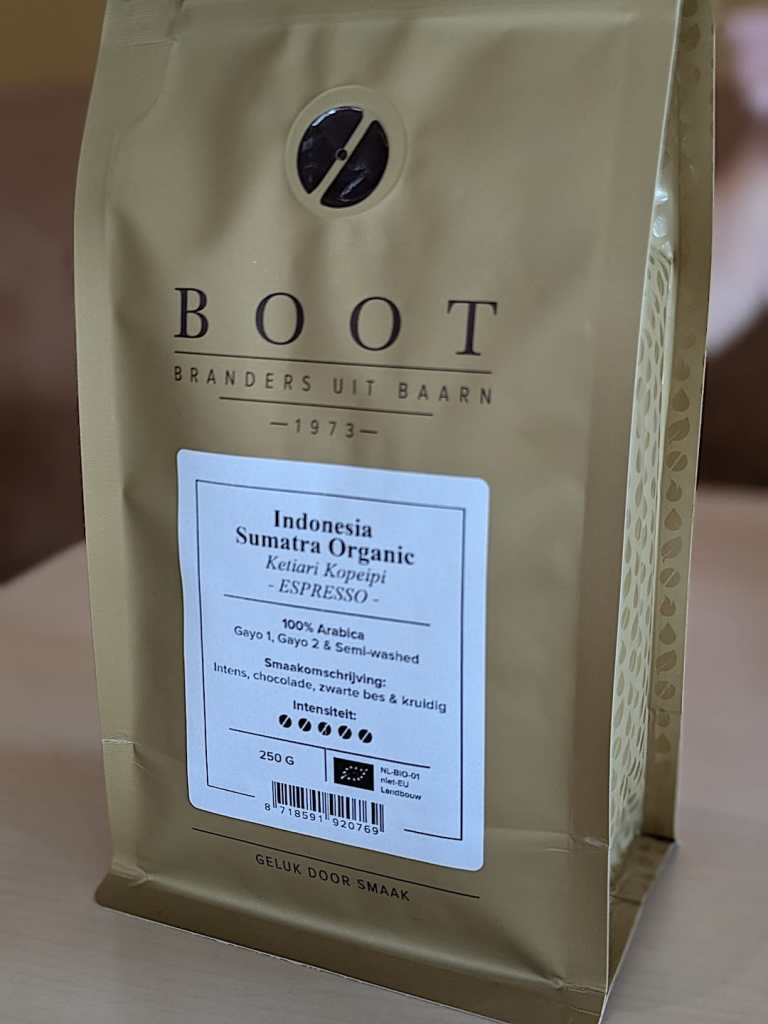
Indonesia Sumatra Organic beans from Boot Koffie

The key to an exceptional cold brew lies in the bean selection. I highly recommend the Indonesia Sumatra Organic beans from Boot Koffie, but you can also find these at Whole Foods and in various online shops. These beans, grown in the rich, volcanic soil of Sumatra in Indonesia, yield a full-bodied, medium-dark roast with a distinct chocolatey undertone and subtle spice notes. This unique character sets them apart from the milder Colombian varieties.

Crafting the Perfect Cold Brew

Achieving the perfect cold brew is an art form and highly subjected to your personal tastes. Here’s my preferred recipe:

  • Ingredients:
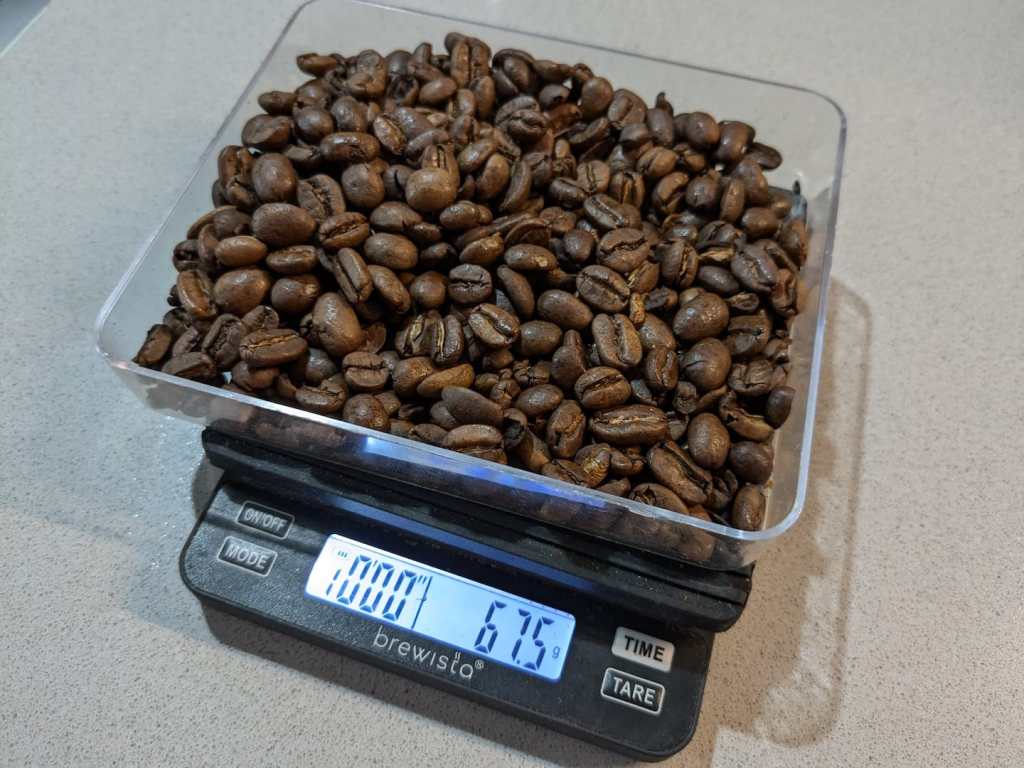
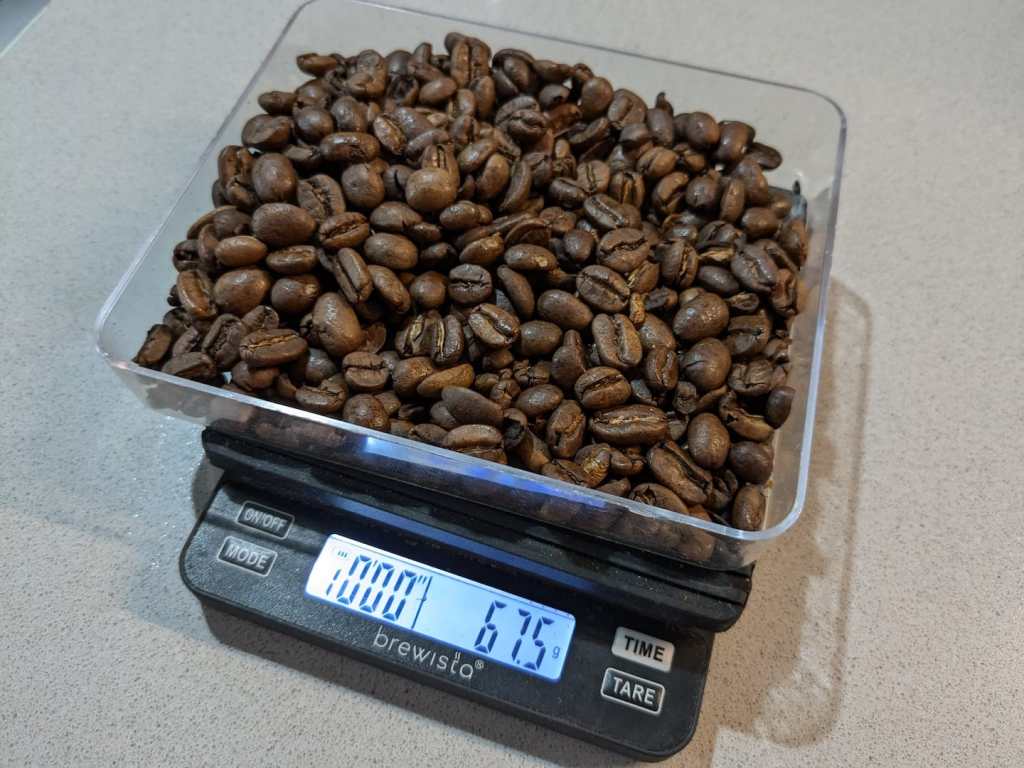
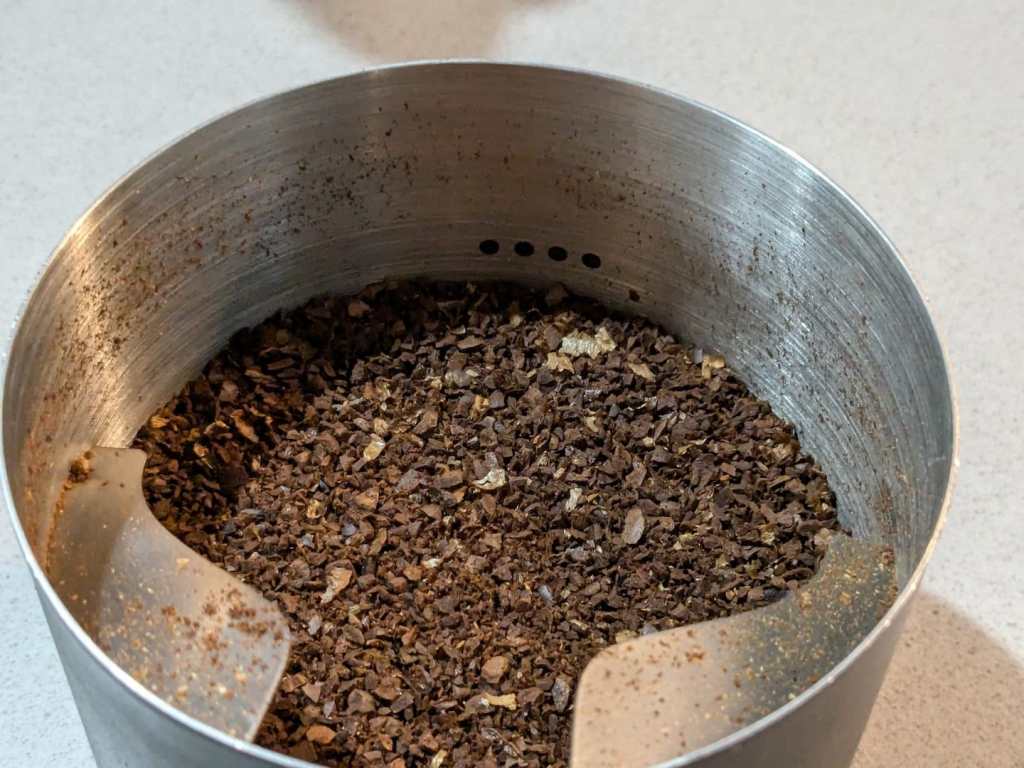
    • 67.5 grams coarsely ground Indonesia Sumatra Organic coffee beans
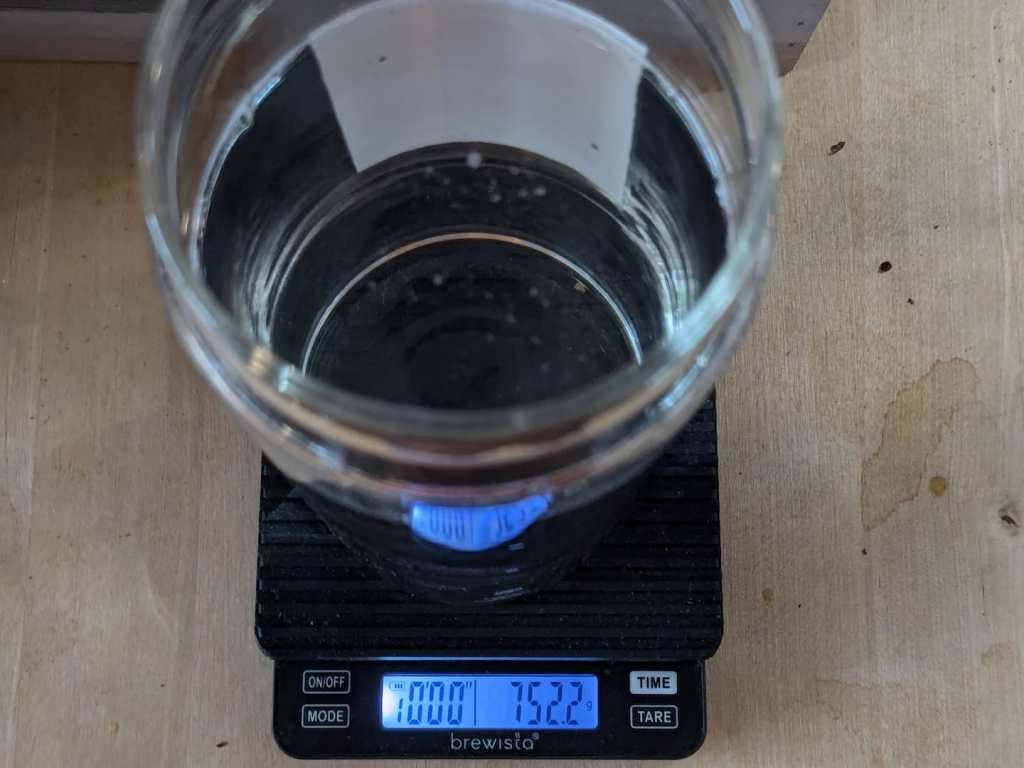
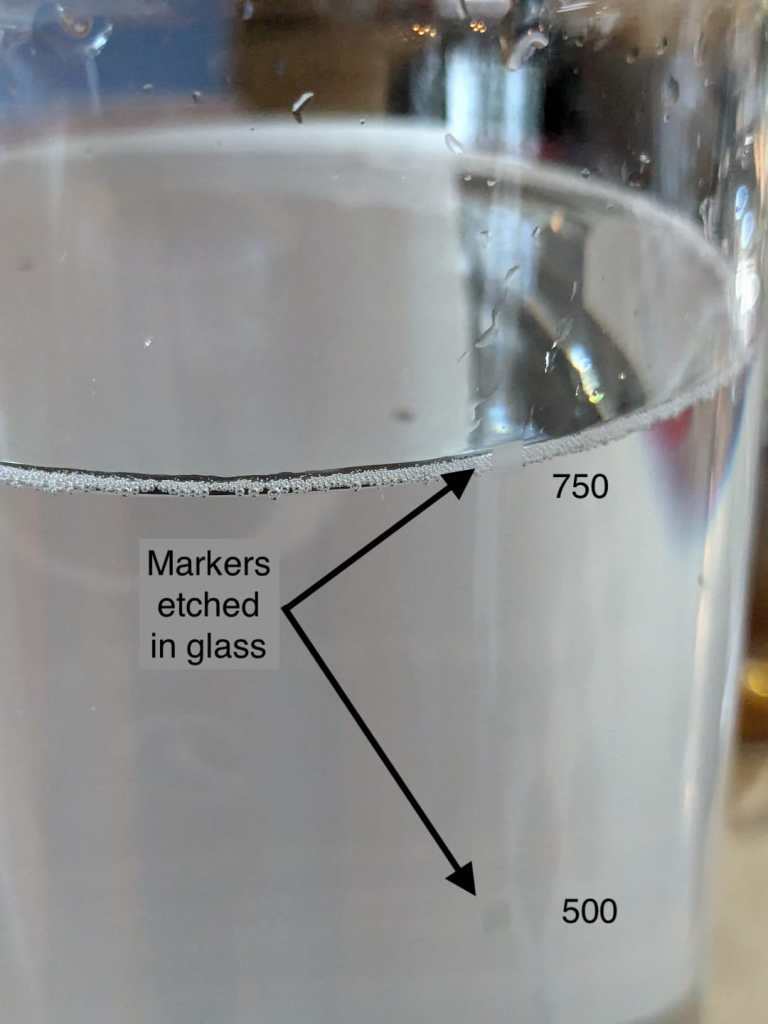
    • 750 ml filtered water
  • Brewing Process:
    1. Combine the ground coffee and water in a container. (5-10 min)
    2. Steep in the refrigerator for 12-24 hours.
    3. Filter through a fine-mesh sieve or cheesecloth. (5 min)
    4. Savor your expertly crafted cold brew.
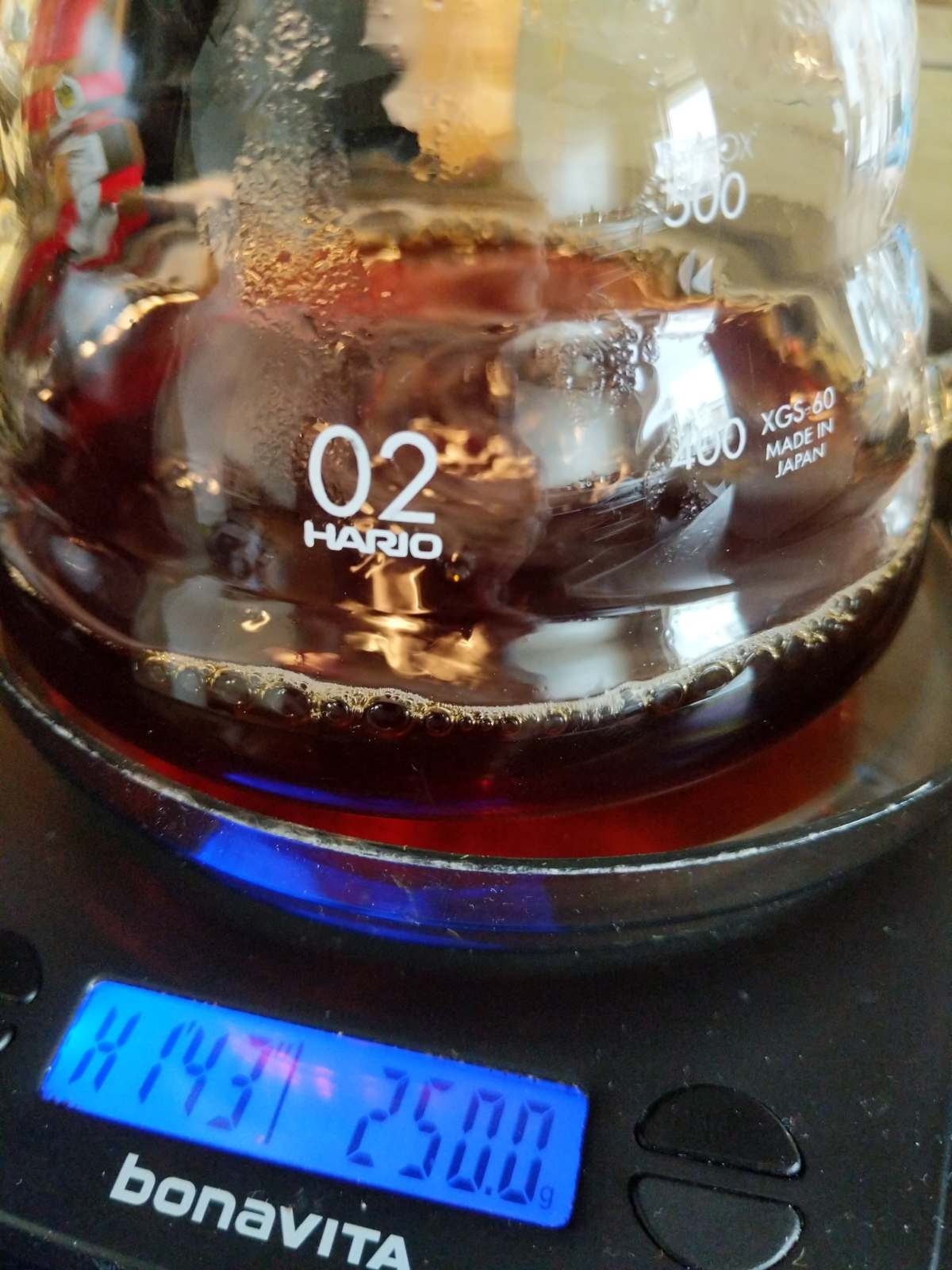
67.5 gr of coffee beans on a scale

While 12 hours yields a flavorful brew, the full spectrum of flavors (particularly the chocolate notes) emerge after a 24-hour steep. Depending on your personal style, you can vary the brew time accordingly. If you like it, that was a good recipe!

A Word of Caution: The Caffeine Kick

Cold brew coffee is known for its potency, packing upto 2-3 times as much caffeine as an espresso or drip coffee. Opt for smaller servings to enjoy its benefits without overdoing it.

Also consider the beans you are using: Robusta beans have 2x the caffeine of Arabica beans! Cold brew is ideally suited for Robusta beans, in my opinion, because the lack of heat means you don’t extract as much of the bitters.

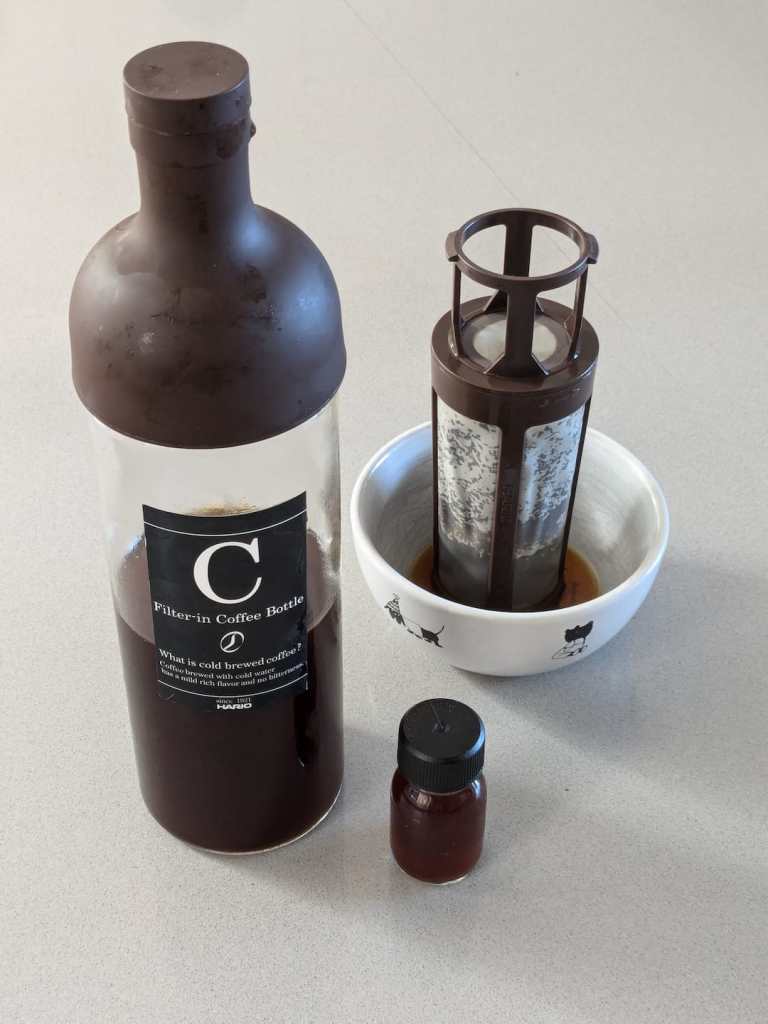
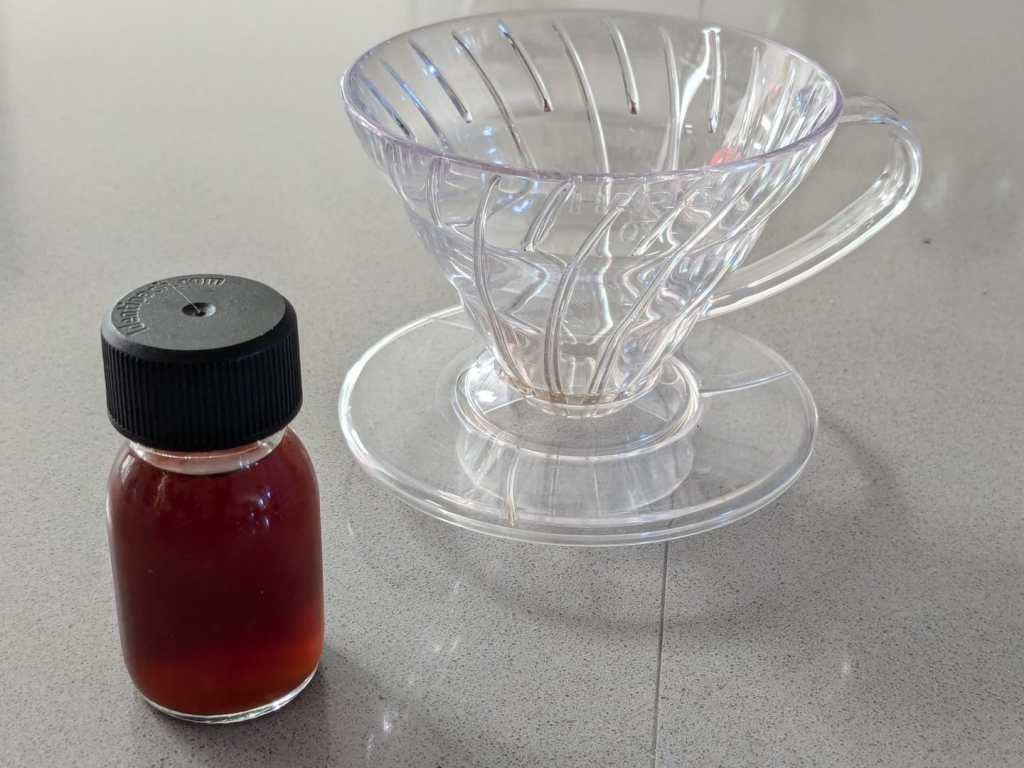
For convenience, I recommend the small, glass, reusable sample bottles available at identipack.com, for instance. Mine serve 50-60ml of coffee.

They’re perfect for pre-portioned servings, allowing you to enjoy your cold brew on the go. As a bonus, you can conveniently open a bottle by yourself, while everyone else in the car is sleeping p[eacefully!

In Conclusion

Cold brew coffee elevates your travel experience. Its alluring aroma, complex flavor profile, and sustained energy boost make it the ideal companion for those on the move. Explore the world of cold brew with the Indonesia Sumatra Organic beans and discover a new level of coffee enjoyment.

Equipment & Gallery

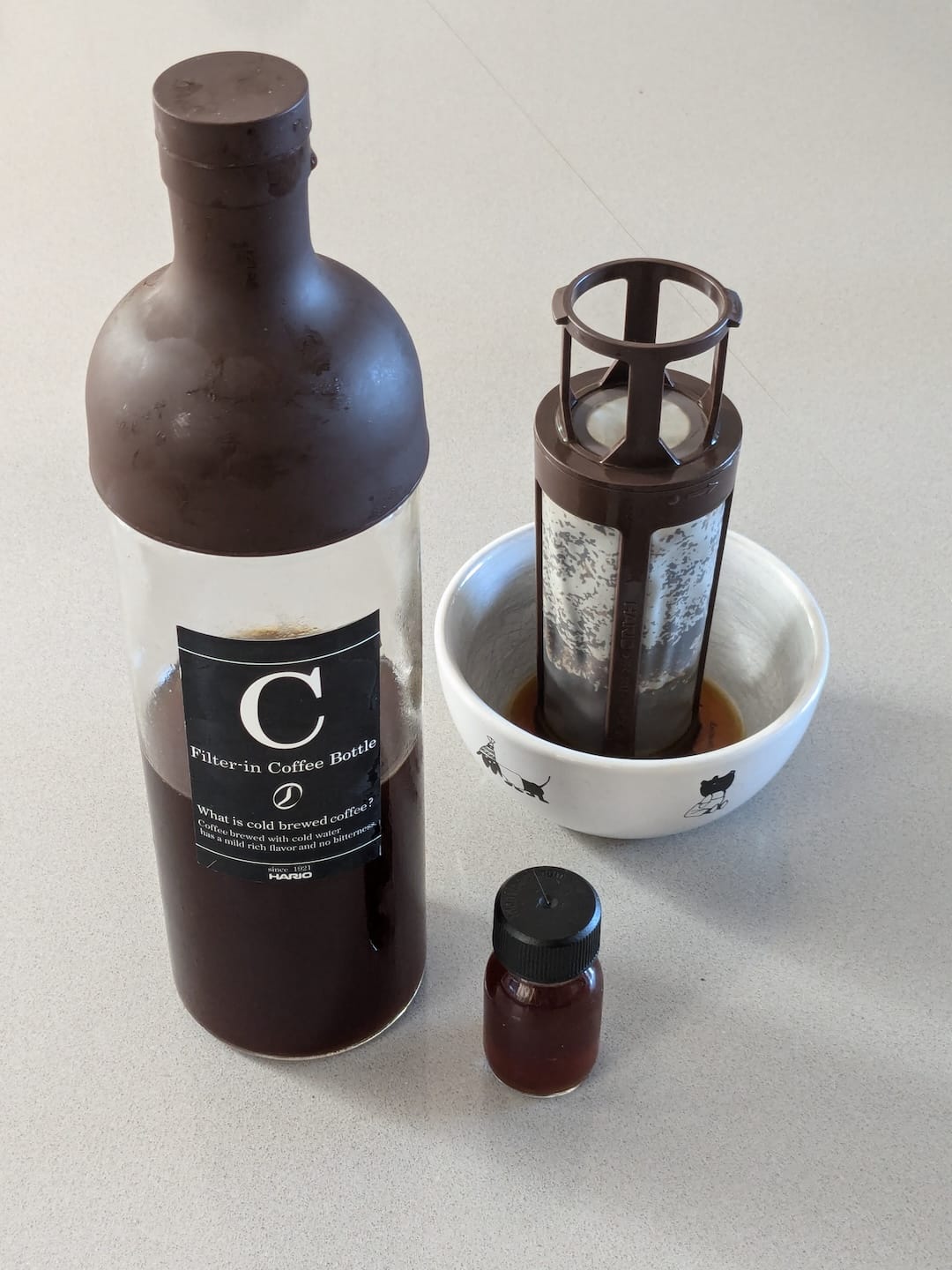
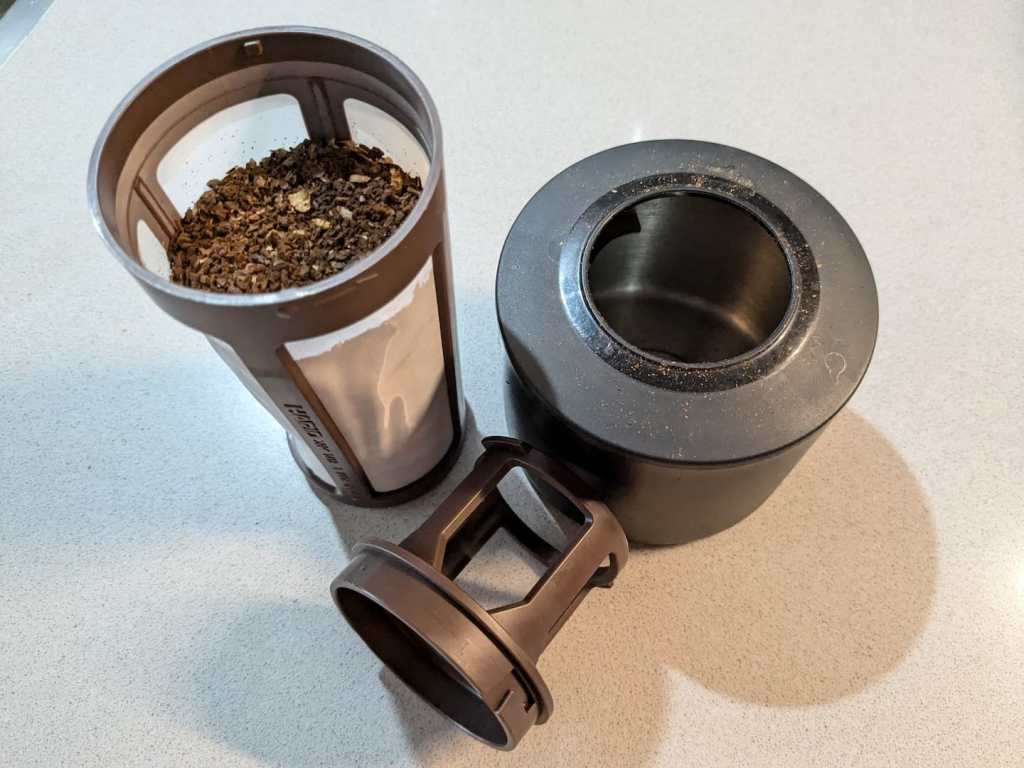
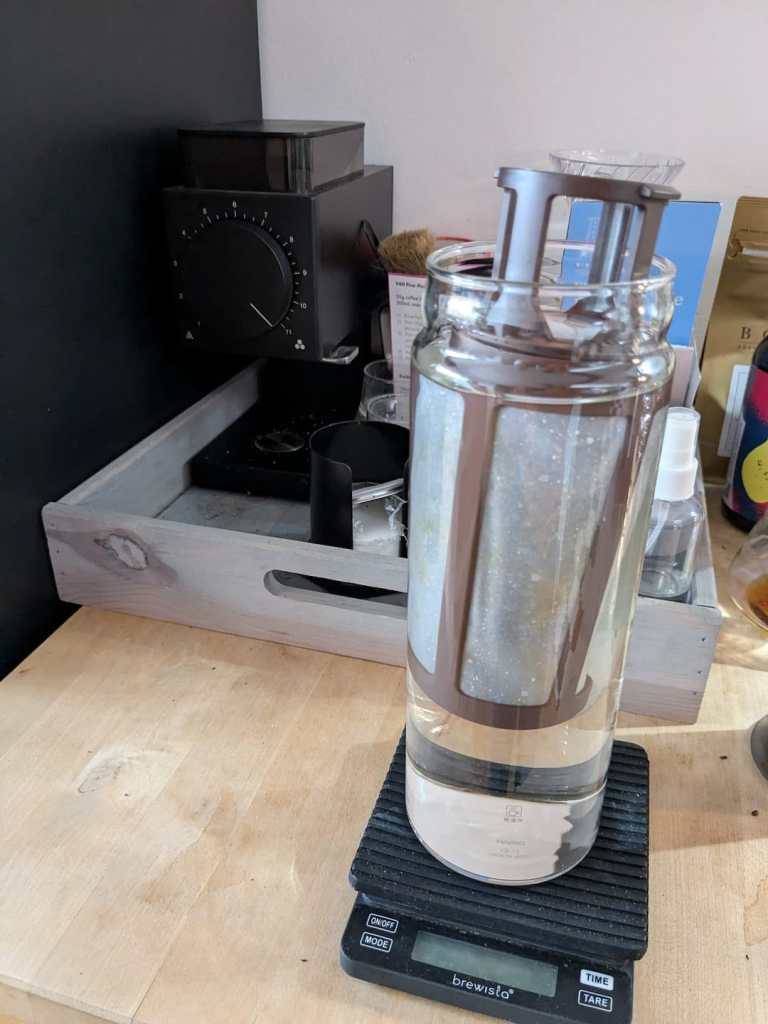
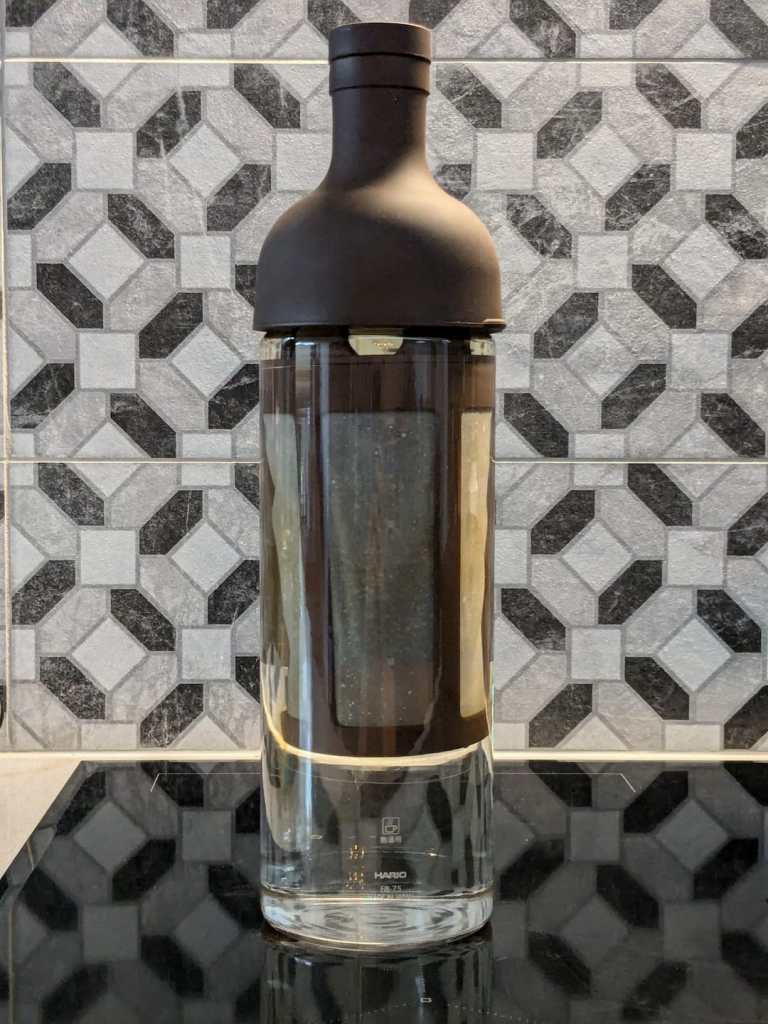
Below you can see a set of photos of how I prepared my cold brew. The brewer I use is the simple, elegant but great Hario Filter-In-Coffee bottle, available everywhere for approx 30-40 Euros. There is a larger version, but be careful: it holds so much cold brew you will need to notify your physician of what you are doing! (A joke, do not drink a liter of cold brew!)

Categories
brewing coffee news

Best coffee machine for home baristas

I get asked this question a lot: “What’s the best coffee machine for at home?” Just like: “What’s the best coffee to buy?”

I understand why people ask it, though. They want an experienced opinion. I’ve tasted more coffees than most. Unfortunately, it is not that easy.

To answer the question: “What is the best coffee machine to use at home?”, I would first need to know what kind of coffee you prefer? In other words, the drink itself:

  • Black or milk-based coffee?
  • Espresso or filter coffee?
  • Drip, pour-over or submersion coffee?

To choose the best coffee machine for making coffee at home, you need to find your favorite style next. Then find the best machine that suits that style. That said, I can give a couple of recommendations for good coffee machines for your home. These machines make a great cup of coffee every single day.

Most people either prefer espresso-based coffee or filter coffee. We have all grown up to become accustomed to dark roasted, fairly bitter tasting coffee (with or without milk). With that in mind…

Espresso machines

When buying any espresso machine, do pay attention to the diameter of the portafilter. It is a handle-like device that holds the coffee grounds and attaches to the espresso machine’s brewing group. The portafilter plays a crucial role in the extraction process, determining the flavor, strength, and quality of the espresso shot.

Ensure that this is 53 – 58 mm, which are the industry standards. It should hold 14 – 24 gr of ground coffee. Anything smaller will also work but it will be much harder to find parts, accessories and additional tools. And you will get more tools! LOL

Fully automatic

Don’t get a fully automatic machine! Ever! Seriously.

My biggest complaint about fully automatic espresso machines is that they grind the beans for you without any useful form of manual adjustments. The manufacturer will never include a great grinder. That would make the machine too expensive. Always get a separate grinder, it will last you at least 10 years.

These automatic machines focus on convenience, speed and not flavor. So in my opinion, this is always a setback that I can’t except.

If you prefer speed and ease over flavor, then choose either of these:

Sage and Breville are essentially the same Australian company with different brands for Europe and US/UK (resp.)

Wikipedia

The Pro version lets you tamp the coffee yourself. The Impress version has a built-in tamper and will do it for you. ¯\_(ツ)_/¯ Since tamping affects taste much, I prefer to do it myself.

I personally don’t like a Jura machine. Although it’s pretty, it’s too limited and maintenance is expensive. Sorry Jura.

Semi automatic

These machines are more my style. They automate some of the actions but not all. This gives you more control over the espresso that’s brewed. Note that a great espresso maker will cost at least 1250-1500 Euro/Dollars because of the quality of the parts and build. That does not include a grinder!

Your biggest choice depends on how you drink your coffee: black or white?

If you prefer black coffee (an espresso, long black or americano), your life is easy: choose a single boiler machine. They’re a lot cheaper.

Do you (or your partner) prefer white coffees? Think about how many cappuccinos or lattes you will make? For one or two each time, it’s fine to get a single boiler machines as well. First froth your milk then brew the espressos! If you drink more coffee daily or host regular dinner parties, then you should opt for a dual boiler machine. That way, you can start frothing the milk while the espressos are still brewing.

La Pavoni stradivari lever machine
La Pavoni Stradivari

Manual espresso machines

A category on their own for this is where innovation really shines.

Superkop is a brand new, solid, durable design and fully non-electrified. It will work when the power is out, on the road or camping, when disaster strikes and zombies invade our homes! It only needs hot water and ground coffee. It will last a lifetime with only a few replaceable moving parts.

The lever-operated La Pavoni is a classic machine! A gorgeous design that does require some practice and getting used to. Once you do, it is the holy grail of many baristas. Beautiful to look at and room for creativity to add you own special twists when making an espresso.

The Flair revolutionized the world of home baristas when it appeared on Kickstarter. It’s cheap, easy to make, easy to use and a great way to get into making better coffee at home. Quality has improved a lot since and you can’t go wrong with it!

Filter coffee machines

moccamaster KGB select wireframe
Moccamaster KGB Select

The traditional home coffee makers have received a ton of innovations and improvements over the last 3-5 years. Coffee making, filter coffee at home, has drastically improved since the 80s and 90s. Designer machines, premium options, gorgeous materials and very reliable manufacturing mean that today’s coffee maker is light years ahead of those our parents and grandparents used.

I can recommend one of these four machines:

Moccamaster has been the go-to coffee maker for many official coffee competitions and conferences. They’ve been around for 40 years and are rock solid, well built and easy to maintain or repair.

You can also refer to the SCA certified list of approved coffee makers. The Specialty Coffee Association takes their work very seriously. Every machine is thoroughly tested and retested to ensure it makes a great cup every single time, all the time.

I hope this answered some of your questions and gave you a good start to selecting the best coffee machine for your home. Maybe it just confused you more and made you reevaluate what it is you want. Then at least I did my job. Trust me when I say that you will not find the best machine in one go. I will take several iterations before you find what works best.

Most of all, your taste for coffee will change and that brings new machines, new coffees, new equipment and new kitchen setups. If you can, buy second hand on Ebay or your local penny savers. Closed restaurants often sell off their equipment to pay debts. That’s a nice way to get a premium machine for less.

PS: If you follow my advice above and do not buy a fully automatic machine, you will need to also buy a good grinder. That’s a whole new subject, but for starters I can recommend watching James Hoffman’s review video: