Categories
brewing coffee competition news

Overview of pour over coffee brewers

Filter coffee!!! 💖 ☕ 🫘 I love my espresso but flavor-wise it can’t compete with a good pour over coffee made with love.

Having been a volunteer at the Dutch SCA Coffee Championships and its preliminaries, I love being backstage and observing the gear displayed, competitors practicing and their workflow with the chosen brew method/device. It changes every year! Some opt for complete reworks compared to last year. Others have optimized their previous workflows and swapped certain gear in or out.

Brief background: during the SCA preliminaries, everyone receives an unknown, freshly roasted bean (250 gr) and has 45 minutes to come with their best recipe. Then, you brew 3 cups of at least 180 ml for the judges who judge your coffee anonymously! They do not see the barista, they only taste their coffees. You receive points for consistency and flavors, since the judges have benchmarked the same beans themselves that morning or the previous day.

I became overwhelmed with the new filter brewers appearing on the market in the last 2-3 years. It’s awesome to see some competitors swearing by them as soon as they’ve tried it and bring them to the competition. But I don’t have the time to try them all out and I don’t want to spend money on acquiring (even) more coffee gear that I may only use occasionally.

So how do they compare? What is the opinion of the general public about all of these pour over brew methods? How many different ones are there anyway?

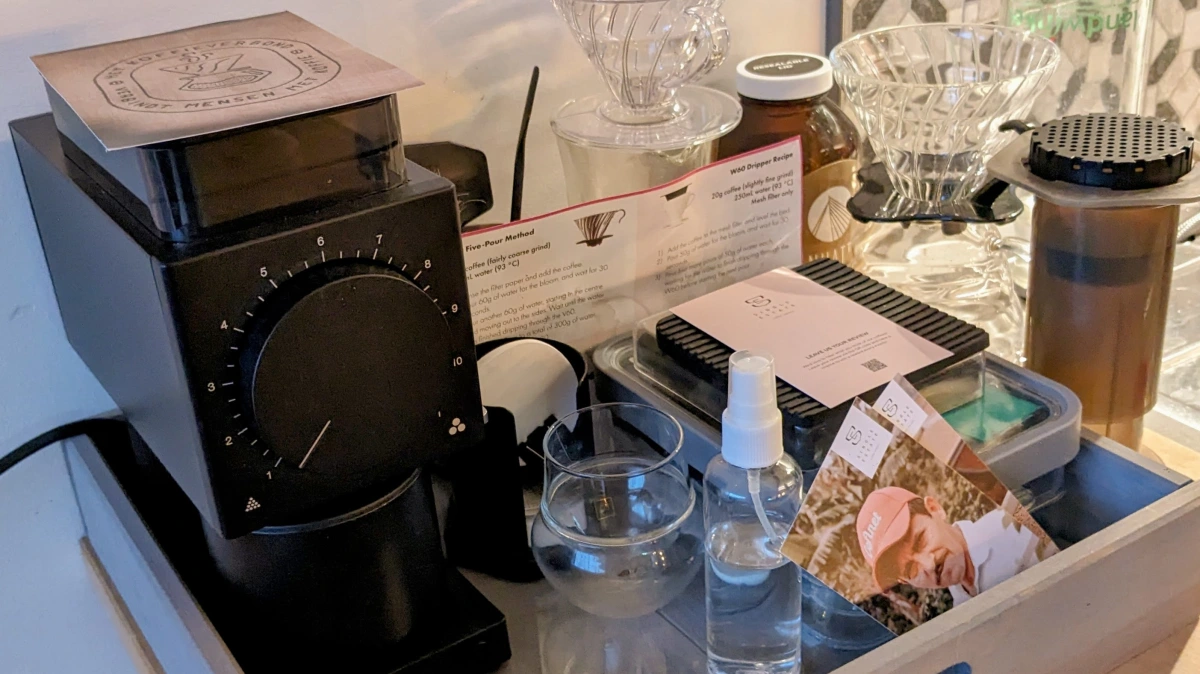
So I made a list with my co-volunteers of the gear that we all knew about and asked Gemini to research them, check Reddit for opinions and feedback and give an overview of each brew method/device and how it differs from others. It should also try to categorize them into types of brew methods, if possible.

Here is my initial (seed) list, in no particular order:

  • Gina Coffee Maker
  • Orea coffee brewer
  • Hario V60
  • Hario V60 neo
  • Hario Switch
  • Aeropress (Premium, XL)
  • UFO dripper
  • Pulsar
  • Z brewer
  • Kalita wave
  • clever dripper
  • Aramse Sofi brewer
  • Aeropress prisma

Here is what Gemini came up with. Use it as-is. I didn’t verify many of these devices. I only know the Aeropress and V60 very well. I rely on (review) videos just like the rest and I take them with a grain of salt. But I like the general overview and categories of pour over coffee makers.

Here we go!


The Manual Coffee Renaissance: A Guide to Pour-Over Brewing Methods

So, you’ve dipped your toes into specialty coffee, maybe even upgraded your automatic brewer. But now? Now you’re hearing whispers of “total control,” “clarity,” and “unlocked flavors.” Welcome, my friend, to the beautiful, sometimes obsessive, world of manual pour-over brewing.

This isn’t just about making coffee; it’s about becoming an active participant in the creation of your cup. When you go manual, you’re the master of four critical variables: Contact Time, Temperature, Turbulence (Agitation), and Grind. But the brewer you choose, that physical vessel, is your instrument, and its design dictates how you play.

Your water quality, its chemical composition and your choice of paper or metal filters also play a major role in the resulting coffee. We’ve ignored these variables at this stage.

We’ll explore the most talked-about manual brewers of 2025/2026, from the iconic classics to the cutting-edge “no-bypass” disruptors and the new wave of “flatbed” champions. We’ll break down their physics, highlight their unique quirks, and even point you to the top pros’ reviews so you can see them in action.

Let’s brew this!


The “Control Freak” Dictionary: Why Brewer Design Matters

Before we get into the specific brewers, let’s understand the core design elements that dictate your coffee’s fate. This is the language of control.

  • Cone Angle (The Slope): This refers to how steep the walls of the brewer are.
    • A steeper 60° cone (like a V60) creates a deep coffee bed, meaning water has a long path through the grounds. This can lead to higher extraction but requires precise pouring to avoid “stalling.”
    • A shallower 80° cone (like the UFO Dripper) or a very wide flat bottom makes the bed shallower and more uniform, often promoting sweetness and evenness.
  • The Bottom Hole(s): This is where the magic (or frustration) of flow control happens.
    • A single large hole (V60, Orea) puts all the flow control directly in your hands; your grind size and pour speed are paramount.
    • Multiple small holes (Kalita Wave) or a restricted screen (Pulsar) create a “speed limit” for the water, offering more consistency regardless of your pour technique.
  • Shutoff Valves: These turn a pour-over into a “hybrid” brewer.
    • By closing a valve, you allow the coffee to steep (full immersion) before filtering. This ensures incredibly even extraction and is a cheat code for consistency.
  • Bypass vs. No-Bypass: This is a big one for enthusiasts!
    • In most brewers, some water flows around the coffee bed (between the paper and the brewer wall) without fully extracting flavor. This is called bypass.
    • No-bypass brewers (Pulsar, Z1, Tricolate) force 100% of the water through 100% of the grounds, aiming for maximum extraction efficiency and intensity.

1. The Conical Classics: The “Skill” Brewers

These iconic brewers rely on a steep cone and a single large hole, demanding the most from your pouring technique. They are designed for clarity and brightness.

Hario V60 (Classic, Neo, and Suiren)

The undisputed king of manual pour-over. Its 60-degree angle and internal “ribs” allow for high airflow, making it incredibly responsive to grind size and pouring. While the V60 Neo is a high-performance glass-and-silicone version of the classic, the V60 Suiren is Hario’s modular, petal-based evolution, designed to maximize airflow and minimize stalling by removing the solid wall entirely.

UFO Dripper

A fascinating newcomer with a very steep 80° angle. It creates a uniquely shallow coffee bed compared to other cones, which impacts extraction.

  • What makes it unique: Designed for high sweetness and clarity, often used by competitors. It requires specific filters or a precise origami fold.
  • The Pro View: The Real Sprometheus – UFO Dripper: A Giant Leap?. He analyzes the 80° angle and how the deeper bed affects extraction compared to a standard V60.

2. Flat-Bottom Moderns: The “Sweetness & Body” Brewers

By creating a flat bed of coffee, these brewers aim for more even water distribution, generally leading to a sweeter, heavier-bodied cup.

Kalita Wave

The “old reliable” of the flat-bottom world. It’s famous for its three small holes and distinctive “wave” filters.

  • What makes it unique: Those three holes act as a bottleneck, regulating the flow and making the brew more forgiving and consistent.
  • The Pro View: James Hoffmann – The Best Pour-Over Dripper?. A classic review focusing on the stainless steel vs. glass models.

Orea Coffee Brewer (V3 & V4)

Currently the most lusted-after flat-bottom brewer on enthusiast forums. Made of high-grade, thermally stable plastic, it features a massive, wide-open bottom. The V4 is modular, allowing you to swap “bottoms” to change the flow style.


3. New Wave Flat-Bed Brewers: The “Balanced Clarity” Machines

This sub-category takes the “flat bed” concept even further, focusing on perfectly even water contact across a very shallow, wide bed. They aim for balance, juiciness, and often a brighter, cleaner cup than traditional flat-bottoms.

April Coffee Brewer

Designed by World Brewers Cup champion Patrik Rolf, this brewer emphasizes a super-wide, very shallow bed and is optimized for lighter roasts and a high-volume pour.

  • What makes it unique: It aims for extreme evenness and clarity. Often used with a coarser grind than other methods.
  • The Pro View: James Hoffmann – The April Coffee Brewer Review. Hoffmann discusses its unique design and how it promotes a distinct flavor profile.

Timemore B75

Often touted as an “Orea-killer” due to its affordability and similar ultra-fast flow. It’s a transparent, ribbed flat-bottom dripper.

Tricolate & NextLevel LVL-10

These are the most “extreme” flat-bed brewers, featuring perfectly vertical walls and often a shower screen.

  • What makes it unique: They achieve virtually zero bypass due to their cylindrical design and often allow for much higher brew ratios (e.g., 1:20) for surprisingly strong, clean coffee. You often just dump the water in, no fancy gooseneck needed!
  • The Pro View: The Real Sprometheus – Tricolate Brewer Review. He examines whether this “no-pour” method lives up to its scientific claims.

4. No-Bypass Specialists: The “Physics” Brewers

These are for the scientists and the detail-oriented. They aim for 100% extraction efficiency by forcing all water through the coffee bed.

NextLevel Pulsar

Developed with coffee physicist Jonathan Gagné, the Pulsar looks like a lab experiment. It features a unique valve at the bottom.

  • What makes it unique: The valve allows you to control the flow rate precisely, effectively combining immersion and percolation in a highly controlled manner. It’s built for maximum extraction.
  • The Pro View: Lance Hedrick – Pulsar: The Future of Pour Over?. Hedrick worked closely with the designer and offers a masterclass on its capabilities.

Orea Z1 (The “Z Brewer”)

A specialized zero-bypass brewer designed for smaller doses. It often includes a built-in showerhead for gentle, even water dispersion.

  • What makes it unique: Creates an incredibly intense, concentrated cup. It requires specific Sibarist Z1 paper filters.
  • The Pro View: Matteo D’Ottavio – Orea Z1 Review. A deep dive into what “zero bypass” actually means for your morning cup.

5. Hybrid & Immersion: The “Consistency” Kings

Can’t decide between a French Press and a Pour-over? These give you both, offering a consistent brew with less fuss.

Hario Switch & Clever Dripper

These brewers allow you to steep the coffee (immersion) and then release it to filter through. The Switch is a glass V60 with a valve; the Clever is a plastic, wedge-filter version.

Goat Story Gina

A “smart” hybrid brewer with a built-in scale and a precision valve that’s also gorgeous to look at and showcase your skills.

  • What makes it unique: App-connected brewing for tracking, and the ability to switch between pour-over, immersion, and even cold drip.
  • The Pro View: The Real Sprometheus – Gina Smart Brewer Review. He tests its smart features and versatility.

6. The AeroPress Universe: The Versatile King

Not strictly a pour-over, but its incredible versatility and control make it a staple in any manual brewer’s arsenal.

  • AeroPress (Classic, Premium, XL): The Premium is a new glass/stainless model; XL offers double capacity.
  • AeroPress Prisma (Fellow Prismo/Flow Control Cap): These are attachments that add a pressure-actuated valve, allowing you to brew concentrated “espresso-style” shots.
  • What makes it unique: Unmatched versatility for brew styles, grinds, and portability. The Prisma/Flow Control Cap transforms it into a pseudo-espresso maker.
  • The Pro View:

7. Specialized & Heritage: Aramse Sofi Brewer

A beautifully modernized take on the traditional South Indian Filter.

  • What makes it unique: It uses a fine-holed stainless steel disc (no paper!) to create a rich, thick “decoction.” Perfect for intense, milk-based coffees.
  • The Pro View: Aramse – The Sofi Brewer: Reimagined. The creator’s channel provides the best context on its heritage and modern application.

Paper: The Unsung Hero

Don’t neglect your paper filters! They dramatically impact flow rate, clarity, and even taste.

  • Hario Tabbed: The standard, good all-rounder. Available in one cup (01) or two cup (02) sizes. Do note that the “official” paper is from Japan and other manufacturers have licences to produce V60 paper outside of Japan. However, these are slightly different filters. See James Hoffman’s V60 filter paper test.
  • Sibarist FAST: The “Ferrari” of paper. Allows ultra-fast flow, demanding a finer grind but unlocking immense flavor.
  • Cafec Abaca Plus: A favorite for its consistent flow and lack of “papery” taste.

Your Next Step: Choosing Your Brewing Philosophy

So, which path will you take on your manual brewing journey?

  • For the budding barista keen on technique:
    Start with a Hario V60. It will teach you patience and precision.
  • For foolproof consistency and convenience:
    The Hario Switch is your best friend.
  • For bright, juicy clarity and light roasts:
    Explore the Orea V4 or the April Coffee Brewer.
  • For ultimate extraction and scientific experimentation:
    The NextLevel Pulsar or Orea Z1 are calling your name.
  • For a do-it-all, robust, and portable option:
    The AeroPress ecosystem is unmatched.
  • For heavy-bodied, unique textures or milk-based drinks:
    The Aramse Sofi offers a fantastic experience.

Manual brewing is a journey of discovery. Each brewer offers a unique perspective on coffee, inviting you to experiment and refine. Don’t be afraid to dive in!

If you have specific experience with any of these brew methods or filters, and you are very passionate about its performance, then please get in touch with me and enlighten me! I’m always happy to learn something new.
Categories
brewing coffee news

Best filter coffee brewer for the home

Filter coffee!!! 💖 ☕ 🫘

The best coffee’s require no pressure.

That’s true. Sure, most of us love a warm, steamy, dark espresso or two in the morning to (help) get us started. But for flavor, espresso is not the best. Filter coffee allows flavors and odors to be enjoyed much better than espresso ever can. You can grap a cheap coffee maker almost anywhere, but if you’re spending $25 per bag of fresh beans, you are not doing yourself a favor!

Let’s discuss the gear that bridges the gap between “morning caffeine delivery system” and “specialty coffee experience.” We’re looking at SCA-certified brewers. Machines that actually hit and maintain the temperatures needed to extract those floral, nutty or fruity notes, and the grinders that make it all possible.

No elitism, no gatekeeping. Just better coffee.


The Brewers

The Specialty Coffee Association (SCA) doesn’t hand out certifications for fun. To get that seal, a machine has to maintain a brew temperature of 92–96°C and complete the brew cycle in a specific timeframe. Most cheap supermarket machines fail this, resulting in coffee that is either sour (under-extracted) or bitter (burnt). Most importantly, your artisan specialty coffee beans are more or less wasted…

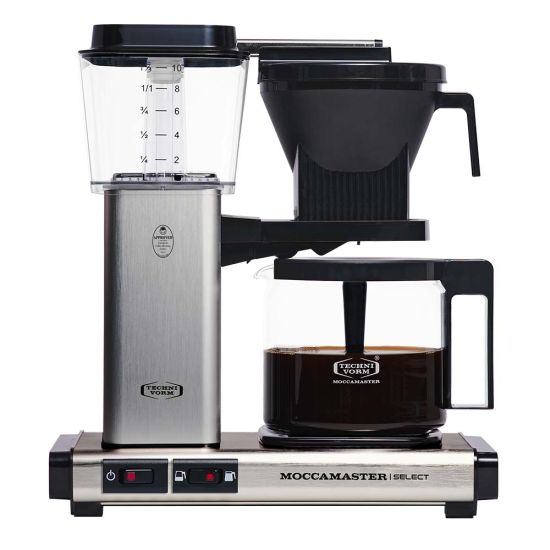
1. The Industry Icon: Moccamaster KBG Select

Handmade in the Netherlands and built like a tank, the Moccamaster is the “buy it for life” option. It’s simple, it’s colorful, and it’s remarkably consistent. The “Select” switch in the filter holder allows you to toggle the flow rate for a half-carafe or a full pot, ensuring you don’t lose quality when you’re only brewing for one.

Deep Dive: James Hoffmann’s Moccamaster KBGV Select Review

2. The Tech Darling: Fellow Aiden

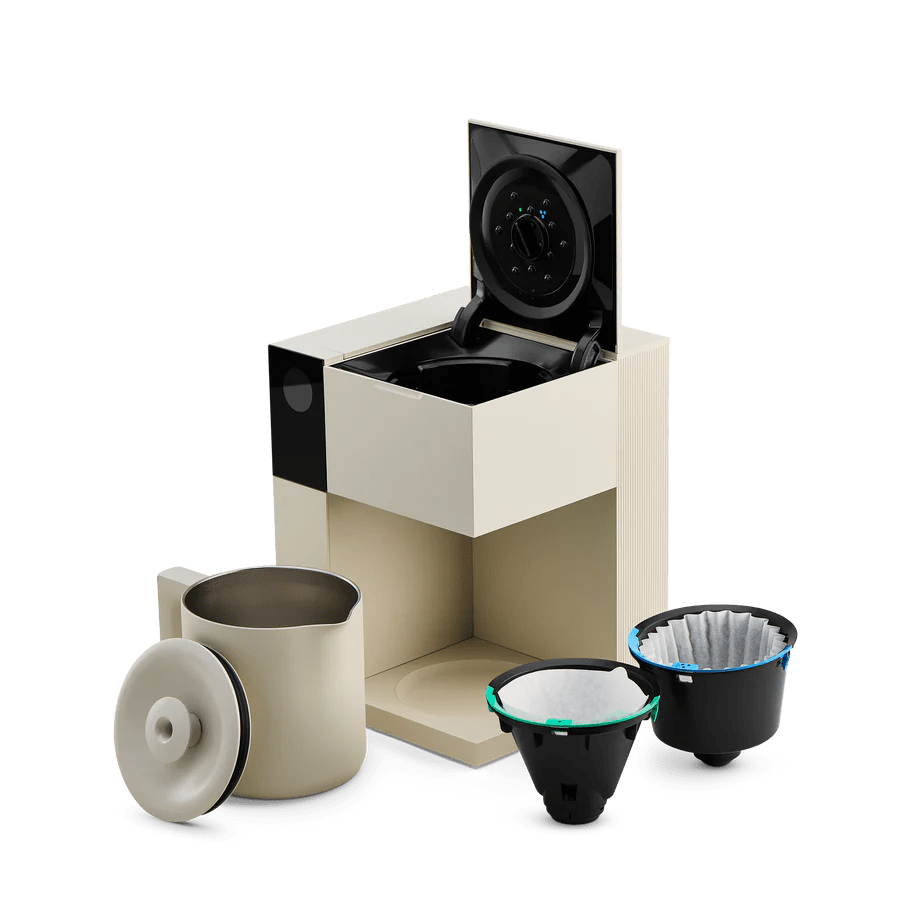
The Fellow Aiden is for the person who wants pour-over quality with the push of a button. It features a dual shower head and interchangeable filter baskets (cone and flat-bottom), allowing it to adapt to whatever style of coffee you’re feeling that morning. It even has an app, because of course it does.

Deep Dive: James Hoffmann’s Fellow Aiden Review

3. The Aesthetic Champion: Ratio Four

If you want your coffee maker to look like a piece of art, the Ratio Four is it. It uses high-end materials like hand-blown glass and wood accents, mimicking the manual pour-over process (including a bloom phase) with zero effort on your part. It’s a “small batch” specialist, perfect for 1-4 cups. If you need your partner’s (design) approval, this is almost a “sure thing”!

Deep Dive: Chase Reeves’ Ratio Four Review

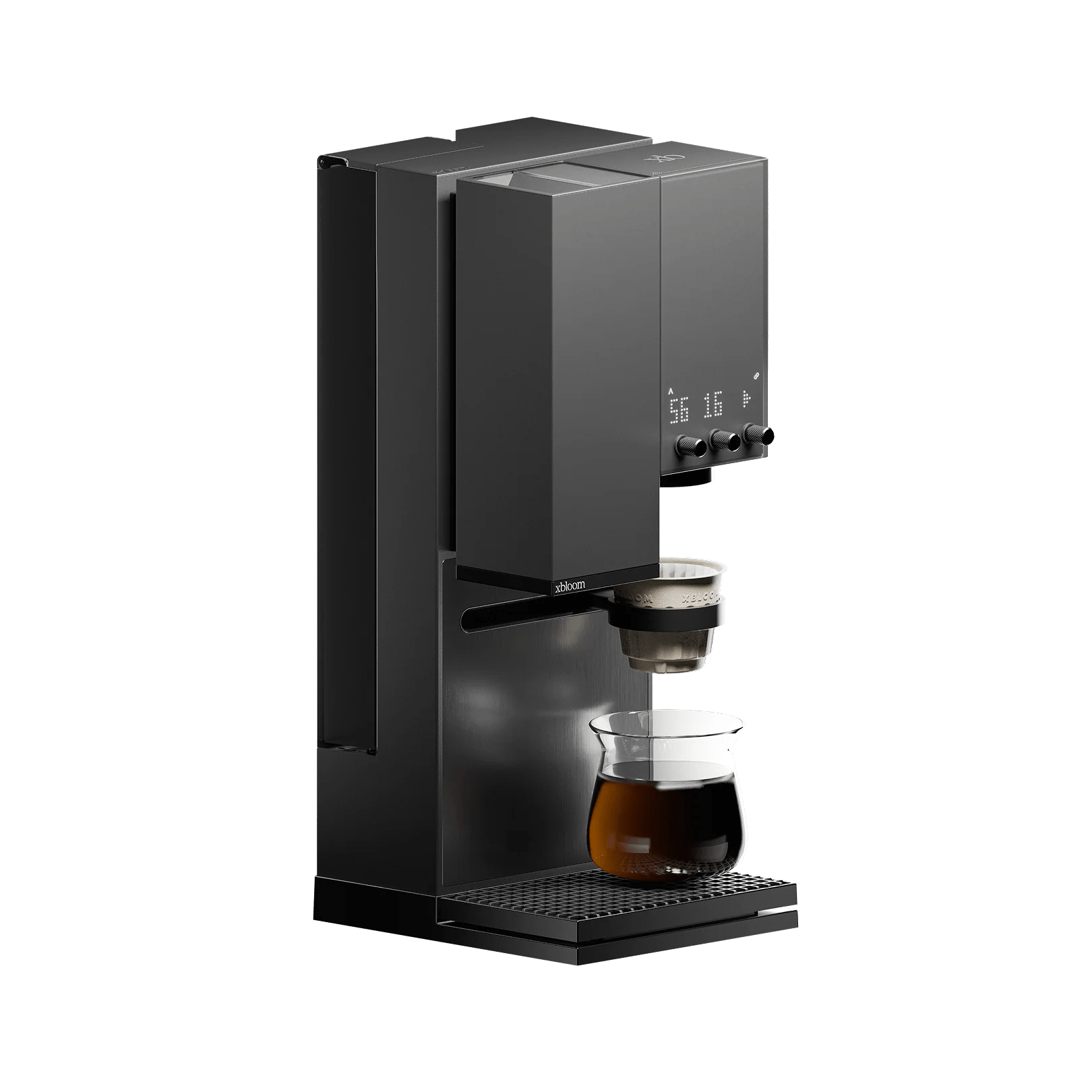
4. The Automation King: Xbloom Studio

The Xbloom Studio isn’t just a coffee maker; it’s a robot barista. It automates the “pour” pattern, moving the water stream across the grounds just like a professional barista would. It’s for the ultimate coffee geek who wants to experiment with recipes but doesn’t want to stand over a kettle at 7:00 AM. It also comes with a built-in grinder that just may be enough in the beginning!

Deep Dive: Lance Hedrick’s Xbloom Studio Insights

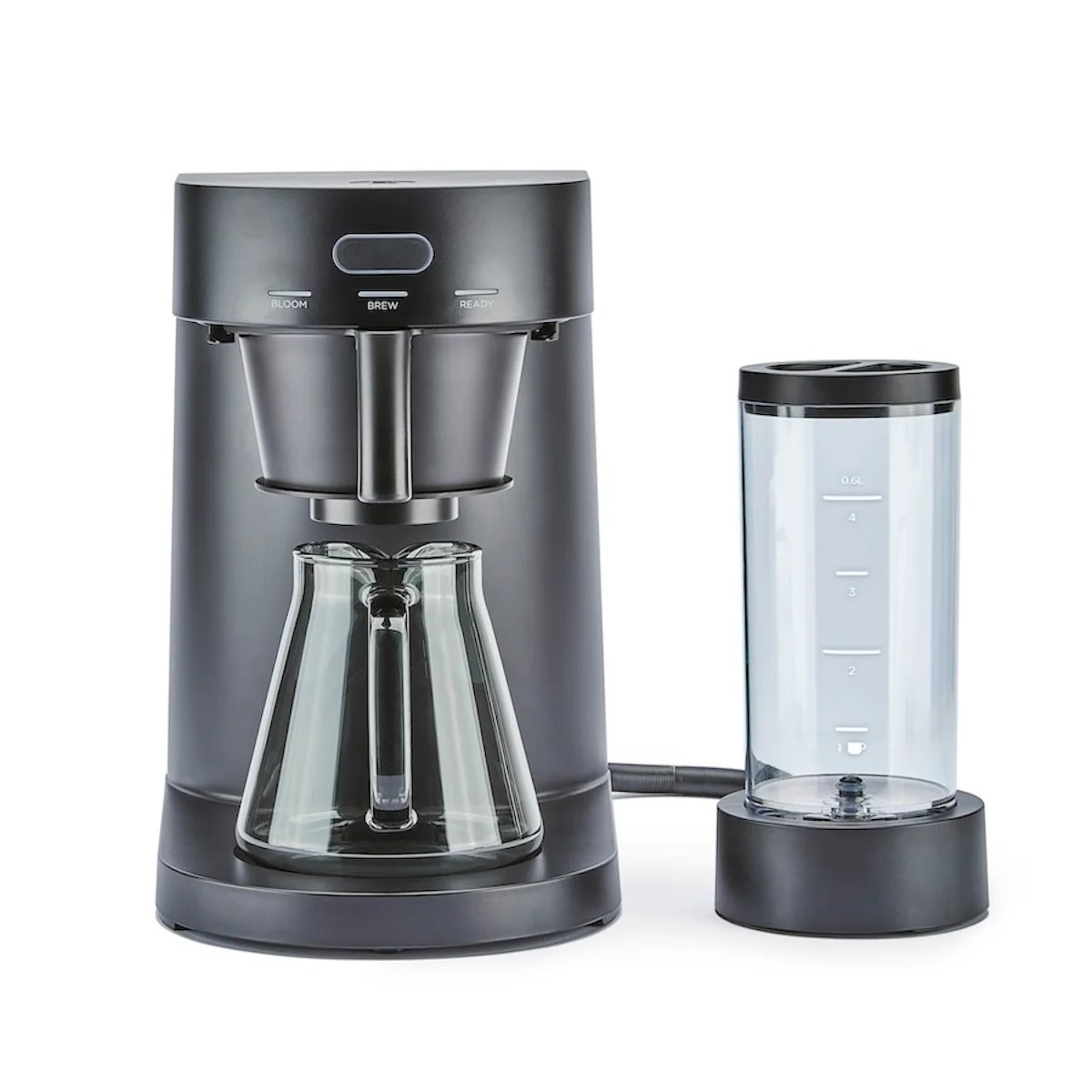
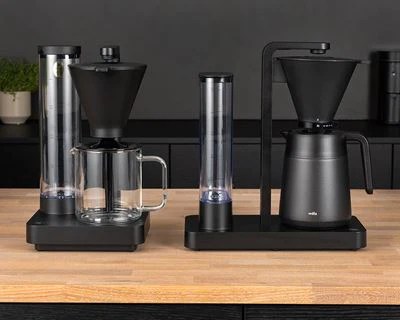
5. The Scandi-Workhorse: Wilfa Performance

Designed in Norway with input from World Barista Champion Tim Wendelboe, the Wilfa Performance features a unique removable water tank. No more pouring water from the carafe (which can contain old coffee oils, don’t do that!) back into the machine. It also has a manual flow control to dial in your extraction.

Deep Dive: James Hoffmann on Wilfa Gear

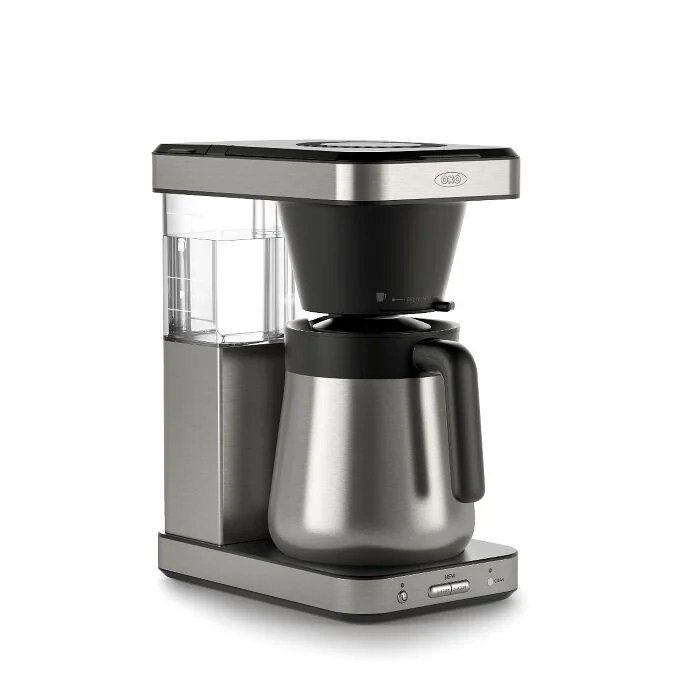
6. The Compact Choice: OXO 8-Cup

The OXO 8-Cup is my favorite for those with limited counter space. It’s SCA-certified, fast, and features a “podless” single-serve mode that uses a special basket to ensure small brews don’t turn out weak. Great for families of coffee drinkers, small offices or campus dorms. Their thermos keeps your coffee warm until after lunch!

Deep Dive: Roasty Coffee’s OXO 8-Cup Review

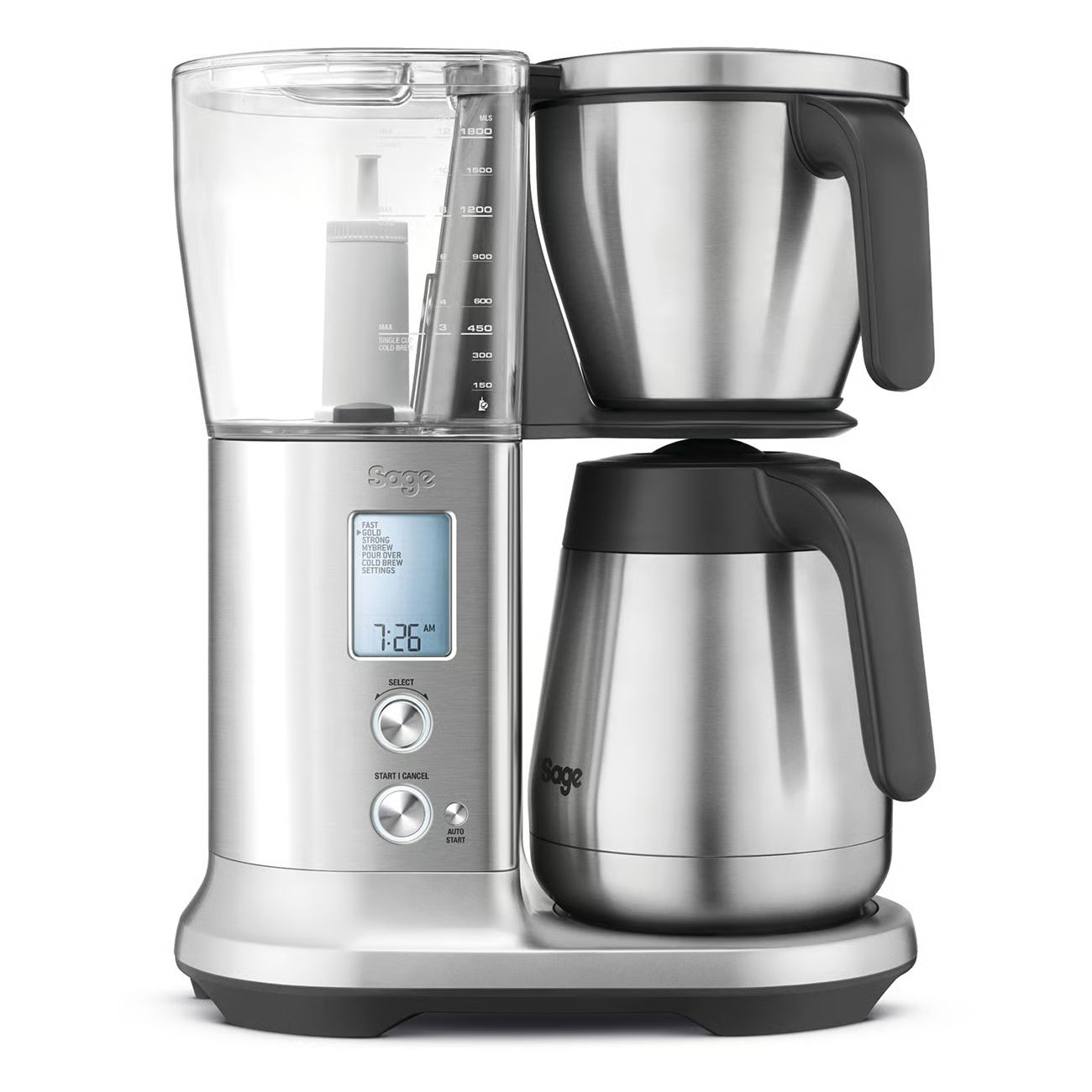
7. The Customizer: Sage Precision Brewer

In the US, this is the Breville Precision Brewer. In the EU, it’s called Sage. This machine gives you control over almost everything:

  • bloom time,
  • water temperature (to the degree), and
  • flow rate.

It’s the closest you can get to a “manual” experience in an automatic machine.

Deep Dive: CoffeeBlogKev’s Sage Precision Review

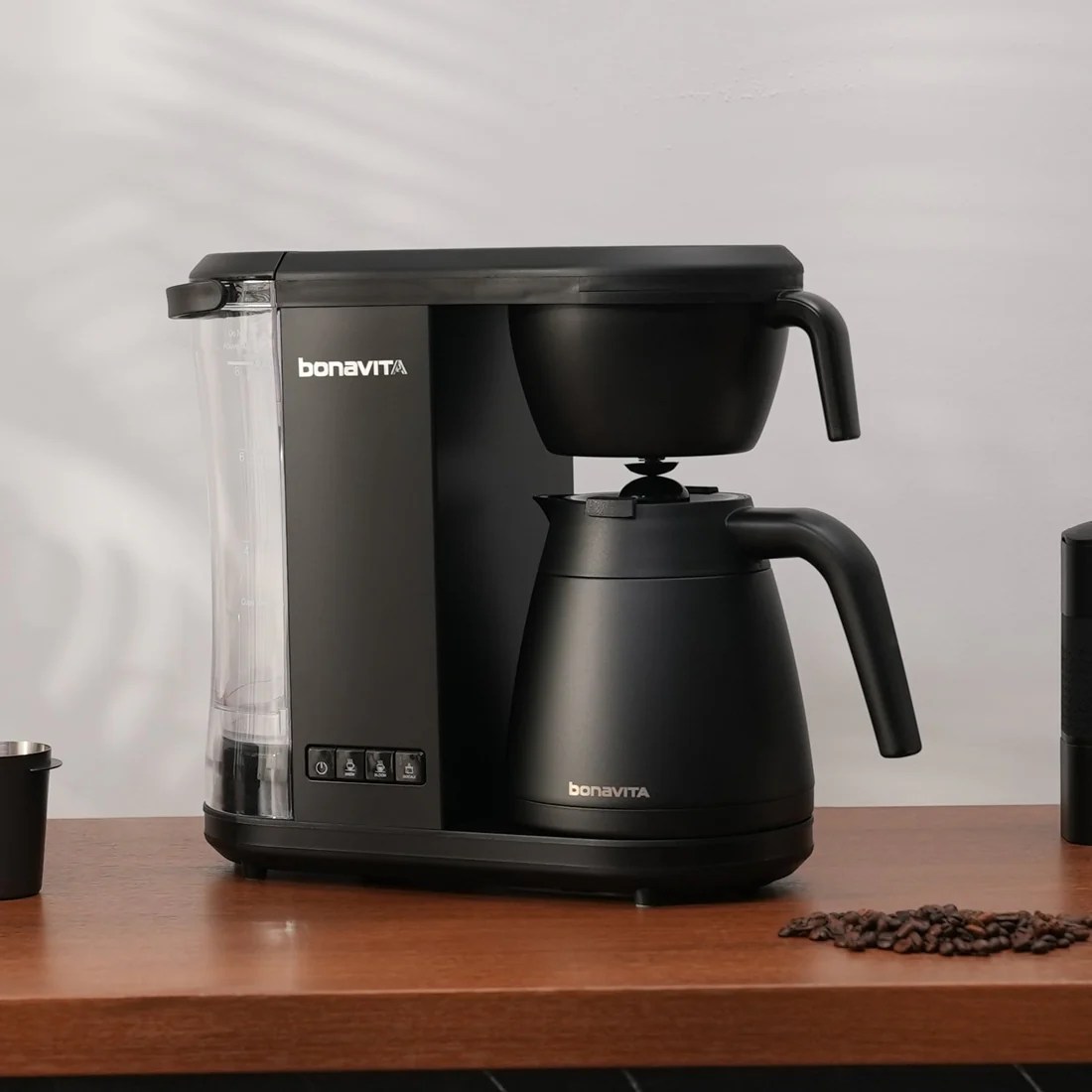
8. The Budget All-Star: Bonavita Enthusiast

The Bonavita Enthusiast is the latest evolution of the legendary Bonavita line. It’s simple, it’s effective, and it’s usually the most affordable way to get into SCA-certified brewing. It has a dedicated “Bloom” button that pre-wets the grounds, essential for letting those CO2 gasses escape. Can’t go wrong here, it will improve your daily brews.

Deep Dive: ECS Coffee’s Bonavita Enthusiast Review


The Grinders

You can have a €1,000 brewer, but if you’re using a €20 blade grinder from the hardware store, your coffee will taste like sadness more often than not. You need a burr grinder for a more consistent particle size. Even the burr’s design matters more than you might think!

1. The Gold Standard: Fellow Ode Gen 2

The Ode Gen 2 is designed specifically for filter coffee (not espresso). Its 64mm flat burrs produce a remarkably clean, sweet cup. It’s quiet and fast, it’s beautiful, and it features an ionizer to reduce that annoying static mess. Though a spray of water across the beans beforehand will almost remove it entirely and keep your grinder more clean!

Deep Dive: James Hoffmann’s Ode Gen 2 Review

2. The Versatile Starter: Fellow Opus

The Opus is the Ode’s younger, more versatile sibling. It can grind for everything from coarse French Press to fine Espresso. It’s a great choice if you’re just starting out and want one machine to do it all.

Deep Dive: Lance Hedrick’s Opus Review

3. The Value King: DF54

The DF54 has taken the coffee world by storm recently. It offers premium 54mm flat burrs at a fraction of the price of competitors. It’s a “single-dose” grinder, meaning you only put in the beans you’re about to brew, keeping everything fresh.

Deep Dive: Lance Hedrick’s DF54 Review

4. The Powerhouse: DF64 Gen 2

Stepping up to the DF64 Gen 2 gets you larger 64mm burrs and a more robust build. It’s the “enthusiast’s choice” because you can easily swap the burrs later (to something like SSP burrs) to further customize your flavor profile.

Deep Dive: Lance Hedrick’s DF64 Gen 2 Review

5. The Endgame: Timemore Sculptor 078

The Sculptor 078 is widely considered the current king of filter grinders. Its “Turbo burrs” and variable RPM (you can slow down or speed up the motor) produce a cup clarity that few other grinders can match.

Deep Dive: James Hoffmann’s Sculptor Review

6. The Reliable Italian: Eureka Mignon Filtro

Eureka has been making grinders in Italy for nearly 100 years. The Filtro is their dedicated filter coffee model. It’s built like a tank, is remarkably consistent, and has that classic Italian industrial vibe.

Deep Dive: The Coffee Chronicler’s Eureka Filtro Review


The Secret Weapon — The Kruve Brewler

How do you know if your grind is “medium-coarse”? Is your “medium” the same as my “medium”? The industry relies on subjective experience and sharp eyes. Especially in the beginning, when you are starting out on this “better coffee journey”, it may be hard to judge reliably and repeatedly what’s a “medium” grind and what’s “medium-coarse“?

Enter the Kruve Brewler. It’s a simple ruler-style tool that allows you to measure your coffee grounds in microns (µm).

  • The Free Version: Kruve offers a printable PDF of the Brewler. It’s not as accurate as the metal one, but it’s a great starting point for calibrating your eyes. Build up some experience and compare your friends’ grinders or pre-ground coffee from the supermarket to what you grind yourself. Perhaps you already have a great affordable coffee from a local store, but you’d like to get whole beans and enjoy fresh ground coffee instead.
  • The Metal Tool: For about the price of two bags of specialty coffee, you can get the stainless steel version. It has actual holes for different micron sizes. You just slide your grounds through until you find the match. It takes the guesswork out of “dialing in.”

Deep Dive: Kruve Sifter & Tooling Review


How Much Should You Spend?

Prices fluctuate, and you’ll find different deals depending on where you live in the EU or the US, but here is a rough guide to the investment levels:

  • The Entry-Level Setup:
    ~€300–€400 total.

    Think Bonavita Enthusiast + Eureka Filtro.
  • The Enthusiast Setup:
    ~€600–€800 total.

    Think Moccamaster + Fellow Ode Gen 2.
  • The “Endgame” Setup:
    €1,000+.

    Think Fellow Aiden or Xbloom + Timemore Sculptor 078.

Remember, the goal isn’t to have the most expensive gear.

It’s to have the gear that makes you look forward to your morning coffee. No pressure.

Categories
brewing coffee news

Best coffee machine for home baristas

I get asked this question a lot: “What’s the best coffee machine for at home?” Just like: “What’s the best coffee to buy?”

I understand why people ask it, though. They want an experienced opinion. I’ve tasted more coffees than most. Unfortunately, it is not that easy.

To answer the question: “What is the best coffee machine to use at home?”, I would first need to know what kind of coffee you prefer? In other words, the drink itself:

  • Black or milk-based coffee?
  • Espresso or filter coffee?
  • Drip, pour-over or submersion coffee?

To choose the best coffee machine for making coffee at home, you need to find your favorite style next. Then find the best machine that suits that style. That said, I can give a couple of recommendations for good coffee machines for your home. These machines make a great cup of coffee every single day.

Most people either prefer espresso-based coffee or filter coffee. We have all grown up to become accustomed to dark roasted, fairly bitter tasting coffee (with or without milk). With that in mind…

Espresso machines

When buying any espresso machine, do pay attention to the diameter of the portafilter. It is a handle-like device that holds the coffee grounds and attaches to the espresso machine’s brewing group. The portafilter plays a crucial role in the extraction process, determining the flavor, strength, and quality of the espresso shot.

Ensure that this is 53 – 58 mm, which are the industry standards. It should hold 14 – 24 gr of ground coffee. Anything smaller will also work but it will be much harder to find parts, accessories and additional tools. And you will get more tools! LOL

Fully automatic

Don’t get a fully automatic machine! Ever! Seriously.

My biggest complaint about fully automatic espresso machines is that they grind the beans for you without any useful form of manual adjustments. The manufacturer will never include a great grinder. That would make the machine too expensive. Always get a separate grinder, it will last you at least 10 years.

These automatic machines focus on convenience, speed and not flavor. So in my opinion, this is always a setback that I can’t except.

If you prefer speed and ease over flavor, then choose either of these:

Sage and Breville are essentially the same Australian company with different brands for Europe and US/UK (resp.)

Wikipedia

The Pro version lets you tamp the coffee yourself. The Impress version has a built-in tamper and will do it for you. ¯\_(ツ)_/¯ Since tamping affects taste much, I prefer to do it myself.

I personally don’t like a Jura machine. Although it’s pretty, it’s too limited and maintenance is expensive. Sorry Jura.

Semi automatic

These machines are more my style. They automate some of the actions but not all. This gives you more control over the espresso that’s brewed. Note that a great espresso maker will cost at least 1250-1500 Euro/Dollars because of the quality of the parts and build. That does not include a grinder!

Your biggest choice depends on how you drink your coffee: black or white?

If you prefer black coffee (an espresso, long black or americano), your life is easy: choose a single boiler machine. They’re a lot cheaper.

Do you (or your partner) prefer white coffees? Think about how many cappuccinos or lattes you will make? For one or two each time, it’s fine to get a single boiler machines as well. First froth your milk then brew the espressos! If you drink more coffee daily or host regular dinner parties, then you should opt for a dual boiler machine. That way, you can start frothing the milk while the espressos are still brewing.

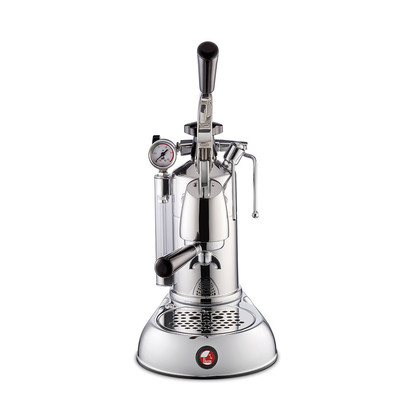
La Pavoni stradivari lever machine
La Pavoni Stradivari

Manual espresso machines

A category on their own for this is where innovation really shines.

Superkop is a brand new, solid, durable design and fully non-electrified. It will work when the power is out, on the road or camping, when disaster strikes and zombies invade our homes! It only needs hot water and ground coffee. It will last a lifetime with only a few replaceable moving parts.

The lever-operated La Pavoni is a classic machine! A gorgeous design that does require some practice and getting used to. Once you do, it is the holy grail of many baristas. Beautiful to look at and room for creativity to add you own special twists when making an espresso.

The Flair revolutionized the world of home baristas when it appeared on Kickstarter. It’s cheap, easy to make, easy to use and a great way to get into making better coffee at home. Quality has improved a lot since and you can’t go wrong with it!

Filter coffee machines

moccamaster KGB select wireframe
Moccamaster KGB Select

The traditional home coffee makers have received a ton of innovations and improvements over the last 3-5 years. Coffee making, filter coffee at home, has drastically improved since the 80s and 90s. Designer machines, premium options, gorgeous materials and very reliable manufacturing mean that today’s coffee maker is light years ahead of those our parents and grandparents used.

I can recommend one of these four machines:

Moccamaster has been the go-to coffee maker for many official coffee competitions and conferences. They’ve been around for 40 years and are rock solid, well built and easy to maintain or repair.

You can also refer to the SCA certified list of approved coffee makers. The Specialty Coffee Association takes their work very seriously. Every machine is thoroughly tested and retested to ensure it makes a great cup every single time, all the time.

I hope this answered some of your questions and gave you a good start to selecting the best coffee machine for your home. Maybe it just confused you more and made you reevaluate what it is you want. Then at least I did my job. Trust me when I say that you will not find the best machine in one go. I will take several iterations before you find what works best.

Most of all, your taste for coffee will change and that brings new machines, new coffees, new equipment and new kitchen setups. If you can, buy second hand on Ebay or your local penny savers. Closed restaurants often sell off their equipment to pay debts. That’s a nice way to get a premium machine for less.

PS: If you follow my advice above and do not buy a fully automatic machine, you will need to also buy a good grinder. That’s a whole new subject, but for starters I can recommend watching James Hoffman’s review video:

Categories
brewing coffee news

The math of brewing a better espresso

Scientists have finally answered a burning question of mine: why should an espresso be brewed in 25 +/- 2 seconds and use approx 15-22gr of dry coffee to yield 50ml of (a double) espresso?

Who came up with this rule and why? Not that I have a specific problem with it but it seems so arbitrary. Also, once you start to make espresso’s a day long, you’ll notice that it’s really hard to dial in the equipment a certain way and maintain those rules for every cup. Sometimes it’ll be 21 seconds, sometimes 29. The grinder is pretty accurate. The beans are practically the same. So where does this high variation come from?

Well, it turns out that brewing your espresso differently yields the same great taste and flavors while achieving this with much greater consistency and reducing the cost per cup of espresso!

How did they do it? Well, they started by reducing the process to a proper model with solid mathematics behind it. Brewing an espresso is basically fluid dynamics of a bed of particles. The “puck” being coffee grinds of varying sizes and water is pushed through this bed at a certain pressure.

These mathematics are very well understood and accepted. So the scientists started with this model, created equations for everything and solved the equations using differential equations. That resulted in a few parameters and then they found the optimal solutions.

Sounds easy enough but believe me the math is pretty impressive, yet their logic is sound.

Turns out if you lower the pressure to 6 bars instead of 9, use 7-15gr of dry coffee, ground more coarse then tradition tells you to and aim for an extraction of 8-15 seconds, you will get a beautiful espresso that is much easier to reproduce!

Don’t believe it? Read the articles:

Categories
brewing coffee news travel

Making An Espresso At Home During The Corona Crisis

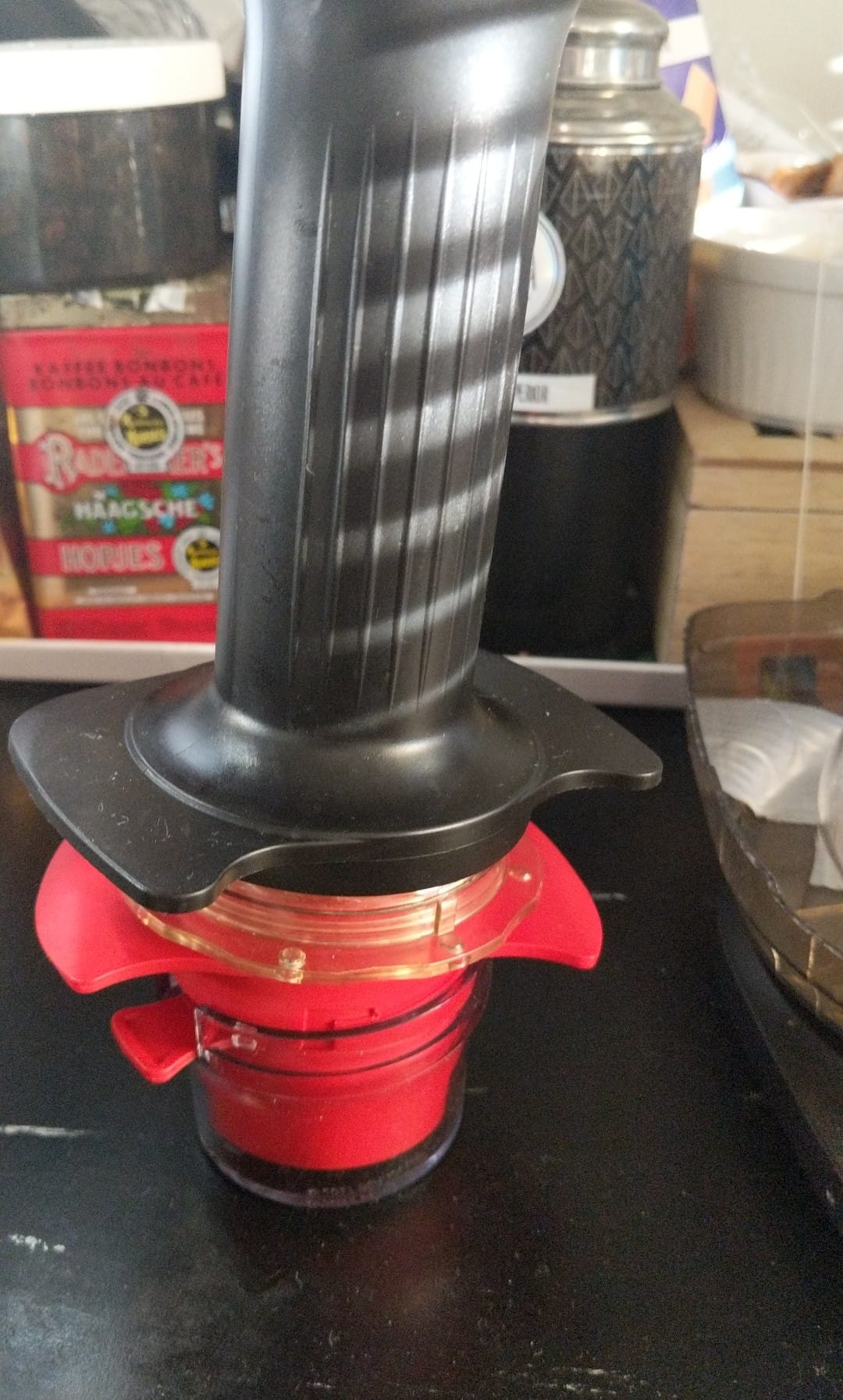
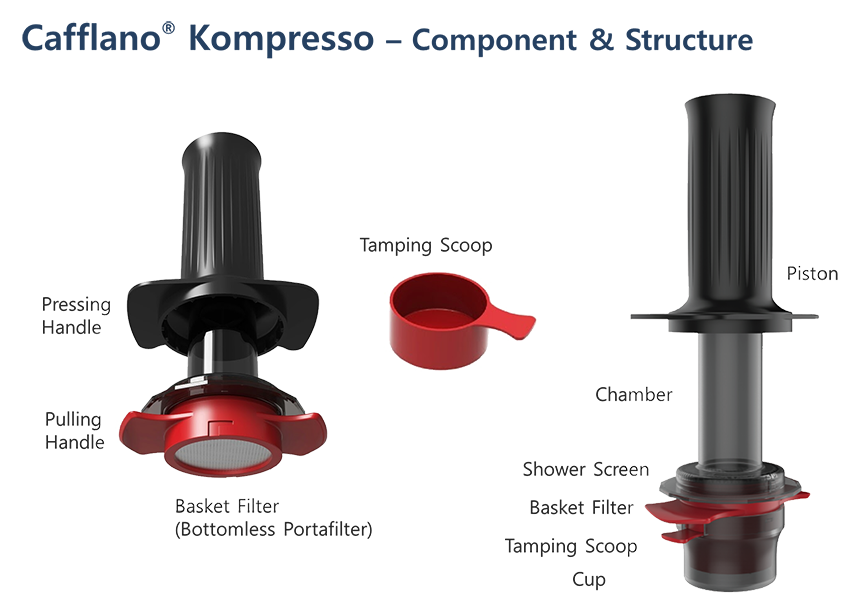
To all my fellow coffee fanatics who crave a good espresso but cry every day because the coffee places are mostly closed: you owe it to yourself to get a Cafflano Kompresso! The only way to make anything that comes close to an espresso at home, easily.

cafflano kompresso blow up view of components
Cafflano Kompresso

It’s durable, cheap and portable. Will save your travels, hotels, and vacation rental too! Works on a train boat or train.

Only hot water needed to make an espresso anywhere

Cafflano Kompresso

You can grind your own beans (for best results) or start out with ground coffee from the supermarket. I’d choose a medium roast wherever possible, not a dark, French or Italian roast, as these are likely to turn out too bitter and “ashy”, IMHO.

Then move up to a pound of gourmet coffee from your favorite shop around the corner, ask them to grind it for “espresso”. This way, you can still support your local shops even though they can’t make you your coffee and you create a nice relationship with them for when all this is over and you can get a real espresso again!

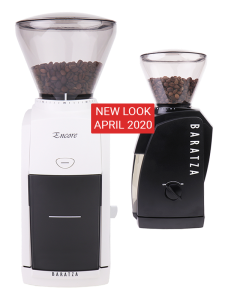
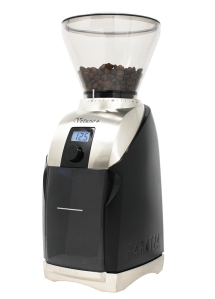
And eventually get your own grinder. If you do, get a burr grinder, always! The best entry-level grinder out there is the Baratza Encore, for approx $130 or so. One step up and only different in the number of different grind-size settings it has, it the Baratza Virtuoso.

Baratza was bought by powerhouse and specialty coffee shop darling grinder manufacturer Mahlkönig (German for “King Grinder”, BTW!). It’s the only thing they do, build grinders. They are superb in quality and stability, the latter meaning they grind still very well when the burrs start to get dull.

Now, if you’ve read trhis far that means you are serious about coffee, just like myself. I like that.

If you’re thinking of getting the Kompresso, you may also be interested in the Cafflano Klassic. It’s the filter coffee equivalent of the Kompresso. Having the two means you will never NEVER EVER having to go without superb coffee that you make yourself. Anywhere, everywhere, all the time. (The Klassic comes with a grinder built-in so you can even grind the beans just before you brew the coffee.

cafflano Klassic
Cafflano Klassic with built-in grinder for on the road. source: Cafflano

You’re welcome!

And because the proof is in the pudding:

Categories
brewing coffee news training

Barista ethics, principles and practice

After working as a barista in various places since our return to the Netherlands in July 2019, I’ve learned that the coffee business is vastly better here than on Sint Maarten. The beans, the machines and the skills of the baristas working there are much better than there.

But what’s surprised me the most is that most places stopped after buying better quality beans or investing in a good machine.

Many places shamelessly use the same beans for espresso as well as “gewone koffie”, the historical Dutch name for normal coffee meaning filter coffee that our parents and grandparents used to make.

Some establishments use at least a different grinder when making “koffie”. But they opt using the same espresso machine because it’s there, so the “koffie” is most often approximated by a lungo.

A few use both a different bean as well as a separate grinder. A conscious decision. But I fail to understand why you don’t simply make “koffie” using a filter method?! After all, if it is about the money, and I think it is, then the math of making a liter of coffee from 57-63g of ground coffee is always better than turning 17-19g of the same coffee into 50ml of espresso or 90-100ml of “koffie”. Right?

And if you decide to use different beans for espresso and “koffie”, because of flavor I assume, then how come you don’t use different beans for cappuccino? After all, roughly 70% of coffee drinks sold in the Netherlands are “white coffees” aka milk-based coffees such as flat white, cappuccino, latte macchiato and large lattes.

I’m often disappointed by what I find in espresso bars during my Temper shifts. Large 3 group machines supplied by a caterer and left to more and more careless baristas who’s level of care and quality goes down by the month when management is not present, training is no longer provided and customers don’t know better.

Granted, many people working as barista are students either during the studies or directly after, earning money for leisure time, travel plans or settling down. They learn on the job while doing it and some of them are truly gifted and highly skilled by intuition. Nothing wrong with that. But as soon as they leave, and there’s always a better laying barista position coming next month – turnover is a bitch – knowledge is drained and whoever is left in charge has to pick up the slack. But pay is low, pressure is high and people don’t seem to care or know.

I’ve been searching for a better place to make excellent coffee now for 2 months and every place that I’ve talked to is stuck to bean contracts, doesn’t want to invest anything further and can’t train the people with SCA courses.

Well you can’t have it both ways! You want cheap high quality coffee fast, but you only pick two at any time. Not three. Skilled baristas cost more, care for the equipment, as well as customers. They know how to tweak the machine on a daily or even hourly basis to result in the best quality coffee.

Nothing makes a barista more happy than a great clean machine, new grinder or a kilo of fantastic beans to try out. Reward staff with perks, not salary. The effect is the same, if they truly love their jobs. Hire a legendary barista or roaster to give a workshop and spark their interest again, relight that fire (no, don’t go there!) and give the team a new boost of energy.

Categories
coffee news

Running out of beans

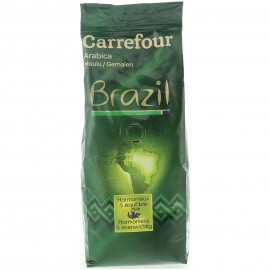
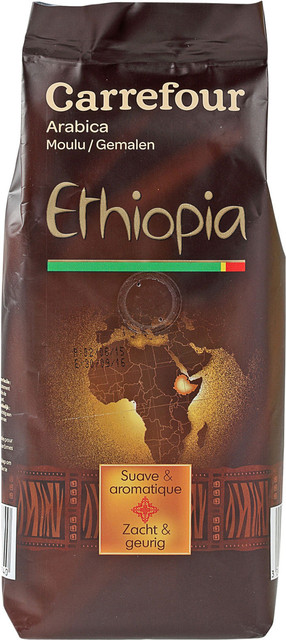
After having finished the amazing reserves of coffee beans I’ve had brought to me by visitors, the sad time arrives when they run out… This happened last week so now I am resorting once again to supermarket coffee from St Maarten.

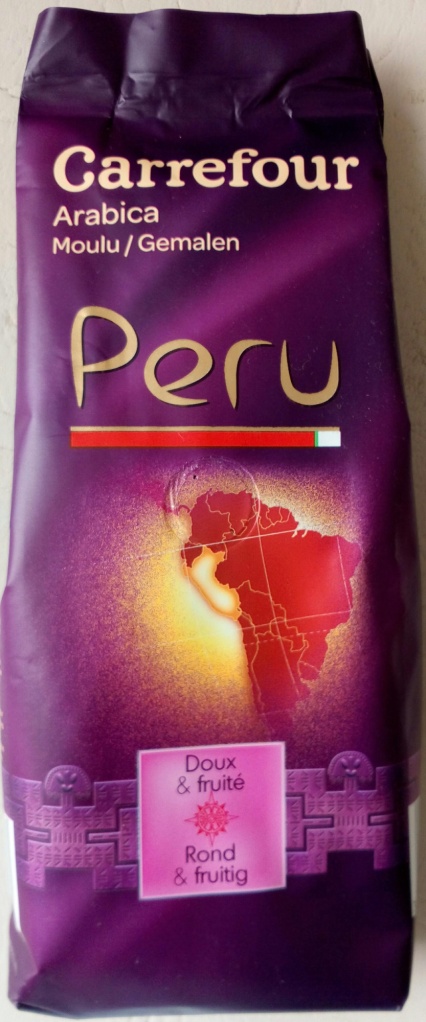
Which coffee do you drink?” is a question I get asked regularly. Well, I don’t make it a secret but bean selection on St Maarten is pretty poor and limited. I’ve tried all the coffees, both ground and whole bean, and my favorites are the house brands from either SuperU or Carrefour. Value/price is super. They both have the same supplier that packages the coffee in custom packages for both, but the coffee is identical as far as I have been able to test and taste.

They come in different “flavors”: Peru, Colombia, Brasil, Ethiopia and Mexico. The Peru and Ethiopia match the best with my tastes. Bold, strong smells and flavors, full bodied strong coffee with enough balance and sweetness not to make it too bitter. They are blends from 100% Arabica beans. Both of them.

Normal recipes call for 30 gr of coffee for 500 ml of water (at 92-96 Celsius) but since this is an espresso grind and not a filter grind (much finer than would should be used), I either use colder water than prescribed (82-86 C) or I reduce the amount of coffee by 10% (3 grams here).

My favorite brew methods are Aeropress in the morning (it makes a more bitter espresso-style cup) and Hario V60 in the afternoon (smoother, milder, less bitter oils)

Categories
coffee roasting

Sourcing Great Coffee Beans for Sint Maarten

Getting good coffee on this island is a challenge. That’s funny because we live right in the middle of the some of the world’s best coffee countries. So you’d expect a larger selection. Sadly, the opposite is true.

While every coffee selling business here seems to focus on making coffee from cups (Nespresso, Lavazza, Illy) and the local population mostly used to and stuck with cheap, large scale, commercially produced filter coffee such as Santa Domingo ground coffee, very few places have whole coffee beans to begin with.

When I started to make an inventory of the equipment needed to create a Specialty Coffee shop on St Maarten, I immediately noticed the lack of good grinders & espresso machines, long delivery times, uncertain product availability and total lack of good single-origin coffee beans. Malongo, a large French roaster with a presence on the French side of this island (Saint Martin) was the exception. Sadly, their stock was low, the beans old (almost a year after packaging date, no roast date mentioned anywhere!) and the selection limited to four countries: Brasil, Colombia, Rwanda, Ethiopia. And they had just survived hurricane Irma as well but I have no idea how good or bad their stock survived that storm.

So I am doing what everybody here does: if you can’t get it here and people won’t get it for you, you find and buy it yourself in the US, send it to Miami, FL, and have it shipped here by one of the several shipping companies that visit the island at least twice week. Here’s the list of roasters that I’ve contacted and who’ve replied to me they’d be interested in selling us beans at wholesale:

I’m very excited to make a choice from these wonderful companies, their coffee descriptions online give me a lot of confidence that they are indeed “Third Wave Roasters” and take quality seriously. I still have an order coming in from Malongo that will last a while, but their orders take 2 months to fulfill and that’s simply too long. I contacted Smit & Dorlas in Curaçao but they don’t have single origin coffees, only blends – but can ship these in 2 weeks -, and blends are not what I want to serve in the Double Dutch Cafe for black coffees, if at all possible.

I will blog about the progress that I’m making in getting serious coffee to St Maarten and having people take coffee more seriously on this island. 🙂

Categories
coffee news

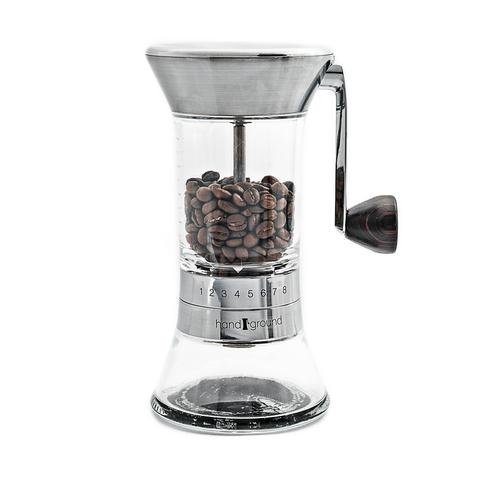
Hand Grinder

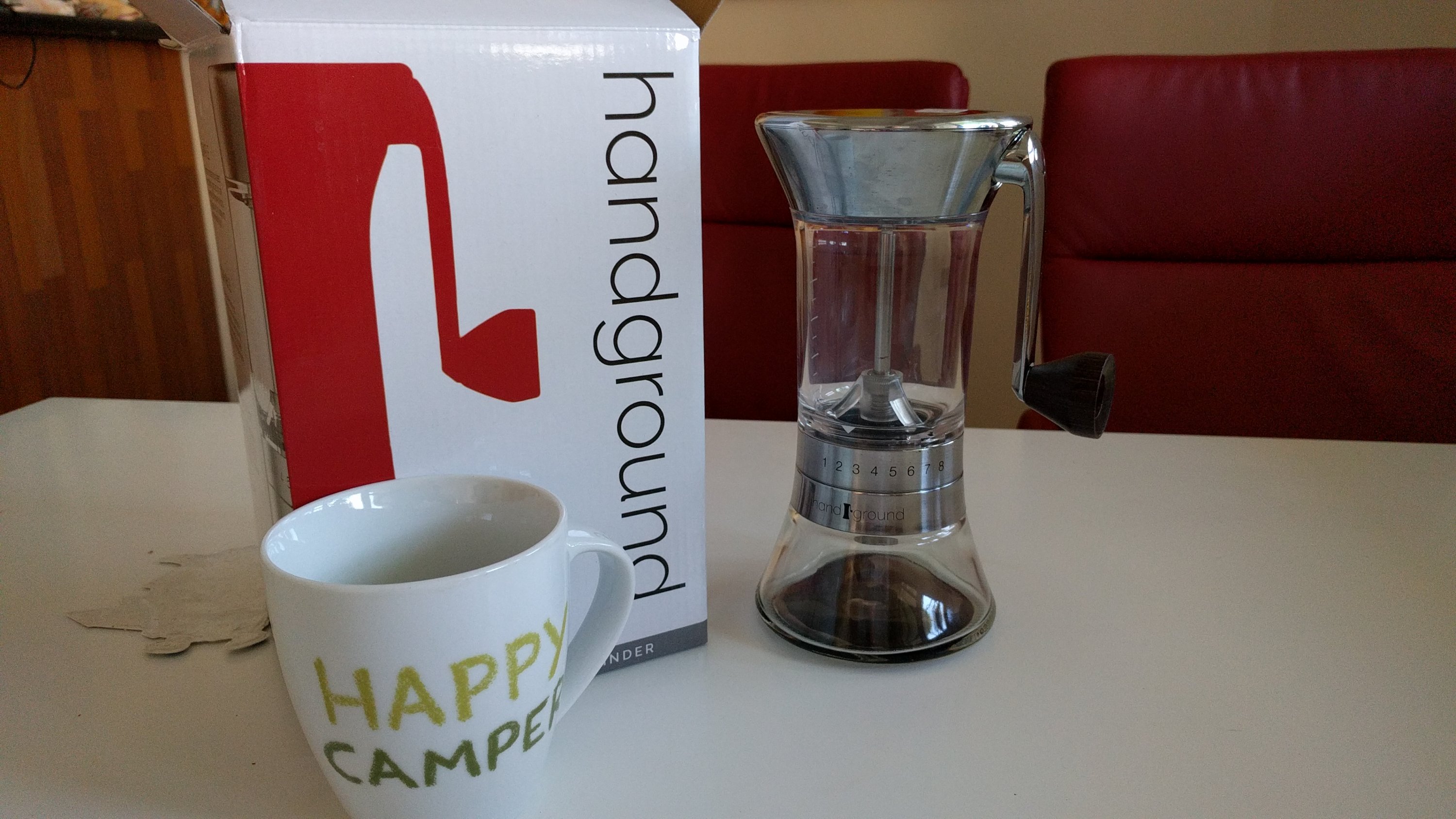
I was surprised with a package from the Netherlands that someone forwarded for me. It contained the hand grinder I had ordered a while ago but was delivered after friends had already flown back to Sint Maarten.

Now I can take my Hario V60 or Aeropress anywhere and also grind whole beans on demand. This comes in handy because I’m always scouting for a cool great new pound of coffee beans and the lack of a portable grinder limited what I could source.

Im really happy with this product of a Kickstarter campaign. It’s solid, accurate, easy to use and clean and for a good price.

For the Market Cafe in Simpson Bay I’m still looking for an espresso bean to use and this way I can try a few samples without taking apart my commercial grinders for it!

Categories
brewing coffee

Getting Started with Specialty Coffee

If you are serious about coffee and want to learn and experiment more, I’ve put together a list of items on Amazon that will help you getting started.

You basically have a choice to make about which brewing method to start with:

  • Aeropress
  • Chemex
  • Hario V60

If you prefer an espresso-style (stronger) cup of coffee, then choose Aeropress. If you prefer a more smooth, rich bodied cup of coffee.

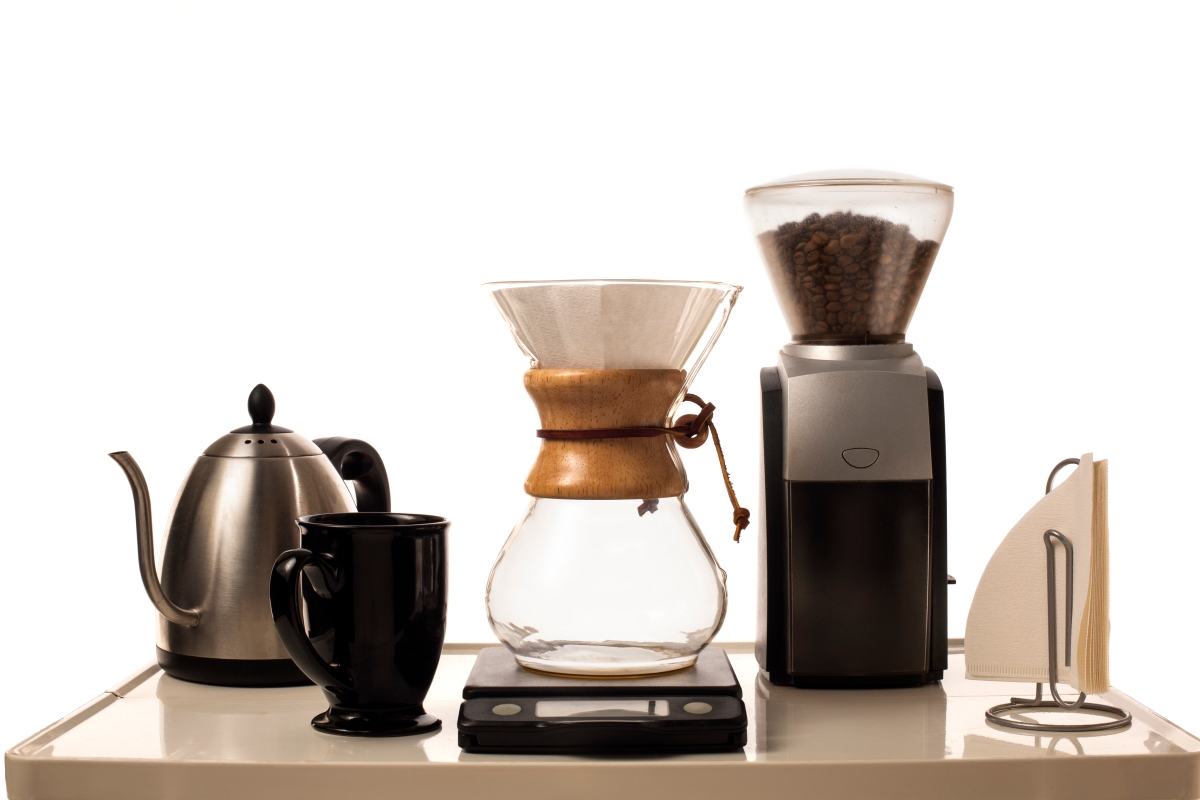
Next, you will need to get a coffee bean grinder,a scale to measure the grinds with a precision of 0.1 grams, a water kettle with precise control of the water temperature and ideally also a thermometer to check the water temperature. But if you choose one of the kettles I’ve listed, they have a built-in thermometer so you can forgo that.

If you’re the only person drinking coffee at home (I sympathize with you) then you might want to get a great hand grinder and skip the more expensive Baratza grinder for now. You always get them later and then use the hand grinder for your travel needs!

hand grinder