Filter coffee!!! 💖 ☕ 🫘 I love my espresso but flavor-wise it can’t compete with a good pour over coffee made with love.
Having been a volunteer at the Dutch SCA Coffee Championships and its preliminaries, I love being backstage and observing the gear displayed, competitors practicing and their workflow with the chosen brew method/device. It changes every year! Some opt for complete reworks compared to last year. Others have optimized their previous workflows and swapped certain gear in or out.
Brief background: during the Brewers Cup preliminaries, everyone receives the same unknown, freshly roasted beans (250 gr) and has 45 minutes to determine with their best recipe. Then, you brew 3 cups for the judges who judge your coffee anonymously! They do not see the barista, they only taste their coffees.
You receive points for consistency and flavors, since the judges have benchmarked the same beans themselves that morning or the previous day.
I became overwhelmed with the new filter brewers appearing on the market in the last 2-3 years. It’s awesome to see some competitors swearing by them as soon as they’ve tried it and bring them to the competition. But I don’t have the time to try them all out and I don’t want to spend money on acquiring (even) more coffee gear that I may only use occasionally.
So how do they compare? What is the opinion of the general public about all of these pour over brew methods? How many different ones are there anyway?
Recently, I made a list with my co-volunteers of the gear that we all knew about and asked Gemini to research them, check Reddit for opinions and feedback and give an overview of each brew method/device and how it differs from others. It should also try to categorize them into types of brew methods, if possible.
Here is my initial (seed) list, in no particular order:
- Gina Coffee Maker
- Orea coffee brewer
- Hario V60
- Hario V60 neo
- Hario Switch
- Aeropress (Premium, XL)
- UFO dripper
- Pulsar
- Z brewer
- Kalita wave
- Clever dripper
- Aramse Sofi brewer
- Aeropress prisma
Here is what Gemini came up with. Use it as-is. I didn’t verify many of these devices. I only know the Aeropress and V60 very well. I rely on (review) videos just like the rest and I take them with a grain of salt. But I like the general overview and categories of pour over coffee makers.
Here we go!
A Guide to Pour-Over Brewing Methods
The Manual Coffee Renaissance
So, you’ve dipped your toes into specialty coffee, maybe even upgraded your automatic brewer. But now? Now you’re hearing whispers of “total control,” “clarity,” and “unlocked flavors.” Welcome to the beautiful, sometimes obsessive, world of manual pour-over brewing!
This isn’t just about making coffee; it’s about becoming an active participant in the creation of your cup. When you go manual, you’re the master of four critical variables:
- Contact (Brew) Time,
- Temperature,
- Turbulence (Agitation), and
- Grind size.
But the brewer you choose, that physical vessel, is your instrument, and its design dictates how you play.
Your water quality, its chemical composition and your choice of paper or metal filters also play a major role in the resulting coffee. We’ve ignored these variables at this stage.
We’ll explore the most talked-about manual brewers of 2025/2026, from the iconic classics to the cutting-edge “no-bypass” disruptors and the new wave of “flatbed” champions. We’ll break down their physics, highlight their unique quirks, and even point you to the top pros’ reviews so you can see them in action.
Let’s brew this!
The “Control Freak” Dictionary: Why Brewer Design Matters
Before we get into the specific brewers, let’s understand the core design elements that dictate your coffee’s fate. This is the language of control.
- Cone Angle (The Slope): This refers to how steep the walls of the brewer are.
- A steeper 60° cone (like a V60) creates a deep coffee bed, meaning water has a long path through the grounds. This can lead to higher extraction but requires precise pouring to avoid “stalling.”
- A shallower 80° cone (like the UFO Dripper) or a very wide flat bottom makes the bed shallower and more uniform, often promoting sweetness and evenness.
- The Bottom Hole(s): This is where the magic (or frustration) of flow control happens.
- A single large hole (V60, Orea) puts all the flow control directly in your hands; your grind size and pour speed are paramount.
- Multiple small holes (Kalita Wave) or a restricted screen (Pulsar) create a “speed limit” for the water, offering more consistency regardless of your pour technique.
- Shutoff Valves: These turn a pour-over into a “hybrid” brewer.
- By closing a valve, you allow the coffee to steep (full immersion) before filtering. This ensures incredibly even extraction and is a cheat code for consistency.
- Bypass vs. No-Bypass: This is a big one for enthusiasts!
- In most brewers, some water flows around the coffee bed (between the paper and the brewer wall) without fully extracting flavor. This is called bypass.
- No-bypass brewers (Pulsar, Z1, Tricolate) force 100% of the water through 100% of the grounds, aiming for maximum extraction efficiency and intensity.
1. The Conical Classics: The “Skill” Brewers
These iconic brewers rely on a steep cone and a single large hole, demanding the most from your pouring technique. They are designed for clarity and brightness.
Hario V60 (Classic, Neo, and Suiren)
The undisputed king of manual pour-over. Its 60-degree angle and internal “ribs” allow for high airflow, making it incredibly responsive to grind size and pouring. While the V60 Neo is a high-performance glass-and-silicone version of the classic, the V60 Suiren is Hario’s modular, petal-based evolution, designed to maximize airflow and minimize stalling by removing the solid wall entirely.
- What makes them unique: High clarity, bright acidity, and total control over flow. The Suiren offers even faster drawdown and prevents vacuum sealing thanks to its open-petal design.
- The Pro View:
- Classic V60: James Hoffmann – The Ultimate V60 Technique. If you want to master pour-over, start here.
- V60 Suiren: European Coffee Trip – Hario V60 Suiren Review. They highlight its modular, petal design which practically eliminates clogging.
UFO Dripper
A fascinating newcomer with a very steep 80° angle. It creates a uniquely shallow coffee bed compared to other cones, which impacts extraction.
- What makes it unique: Designed for high sweetness and clarity, often used by competitors. It requires specific filters or a precise origami fold.
- The Pro View: The Real Sprometheus – UFO Dripper: A Giant Leap?. He analyzes the 80° angle and how the deeper bed affects extraction compared to a standard V60.
2. Flat-Bottom Moderns: The “Sweetness & Body” Brewers
By creating a flat bed of coffee, these brewers aim for more even water distribution, generally leading to a sweeter, heavier-bodied cup.
Kalita Wave
The “old reliable” of the flat-bottom world. It’s famous for its three small holes and distinctive “wave” filters.
- What makes it unique: Those three holes act as a bottleneck, regulating the flow and making the brew more forgiving and consistent.
- The Pro View: James Hoffmann – The Best Pour-Over Dripper?. A classic review focusing on the stainless steel vs. glass models.
Orea Coffee Brewer (V3 & V4)
Currently the most lusted-after flat-bottom brewer on enthusiast forums. Made of high-grade, thermally stable plastic, it features a massive, wide-open bottom. The V4 is modular, allowing you to swap “bottoms” to change the flow style.
- What makes it unique: Extremely fast flow for a flat bottom, offering exceptional clarity for a modern brew. The V4’s modularity allows for unprecedented customization of flow.
- The Pro View:
- Orea V3/V4 Overview: Kyle Rowsell – Orea: The World’s Smallest/Most Fascinating Brewer.
- V4 Modularity: Matteo D’Ottavio’s review is a comprehensive technical breakdown of its swappable bottoms.
3. New Wave Flat-Bed Brewers: The “Balanced Clarity” Machines
This sub-category takes the “flat bed” concept even further, focusing on perfectly even water contact across a very shallow, wide bed. They aim for balance, juiciness, and often a brighter, cleaner cup than traditional flat-bottoms.
April Coffee Brewer
Designed by World Brewers Cup champion Patrik Rolf, this brewer emphasizes a super-wide, very shallow bed and is optimized for lighter roasts and a high-volume pour.
- What makes it unique: It aims for extreme evenness and clarity. Often used with a coarser grind than other methods.
- The Pro View: James Hoffmann – The April Coffee Brewer Review. Hoffmann discusses its unique design and how it promotes a distinct flavor profile.
Timemore B75
Often touted as an “Orea-killer” due to its affordability and similar ultra-fast flow. It’s a transparent, ribbed flat-bottom dripper.
- What makes it unique: Incredibly forgiving and virtually uncloggable, making it a fantastic entry point into fast-flowing flat-bed brewing.
- The Pro View: Lance Hedrick – The Best Cheap Brewer? (Timemore B75). Lance highlights its impressive clarity for its price point.
Tricolate & NextLevel LVL-10
These are the most “extreme” flat-bed brewers, featuring perfectly vertical walls and often a shower screen.
- What makes it unique: They achieve virtually zero bypass due to their cylindrical design and often allow for much higher brew ratios (e.g., 1:20) for surprisingly strong, clean coffee. You often just dump the water in, no fancy gooseneck needed!
- The Pro View: The Real Sprometheus – Tricolate Brewer Review. He examines whether this “no-pour” method lives up to its scientific claims.
4. No-Bypass Specialists: The “Physics” Brewers
These are for the scientists and the detail-oriented. They aim for 100% extraction efficiency by forcing all water through the coffee bed.
NextLevel Pulsar
Developed with coffee physicist Jonathan Gagné, the Pulsar looks like a lab experiment. It features a unique valve at the bottom.
- What makes it unique: The valve allows you to control the flow rate precisely, effectively combining immersion and percolation in a highly controlled manner. It’s built for maximum extraction.
- The Pro View: Lance Hedrick – Pulsar: The Future of Pour Over?. Hedrick worked closely with the designer and offers a masterclass on its capabilities.
Orea Z1 (The “Z Brewer”)
A specialized zero-bypass brewer designed for smaller doses. It often includes a built-in showerhead for gentle, even water dispersion.
- What makes it unique: Creates an incredibly intense, concentrated cup. It requires specific Sibarist Z1 paper filters.
- The Pro View: Matteo D’Ottavio – Orea Z1 Review. A deep dive into what “zero bypass” actually means for your morning cup.
5. Hybrid & Immersion: The “Consistency” Kings
Can’t decide between a French Press and a Pour-over? These give you both, offering a consistent brew with less fuss.
Hario Switch & Clever Dripper
These brewers allow you to steep the coffee (immersion) and then release it to filter through. The Switch is a glass V60 with a valve; the Clever is a plastic, wedge-filter version.
- What makes it unique: Foolproof consistency. You get the rich body of immersion with the clean finish of a pour-over. The Switch is favored for its V60 filters and aesthetics.
- The Pro View:
- Hario Switch: James Hoffmann – The Best Dripper of All Time?. Hoffmann calls the Switch the “cheat code” for perfect coffee.
- Clever Dripper: James Hoffmann – The Ultimate Clever Dripper Guide. The definitive guide for simple, consistent immersion-to-filter brewing.
Goat Story Gina
A “smart” hybrid brewer with a built-in scale and a precision valve that’s also gorgeous to look at and showcase your skills.
- What makes it unique: App-connected brewing for tracking, and the ability to switch between pour-over, immersion, and even cold drip.
- The Pro View: The Real Sprometheus – Gina Smart Brewer Review. He tests its smart features and versatility.
6. The AeroPress Universe: The Versatile King
Not strictly a pour-over, but its incredible versatility and control make it a staple in any manual brewer’s arsenal.
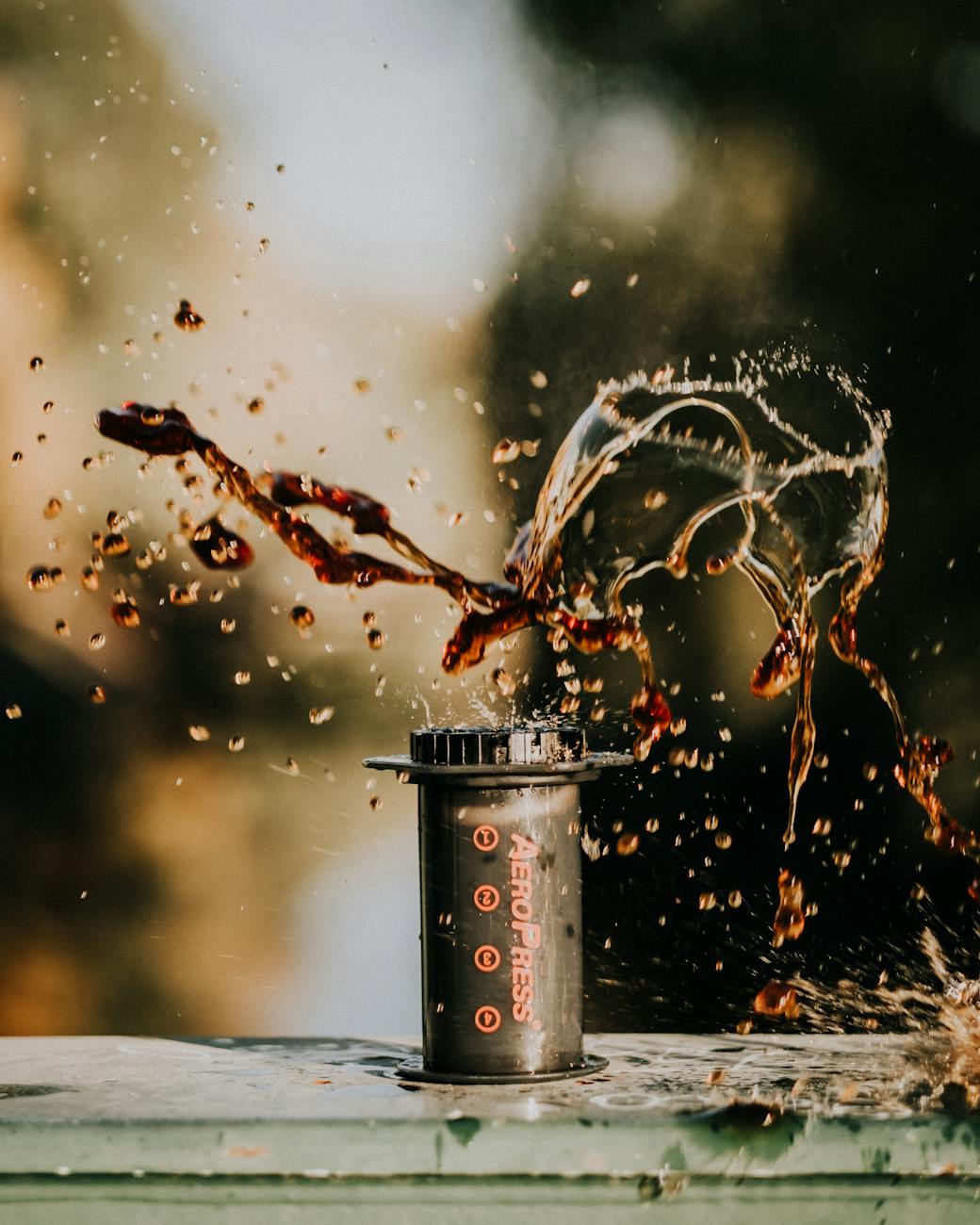
- AeroPress (Classic, Premium, XL): The Premium is a new glass/stainless model; XL offers double capacity.
- AeroPress Prisma (Fellow Prismo/Flow Control Cap): These are attachments that add a pressure-actuated valve, allowing you to brew concentrated “espresso-style” shots.
- What makes it unique: Unmatched versatility for brew styles, grinds, and portability. The Prisma/Flow Control Cap transforms it into a pseudo-espresso maker.
- The Pro View:
- AeroPress Premium: James Hoffmann – The AeroPress Premium Review. A critical look at whether the high-end materials justify the price.
- Prisma/Flow Control: Aramse – AeroPress Flow Control Cap Review. A great overview of how these caps enhance AeroPress functionality.
7. Specialized & Heritage: Aramse Sofi Brewer
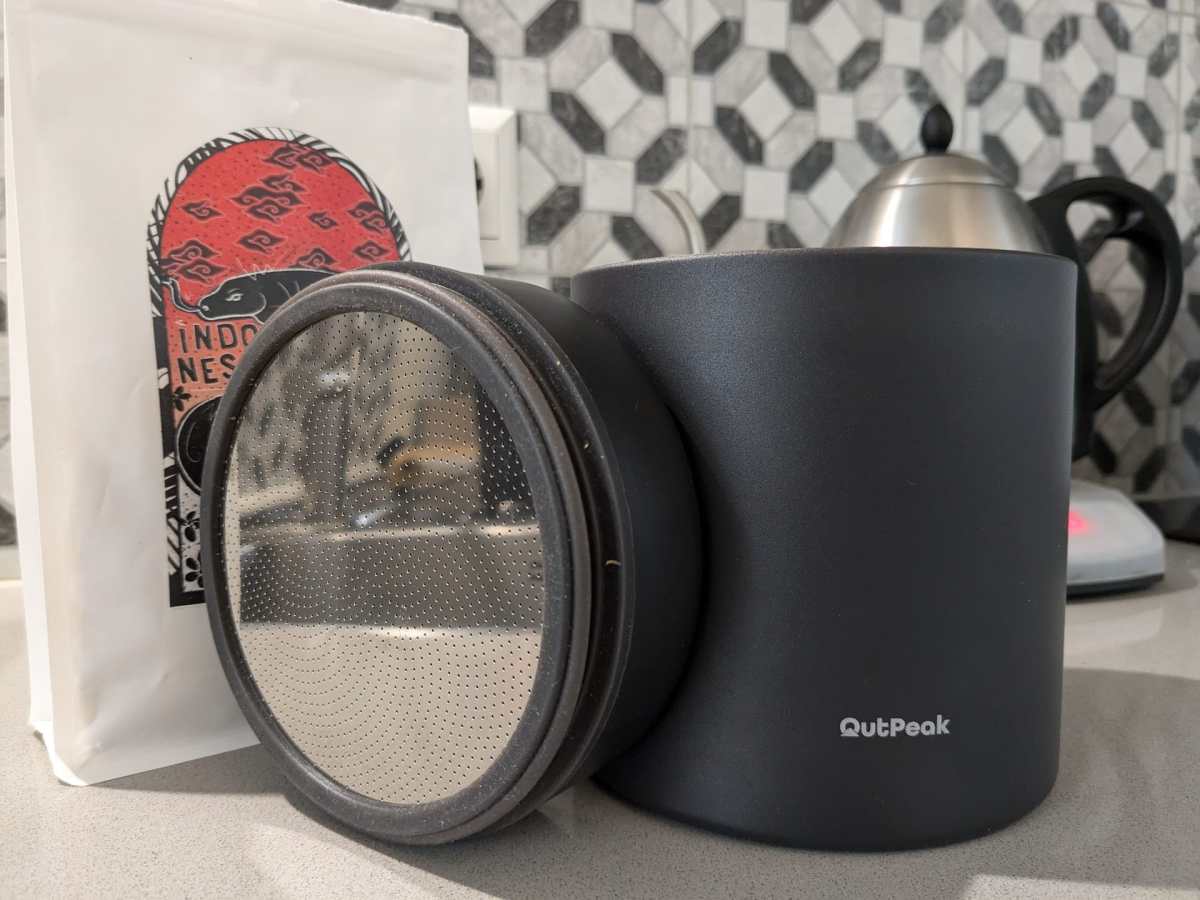
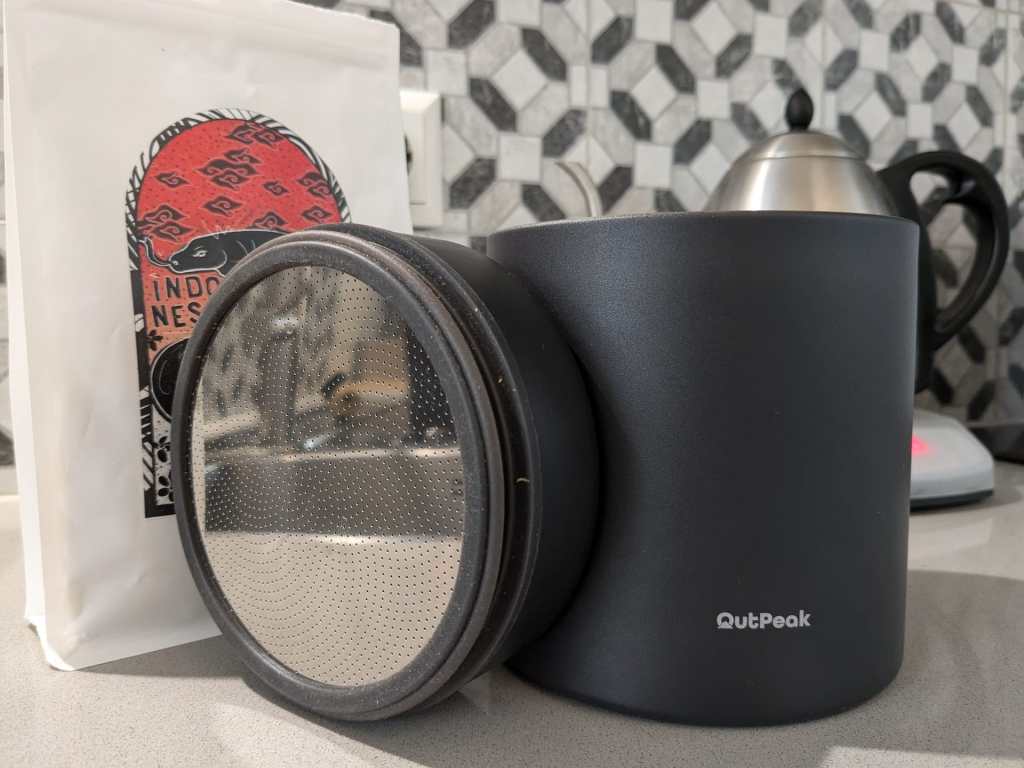
A beautifully modernized take on the traditional South Indian Filter.
- What makes it unique: It uses a fine-holed stainless steel disc (no paper!) to create a rich, thick “decoction.” Perfect for intense, milk-based coffees.
- The Pro View: Aramse – The Sofi Brewer: Reimagined. The creator’s channel provides the best context on its heritage and modern application.
Paper: The Unsung Hero
Don’t neglect your paper filters! They dramatically impact flow rate, clarity, and even taste.
- Hario Tabbed: The standard, good all-rounder. Available in one cup (01) or two cup (02) sizes. Do note that the “official” paper is from Japan and other manufacturers have licences to produce V60 paper outside of Japan. However, these are slightly different filters. See James Hoffman’s V60 filter paper test.
- Sibarist FAST: The “Ferrari” of paper. Allows ultra-fast flow, demanding a finer grind but unlocking immense flavor.
- Cafec Abaca Plus: A favorite for its consistent flow and lack of “papery” taste.
Your Next Step: Choosing Your Brewing Philosophy
So, which path will you take on your manual brewing journey?
- For the budding barista keen on technique:
Start with a Hario V60. It will teach you patience and precision. - For foolproof consistency and convenience:
The Hario Switch is your best friend. - For bright, juicy clarity and light roasts:
Explore the Orea V4 or the April Coffee Brewer. - For ultimate extraction and scientific experimentation:
The NextLevel Pulsar or Orea Z1 are calling your name. - For a do-it-all, robust, and portable option:
The AeroPress ecosystem is unmatched. - For heavy-bodied, unique textures or milk-based drinks:
The Aramse Sofi offers a fantastic experience.
Manual brewing is a journey of discovery. Each brewer offers a unique perspective on coffee, inviting you to experiment and refine. Don’t be afraid to dive in!
If you have specific experience with any of these brew methods or filters, and you are very passionate about its performance, then please get in touch with me and enlighten me! I’m always happy to learn something new.


 No Pressure Coffee