
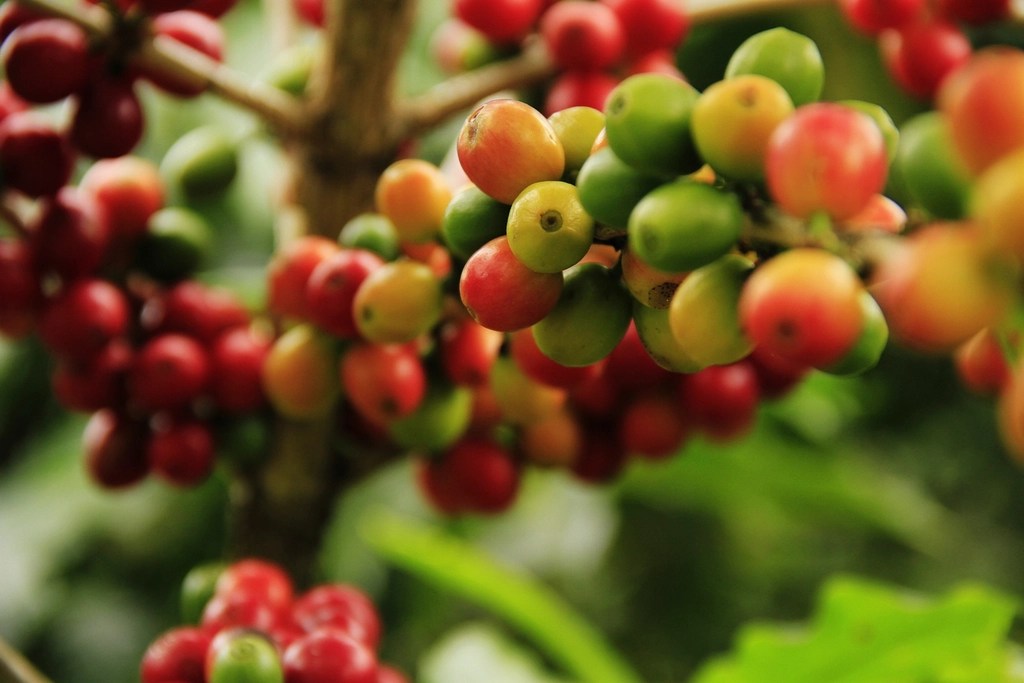
When coffee bushes are filled with cherries and they are ripe (dark red), they can be picked and processed. The skin is removed until only the “pit”or bean of the fruit remains. The bean is green until roasted.
Processing methods
There are various processing methods used to remove the skin from the berry:
- Washed process
- Natural process
- Honey process
In addition to these three processes, one can apply an optional extended fermentation process that can be applied to both methods.
In the washed method, the most common process, the coffee cherries are pulped to remove the skin and fruit flesh. The beans are then fermented for a shorter period of time, typically around 12 hours. After fermentation, the beans are washed and dried in the sun. Washed coffees generally have a cleaner flavor than natural coffees.
In the natural method, the coffee cherries are left whole and fermented with their skin on. This can take anywhere from one to three weeks, depending on the weather conditions. The natural fermentation process in the fruit during this period breaks down the sugars in the coffee cherries, which contributes to the flavor of the finished coffee. After fermentation, the coffee cherries are dried in the sun until they are brittle.
An additional extended fermentation process can be applied to both natural and washed coffees. In this process, the coffee cherries or beans are fermented in an anaerobic environment, which means that there is no oxygen present. This can create a more complex and fruity flavor in the finished coffee.
Here is a summary of the different processing methods:
- Natural: Coffee cherries are fermented with their skin on for an extended period of time (1 to 3 weeks). This results in a coffee with a more complex and fruity flavor.
- Washed: Coffee cherries are pulped to remove the skin and fruit flesh, then fermented for a shorter period of time (12 hours). This results in a coffee with a cleaner flavor.
- Honey: Coffee cherries are pulped to remove the skin and some of the fruit flesh, leaving behind some of the mucilage. The amount of mucilage left on the bean affects the final flavor profile.
- Extended fermentation: Coffee cherries or beans are fermented in an anaerobic environment. This can create a more complex and fruity flavor in the finished coffee.
The video below shows you the difference between natural and washed coffee processing, including a 72-hour anaerobic fermentation process for natural coffee.
The video starts with showing freshly picked red coffee cherries. They show that only red cherries are picked because they are at optimal ripeness (i.e. sugar content).
Natural method
The author of the video (Roaster Kat from Germany, who operates a YouTube channel showing what her work is like) explains that the skins are left on the cherries during this process. The cherries are dried until the skins crumble and fall off easily.
Then the video dives into an optional, additional, natural coffee processing. First, the coffee cherries are put in a plastic bag to ferment anaerobically, which means there is no oxygen. Yeast and bacteria are added to the bag to consume the sugar in the coffee cherries.
After four days of fermentation, the coffee cherries are taken out and rinsed. They are then laid out on a drying patio to dry for one to three weeks.
Washed method
Next, the video explains washed coffee processing. The skins are first removed from the coffee cherries using a long soak in water and a depulping machine.
Then, the beans are fermented in a tank with water for about 12 hours. The narrator explains that this fermentation process is shorter than the one used in natural coffee processing and its purpose is to remove a layer of sticky sugar from the beans. After fermentation, the coffee is rinsed and dried on a patio for several days.
Finally, the video shows how coffee is processed at a dry mill. The dry mill removes the outer layers from the coffee beans and sorts the beans by size and density.
Anaerobic fermentation
The video also talks about extended fermentation, which is a process that can be used with both natural and washed coffee. RoasterKat explains that extended fermentation can give coffee a unique flavor. In the video, they use a 72-hour anaerobic fermentation process.
Fermentation introduces a wealth of different and unique flavors in coffee. Very similar to how grape juice is fermented to wine. The process can be influenced by introducing other yeasts onto the coffee beans than those naturally occuring in their habitat. Commercial yeasts are readily available from companies such as DSM and you can choose the yeast by the flavor you want to create afterwards.
Need more information? Check out this article explaining the different processes in great detail.
 No Pressure Coffee